Gambian diplomats complete China training programme
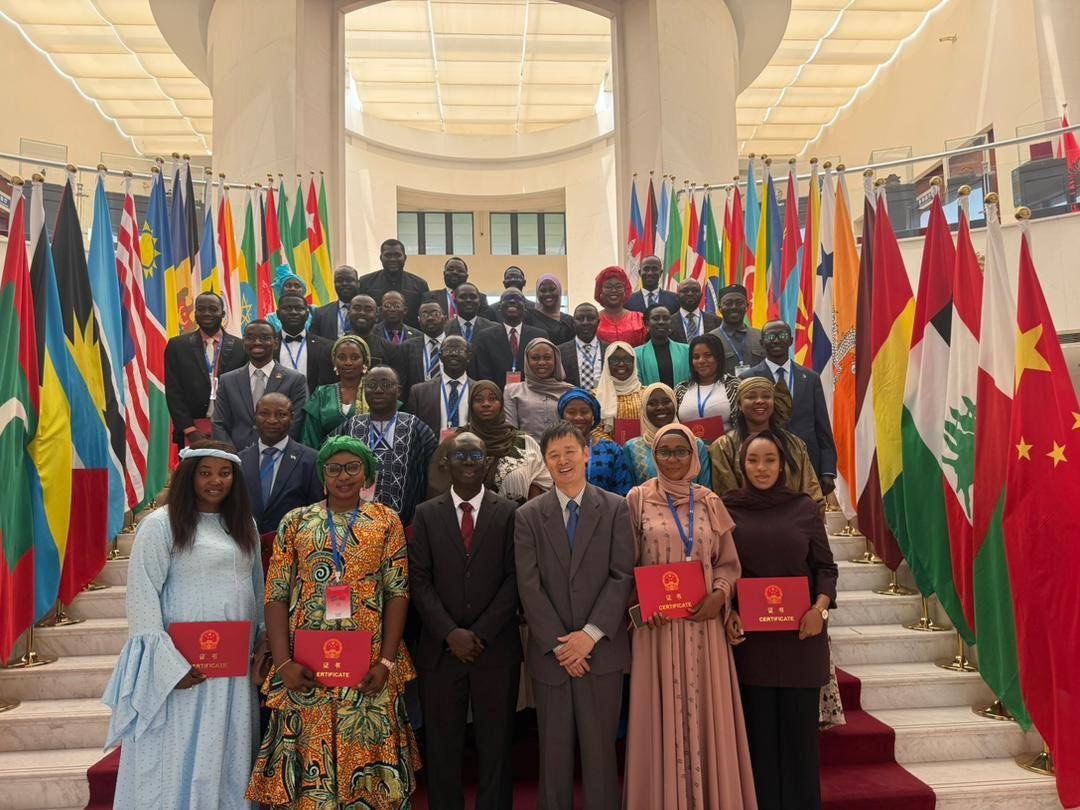
Thirty-five Foreign Service officials concluded a two-week diplomatic training seminar in Beijing, strengthening skills in negotiation, public diplomacy, governance, international law and strategic communication.
By Mutiu Olawuyi
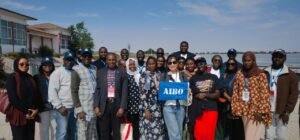
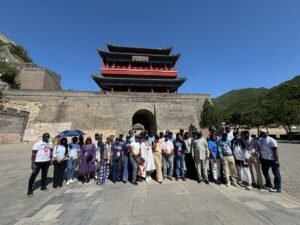
Thirty-five Gambian Foreign Service officials have completed a two-week diplomatic training programme in Beijing, China, in a development the Ministry of Foreign Affairs, International Cooperation and Gambians Abroad says will strengthen the country’s diplomatic capacity and institutional readiness.
The Training Seminar for Gambian Foreign Service Officials was held from May 8 to May 21, 2026, in the People’s Republic of China. It was sponsored by China’s Ministry of Commerce and organized by the Academy for International Business Officials, commonly known as AIBO.
The programme brought together officials from the Ministry’s headquarters and Gambian diplomats serving in various missions abroad. According to the Ministry, the training focused on key areas of modern diplomacy, including governance, international relations, public diplomacy, diplomatic negotiation, international law and China’s development experience.
Participants also engaged in practical negotiation and simulation exercises designed to improve strategic communication, teamwork, leadership and consensus-building skills. These are essential tools for diplomats representing a small state in a complex global environment where diplomacy increasingly requires technical knowledge, cultural fluency, economic understanding and crisis-management capacity.
 The seminar also exposed participants to China’s modernization efforts, governance model, Belt and Road Initiative cooperation and South-South partnership framework. For The Gambia, such exposure can broaden diplomatic understanding and help officials assess how international partnerships may be aligned with national development priorities.
The Ministry said the initiative forms part of its broader objective to continuously build the capacity and professional competence of Gambian diplomats and Foreign Service officials both at headquarters and in diplomatic missions abroad.
This capacity-building agenda is important because foreign policy is no longer limited to protocol and representation. Today, diplomats are expected to support trade, investment, education partnerships, diaspora engagement, development financing, climate cooperation, peacebuilding and national image-building.
For The Gambia, a stronger Foreign Service can help advance national interests more effectively, especially when diplomats are equipped to negotiate partnerships that deliver practical benefits for citizens. Training in negotiation, public diplomacy and international law can also improve how the country protects its interests in bilateral and multilateral spaces.
The Ministry expressed appreciation to the Government of the People’s Republic of China for its continued collaboration and support, particularly in diplomatic training, human capacity development and international cooperation initiatives.
 The successful completion of the programme also reflects the continuing growth of diplomatic relations between The Gambia and China. However, the long-term value of the training will depend on how participants apply the knowledge gained to strengthen service delivery, improve diplomatic coordination and support measurable national development outcomes.
From a constructive perspective, the seminar should be seen not only as a symbol of friendship between Banjul and Beijing, but also as a responsibility. The knowledge gained must translate into stronger institutions, better policy implementation, more effective international partnerships and improved representation of Gambian citizens abroad.
As the officials return to their posts, the opportunity before the Ministry is clear: convert training into action, exposure into strategy, and bilateral cooperation into development-focused diplomacy.
About The Author