Faye inaugurates $738 million highway linking Mbour to Kaolack
By Mutiu Olawuyi
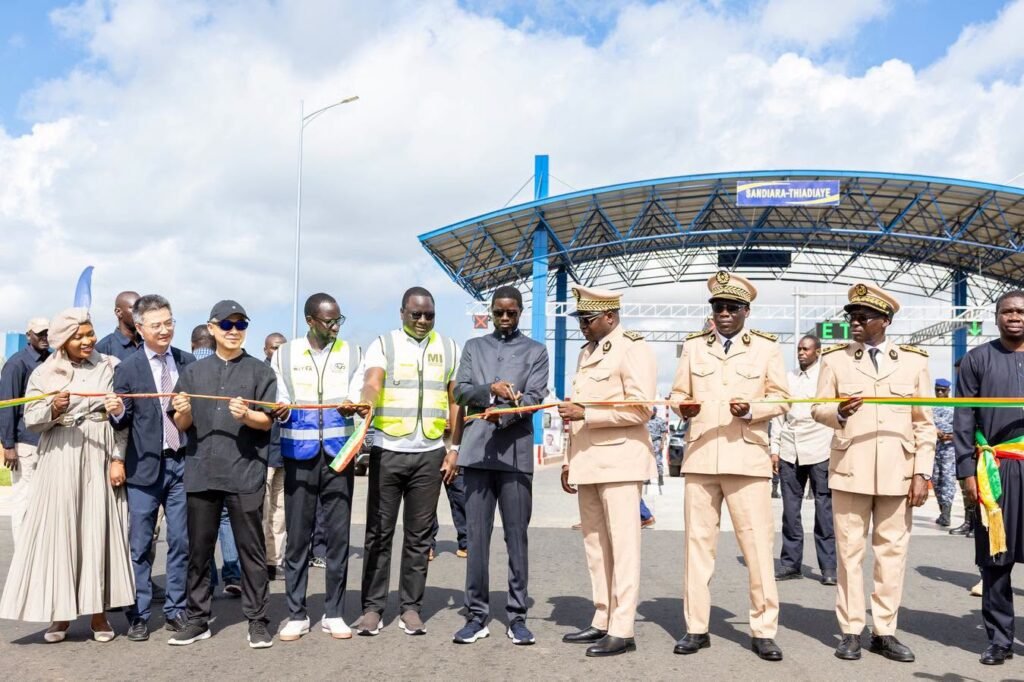
Senegalese President Bassirou Diomaye Diakhar Faye on Saturday inaugurated the Mbour-Fatick-Kaolack toll highway, a major transport corridor now open to traffic and expected to strengthen mobility between the Petite Côte and the heart of Senegal’s Groundnut Basin.
The inauguration ceremony, held on Aug. 22, 2026, in Thiadiaye, was attended by the Ambassador of the People’s Republic of China to Senegal, reflecting the role of Chinese financing in the delivery of the project.
According to the Presidency of the Republic of Senegal, the highway stretches 100 kilometers, with an additional 15 kilometers of connecting roads. The infrastructure project cost $738 million and is designed to improve access, reduce travel time and support economic movement across several strategic areas.
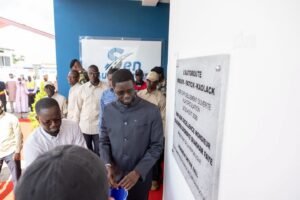 President Faye described the project as a source of national satisfaction and a reflection of the quality of relations between Senegal and China, which financed the construction.
The president also commended the Ministry of Infrastructure and the Ministry of Transport for shortening implementation timelines and bringing the road into service before Gamou, a period of high travel demand for pilgrims and other road users.
Beyond its transport value, the project has had significant economic impact during construction. The Presidency said the worksite mobilized 3,000 direct jobs, paid more than 18 billion CFA francs in wages, and involved about 20 Senegalese companies and small and medium-sized enterprises through subcontracting valued at 60 billion CFA francs.
The new highway is expected to bring communities, territories and agropoles closer together, while improving access to markets and services. For farmers, traders, transporters and families across the corridor, better road infrastructure can mean lower travel stress, safer movement, quicker delivery of goods and stronger connections between production zones and commercial centers.
The Mbour-Fatick-Kaolack corridor is also important because it links coastal economic activity with the Groundnut Basin, a region central to Senegal’s agricultural identity and food economy. When roads are reliable, agricultural communities are better positioned to move produce, attract investment and participate more fully in national development.
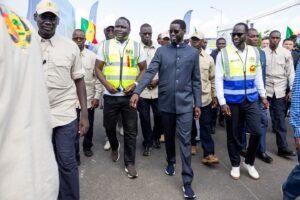 The government presented the inauguration as part of President Faye’s policy of territorial equity and mobility, aimed at promoting balanced development across the country.
Still, the long-term success of the highway will depend on how the infrastructure is managed after inauguration. Citizens will expect safe maintenance, fair toll practices, strong road-safety enforcement, protection for nearby communities and clear economic benefits for local populations.
Large infrastructure projects are most meaningful when they do more than connect places. They must also connect people to opportunity.
For Senegal, the opening of the Mbour-Fatick-Kaolack highway is therefore both an achievement and a responsibility. The road can help accelerate development, but its impact must be measured in improved livelihoods, safer travel, expanded local business opportunities and stronger inclusion for communities along the corridor.
As the highway opens to traffic, the challenge now is to ensure that the promise of faster mobility becomes a practical gain for ordinary Senegalese citizens.
About The Author