Kolda English teacher appeals for learning tools
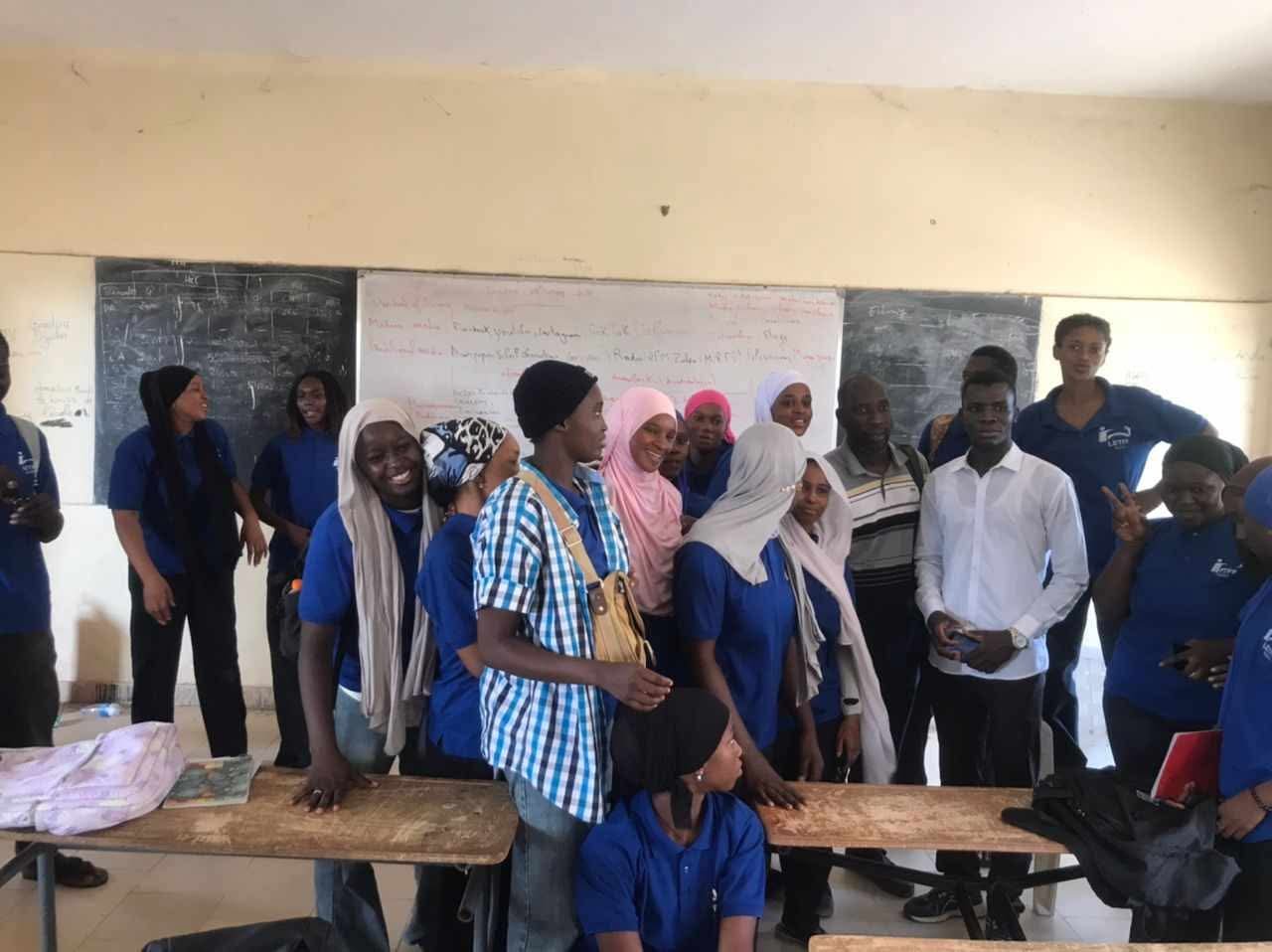
Modou Diouf says technical high school students in southern Senegal need practical English, digital teaching materials and partner support to compete for jobs, scholarships and global opportunities.
By Mutiu Olawuyi
In Kolda, southern Senegal, an English language teacher is calling attention to a practical but urgent education gap: students in technical schools are being prepared for the modern economy, but many still lack the basic teaching tools needed to learn English effectively.
Modou Diouf, an English teacher at Kolda Technical High School, in an exclusive interview with Senegambia Times, says his students are specializing in fields such as economics, management and accounting. For them, English is not merely another school subject. It is a professional tool that can help them communicate, compete and connect with opportunities beyond Senegal’s francophone environment.
Diouf, who studied at Cheikh Anta Diop University of Dakar, where he obtained a master’s degree in African and Postcolonial Studies as well as an English Language Teaching Certificate, has been teaching at Kolda Technical High School since 2025.
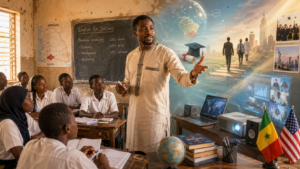 According to him, English teaching in a technical high school requires a different approach from general secondary education.
“It is quite different,” Diouf explained. “Students need a more professional English related to their future career. And we highlight transactional communication.”
That distinction is important. Technical students need English that prepares them for real workplace communication: business conversations, customer service, emails, presentations, interviews, reports, trade vocabulary, technology use and cross-border professional exchange.
But in Kolda, Diouf says several challenges continue to limit effective teaching and learning. These include large class sizes, limited teaching time, inadequate materials, low student confidence and cultural barriers.
The shortage of basic pedagogical equipment is especially urgent. Diouf says his school needs speakers for listening exercises, a video projector, a computer for visual learning and possible pedagogical visits to motivate students.
His appeal is not abstract. It comes from daily classroom experience.
He recalled one incident when he submitted a reading comprehension text to the school administration for photocopying one day before class. The copies were not made. On the day of the lesson, he was forced to change his plan.
“If it was a video or images, it wouldn’t happen like that,” he said.
That simple example reveals a larger problem. When a teacher depends entirely on printed materials in a resource-limited environment, even one missed photocopy can disrupt learning. With digital tools, teachers can diversify instruction, reduce dependence on paper, improve listening and speaking practice, and make lessons more engaging for students who need practical communication skills.
Diouf also sees English as an economic and social necessity for Senegalese students.
“Senegal is a francophone country, but we are living a globalization of the world economy,” he said. “It is quite relevant to prepare learners for international opportunities, jobs or scholarships, and for technology.”
His point reflects a growing reality across West Africa. English proficiency can help students access scholarships, online learning platforms, international business networks, technical manuals, digital tools and employment pathways. For students in a technical high school, it can also strengthen their ability to work in regional and global markets.
Diouf acknowledges that authorities are making efforts to equip schools, but he says the current support is not enough. He believes partners such as the U.S. Embassy in Dakar, education-focused NGOs, diaspora organizations and private donors can help close the gap.
“The authorities are making effort to equip the school, but it is not enough,” he said. “Maybe the U.S. Embassy, the NGOs or even the diaspora would help.”
For prospective partners, the request is clear and modest: provide the tools that can immediately improve English teaching and learning in Kolda.
The priority needs include, but not limited to, a computer for lesson preparation and classroom presentation; a video projector for visual learning; speakers for listening and pronunciation practice; English learning materials for technical and business communication; and support for pedagogical visits or exposure activities that can motivate students.
This is not a call for charity alone. It is an investment in human capital, regional equity and Senegal’s future workforce. Supporting English education in Kolda means helping technical students become more employable, more confident and better prepared for the demands of globalization.
For the U.S. Embassy and other education partners, the opportunity aligns strongly with people-to-people diplomacy, youth empowerment and workforce development. A small intervention in a technical high school could produce measurable outcomes: improved classroom participation, stronger listening and speaking skills, better exam preparation, increased confidence and greater access to scholarships and international opportunities.
The constructive path forward is practical. A pilot English Learning Support Initiative for Kolda Technical High School could begin with basic equipment and expand into teacher training, English clubs, virtual exchanges, career-focused English workshops and partnerships with American educators or Senegalese professionals using English in business and technology.
Diouf’s appeal should be heard not as a complaint, but as a responsible call from a frontline educator who understands both the limitations and the potential of his students.
“We urgently need pedagogical materials,” he said. “They need to be equipped to facilitate learning and teaching.”
In Kolda, the ambition already exists. The students are present. The teacher is committed. What is missing are the tools and partnerships needed to turn English learning into a stronger bridge between local talent and global opportunity.
About The Author