Dakar Police detain 234 in anti-begging operation
By Mutiu Olawuyi
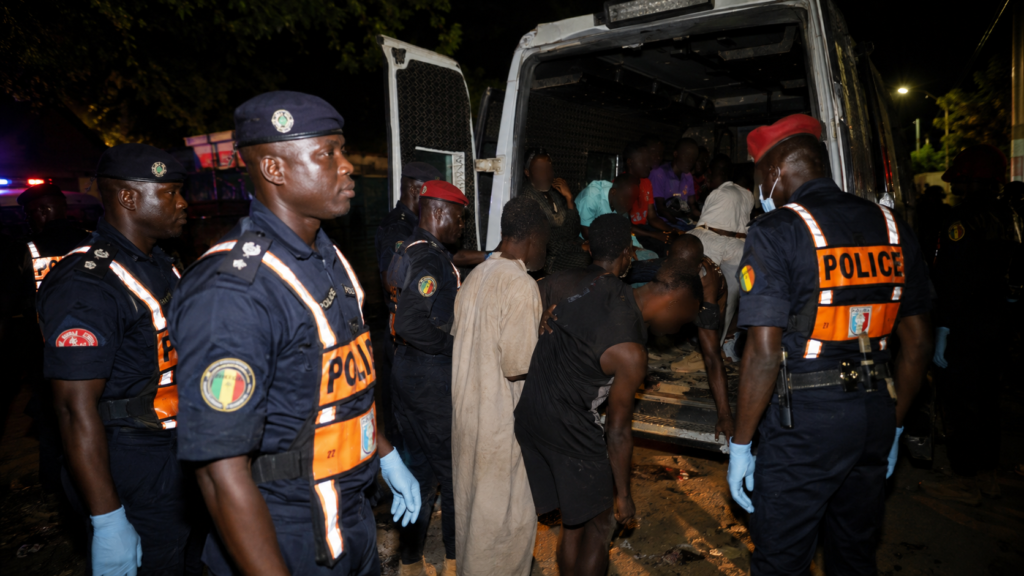
Senegal’s National Police say officers from the Medina District Commissariat, under the supervision of the Central Commissioner of Dakar, detained 234 people during an operation targeting begging and obstruction of public roads in several areas of the capital.
The operation was conducted on Aug. 18, 2026, from 8:30 p.m. to midnight, according to the police statement.
Police said the operation mobilized significant personnel and vehicles and covered several locations, including Colobane, Place de l’Obélisque, the area near Abass Ndao Hospital, Marché Tilène, Centenaire, Canal 4, Gueule Tapée, Rue 31 x 06 and Soumbédioune.
According to the statement, the targeted areas are regularly occupied by people begging, sleeping on public roads or staying in makeshift shelters erected on site.
At the end of the operation, police said 234 individuals were arrested. They included 58 adult men, 66 adult women, 105 children, including 22 infants, and five people with reduced mobility.
The National Police said the operation reflects its daily commitment to maintaining order, security and public tranquility.
The operation has generated public reactions, with some citizens welcoming the police action while urging the state to ensure follow-up, stronger identification systems and long-term solutions.
Papa Ndiouga Mouridoulah Diop commended the National Police for what he described as its commitment to security and public order.
“Congratulations and best wishes to the National Police for its commitment and work in the service of security and public order,” Diop said.
He added that the state should take the issue of irregular migration and the control of people entering the country without proper identification more seriously.
“It is now time for the state to take seriously the issue of irregular migration and the control of people entering the territory without proper identification,” he said. “Strengthening identification and verification systems at entry points must become a priority in order to guarantee respect for the law and national security.”
Diop said operations carried out by the National Police are part of efforts to preserve public order and should be encouraged. He added that they also show the need for coherent and sustainable state action to better manage the movement of people and ensure organized, secure and law-abiding public spaces.
MT Coulibaly said the most important issue is strict follow-up after the operation.
“The most important thing is that there must be rigorous follow-up,” Coulibaly said.
He suggested the creation of a special brigade to patrol sidewalks and public spaces, saying such patrols could strengthen security.
Mouhamadou Bachir Dème also emphasized follow-up, arguing that the problem has roots in border areas.
“I hope there will be follow-up,” Dème said. “Because this phenomenon has its origins at the borders. There is too much negligence and tolerance.”
He called for village chiefs and influential community figures to be involved as local watchdogs in identifying and preventing the conditions that fuel the phenomenon.
The reactions reflect wider public concern over security, urban order, migration control and the visible presence of vulnerable people in Dakar’s streets. They also show that many citizens want more than isolated police sweeps. They want sustained enforcement, better prevention and clearer state coordination.
However, the scale and profile of those detained also raise important social questions. When more than 100 children, including infants, are found sleeping or living in public spaces, the issue cannot be treated only as a policing matter. It is also a child protection, poverty, disability, housing and social welfare concern.
Public roads must remain safe and accessible, and authorities have a responsibility to prevent disorder, exploitation and insecurity. At the same time, people living on the streets often include children, women, persons with disabilities and other vulnerable groups who require protection, care and reintegration, not only removal.
The most effective response should therefore combine security action with social intervention. After such operations, relevant child protection services, social workers, health teams, local authorities and civil society organizations should be mobilized to identify victims of exploitation, reunite children with families where safe, provide emergency care and address the conditions that push people into street begging.
For children, especially infants, the priority should be immediate protection, documentation, medical assessment and safe placement. For persons with reduced mobility, the response should include accessible support and referral to appropriate social services.
The concerns raised by citizens about identification and border control also require careful handling. Security and lawful migration management are legitimate state responsibilities, but they must be implemented without stigmatizing poor people, migrants, children or persons with disabilities. The focus should remain on lawful identification, child protection, anti-trafficking measures, public safety and humane social support.
The operation in Medina should also encourage broader reflection on urban poverty in Dakar. Begging and makeshift occupation of public spaces are visible symptoms of deeper hardship. Sustainable solutions require prevention, family support, education, livelihood programs, disability inclusion, stronger border and community vigilance where necessary, and better community-based protection systems.
The National Police said it remains mobilized to protect the public and invited citizens to share useful information through the free hotline 800 00 17 00.
The challenge now is to ensure that public order is restored without neglecting human dignity. Security and social protection must move together if Dakar is to remain safe, orderly and compassionate.
About The Author