UCAD launches strategic digital plan to strengthen innovation, research, global competitiveness

Rector Alioune Badara Kandji says the university’s digital transformation aligns with Senegal’s New Deal Technologique and aims to position UCAD as a stronger hub for applied research, institutional data, startups and international visibility.
By Mutiu Olawuyi
Cheikh Anta Diop University of Dakar has taken a major step in its digital transformation journey with the official launch of the first phase of work toward the development of its Strategic Digital Plan.
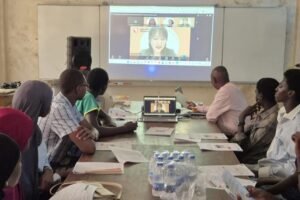
The launch ceremony, held on Wednesday, May 20, 2026, was led by the university’s Rector, Professor Alioune Badara Kandji, in the presence of university authorities, administrative officials and key digital stakeholders within the institution.
In his opening address, Rector Kandji emphasized that digital technology has become central to the competitiveness of modern universities, academic excellence and international visibility. He said UCAD’s new digital planning process fits within Senegal’s national “New Deal Technologique”, which places digital transformation at the heart of the country’s economic, social and educational development.
For one of West Africa’s most historically influential universities, the initiative represents more than a technical upgrade. It is a strategic institutional effort to build a digital ecosystem capable of supporting teaching, research, administration, innovation and global academic ranking.
Professor Kandji also stressed the need for UCAD to reinforce its position as a center for innovation production. He called for stronger applied research, the incubation of innovative projects and deeper partnerships with the private sector and Senegal’s startup ecosystem.
The ceremony featured several presentations highlighting both the historical foundation and future direction of UCAD’s digital agenda.
Mouhamed Tidiane Seck, the first Director of the Directorate of Information Technology and Information Systems, opened the technical presentations by revisiting the major challenges and opportunities surrounding UCAD’s digitalization. He also recalled the university’s pioneering role in the arrival of the Internet in Senegal, noting that the country’s early internet installation began at UCAD in 1992.
Professor Moussa Diallo, Technical Adviser to the Rector in charge of Digital Affairs, presented the methodological framework for the workshops that form the first phase of the strategic planning process.
Fatou Dieng Sarr, Director of the Directorate of Information Technology and Information Systems, presented the university’s overall digital mapping. Her presentation outlined existing digital systems while identifying possible areas for future expansion and improvement.
The final presentation was delivered by Professor Montaga Lam, Director of Decision-Making and Institutional Data. He focused on the importance of institutional and decision-support data, especially in improving UCAD’s academic ranking, governance capacity and international visibility.
The workshops bring together vice-rectorates, faculties, schools, institutes, central services, teacher-researchers and IT officials. Their shared objective is to create a collective process through which UCAD can co-build a coherent, inclusive and unifying digital vision.
The importance of this approach lies in its participatory structure. Rather than treating digital transformation as a purely administrative or technological matter, UCAD appears to be framing it as a university-wide development agenda involving academic leaders, technical experts, researchers and administrators.
For students and faculty, a successful digital strategy could improve access to learning resources, research infrastructure, administrative services and institutional data systems. For Senegal, it could further strengthen UCAD’s role as a national and regional engine of innovation, talent development and knowledge production.
As the university moves into the next stages of planning, the key challenge will be implementation. A strong digital vision must be matched by sustainable funding, cybersecurity safeguards, staff training, reliable infrastructure, transparent governance and measurable impact.
UCAD’s latest step therefore signals both ambition and responsibility: the ambition to compete in a rapidly digitalizing higher education landscape, and the responsibility to ensure that digital transformation serves students, researchers, administrators and the wider Senegalese society.
About The Author