Sall brings UN campaign to State House in Banjul
By Ebrima Fadera
Edited by Mutiu Olawuyi
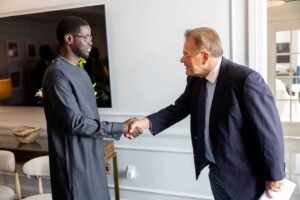
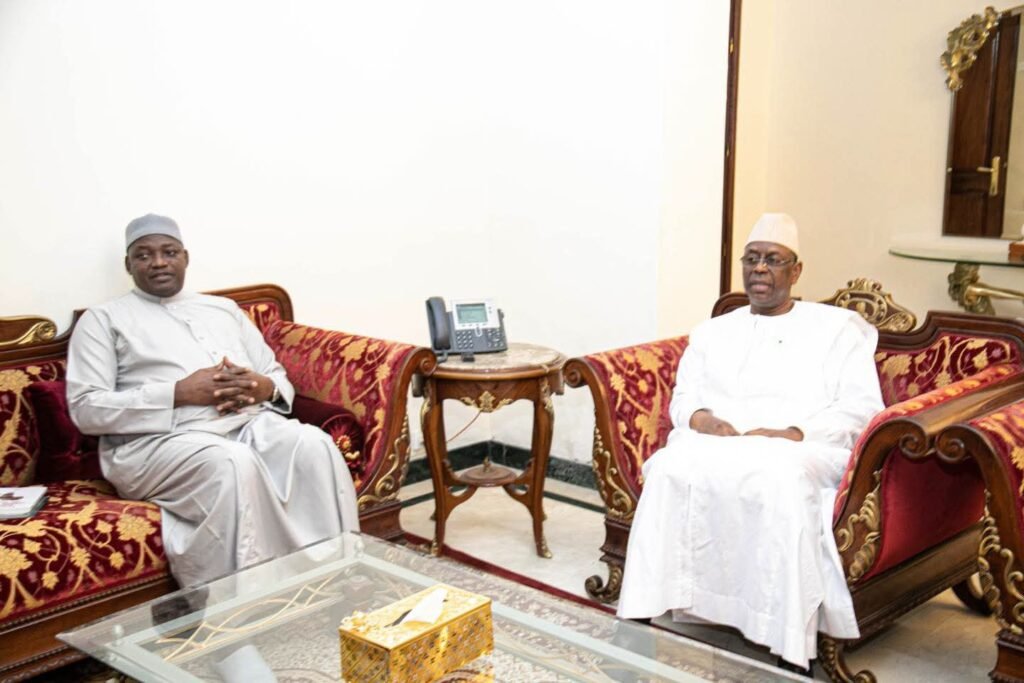
President Adama Barrow has received former Senegalese President Macky Sall, on Friday July 17, at the State House in Banjul as Sall continues consultations in support of his bid to become the next United Nations secretary-general.
The meeting formed part of Sall’s broader diplomatic engagement with world leaders as he seeks backing across Africa and beyond for his candidacy.
During the audience, Sall emphasized the importance of African unity in global affairs, saying the continent must work together around the central pillars of the United Nations.
“As Africans, we must work together and focus our efforts on the key pillars of the United Nations: peace and security, human rights and sustainable development,” Sall said.
He also solicited President Barrow’s prayers and support for his candidacy.
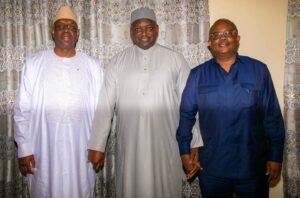 The visit carries regional and diplomatic significance. As a former president of Senegal, Sall’s campaign places the Senegambia region within a wider conversation about Africa’s representation in global governance, multilateral leadership and the reform of international institutions.
For The Gambia, President Barrow’s reception of Sall reflects the value of neighborly consultation and regional solidarity. Senegal and The Gambia share deep historical, cultural, security and economic ties, making high-level dialogue between leaders of both countries important beyond ceremonial diplomacy.
Sall’s message on African unity also comes at a time when the continent continues to demand stronger influence in global decision-making. Issues such as peace and security, human rights, climate resilience, migration, debt, youth unemployment and sustainable development remain central to Africa’s international agenda.
A Senegalese candidacy for the U.N.’s highest administrative position may therefore be viewed not only as an individual ambition, but also as an opportunity to elevate African priorities on the global stage.
However, such a bid will require careful diplomacy, broad consensus and trust across regions. The U.N. secretary-general is expected to serve the world, not a single country or continent. For that reason, Sall’s campaign must speak to Africa’s aspirations while also presenting a credible global vision.
For ordinary citizens in West Africa, the deeper question is whether African leadership at the highest international level can help bring greater attention to the real challenges facing communities — from conflict prevention and economic insecurity to education, food systems and youth opportunity.
The Barrow-Sall meeting therefore represents more than political courtesy. It is part of a larger test of whether African states can coordinate around shared interests while strengthening their voice in international institutions.
As Sall continues his consultations, his visit to Banjul underscores the role of regional relationships in global diplomacy. It also reminds African leaders that unity, when guided by public interest, can strengthen the continent’s ability to negotiate, advocate and lead.
About The Author