Faye receives Macky Sall over UN Secretary-General bid
By Mutiu Olawuyi
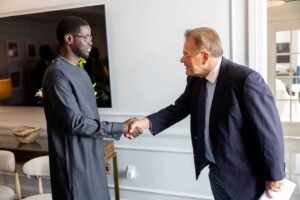
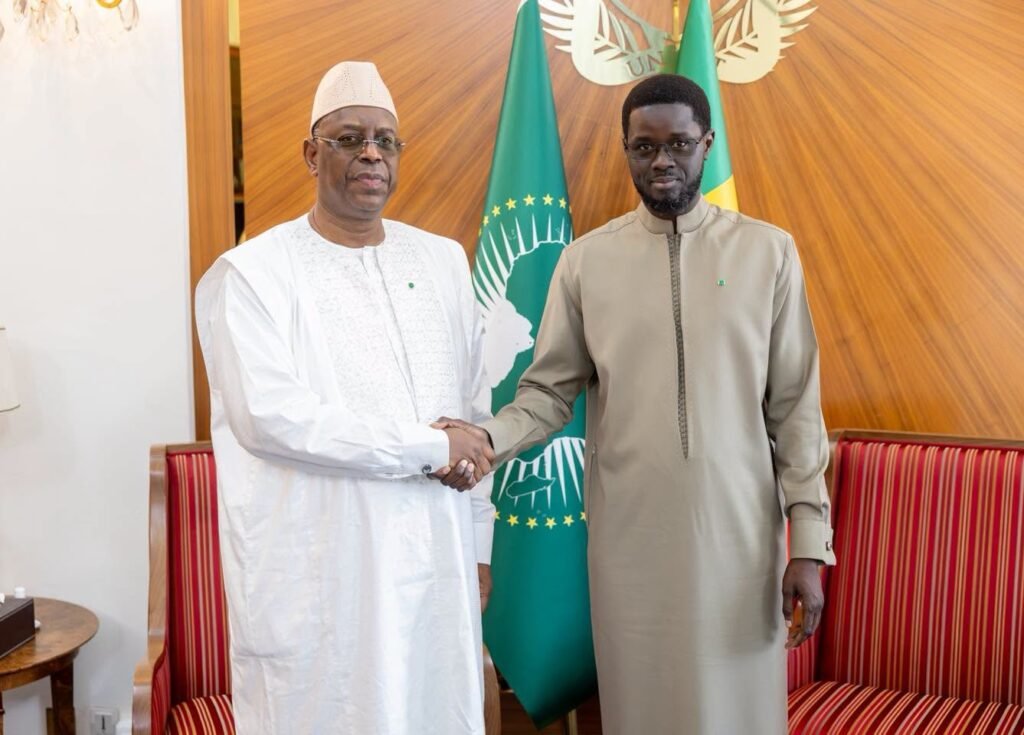
President Bassirou Diomaye Faye received former Senegalese President Macky Sall at the presidential palace on Friday, in a meeting centered on Sall’s candidacy for the position of United Nations secretary-general.
According to official information, Sall came in person to inform the head of state of his candidacy and to seek Senegal’s support as the selection process for the next U.N. secretary-general continues.
The U.N. selection process was formally launched on Nov. 25, 2025, when member states were invited to nominate candidates to succeed current Secretary-General António Guterres, whose term ends Dec. 31, 2026. The Security Council recommends a candidate to the General Assembly, which then appoints the secretary-general.
The United Nations’ official selection page lists a joint letter regarding the nomination of Macky Sall by Burundi on March 2, 2026, confirming his candidacy in the process.
The meeting between Faye and Sall carried significance beyond the candidacy itself. It brought together a sitting president and his predecessor at a time when Senegal’s political atmosphere remains sensitive, and when questions of state continuity, institutional respect and national interest continue to matter.
For Senegal, the image of the two leaders meeting formally is an important democratic signal. Political alternation does not erase the state. Differences in political history, ideology and leadership style do not cancel the responsibility of leaders to preserve institutional dignity.
The presidency described the meeting as a symbol of the continuity of the state and the permanence of institutions beyond political transitions. That message is important in a democracy where power must change hands without destroying national memory.
Faye listened to Sall with courtesy and attention, according to the official account. Sall, for his part, committed to keeping the president informed at each stage of the U.N. selection process.
If Senegal decides to support Sall’s candidacy, the move would raise questions beyond domestic politics. A Senegalese candidacy for the U.N.’s top diplomatic post would place the country again in an international conversation about Africa’s role in global governance, multilateral reform and representation at the highest levels of the world system.
At the same time, such a candidacy will require careful national handling. Macky Sall remains a major figure in Senegalese politics, but also a former president whose tenure continues to generate strong opinions. Supporting a former head of state for a global role should therefore be framed not as a partisan endorsement, but as a matter of national diplomacy, if the government chooses to proceed.
For many Senegalese, the most important lesson from the meeting may be institutional maturity. A republic grows stronger when former and current leaders can meet without chaos, speak without humiliation and place the national interest above personal rivalry.
The meeting also reminds political actors that public office is temporary, but the state continues. Today’s president becomes tomorrow’s former president. Today’s opposition may become tomorrow’s government. That is why democratic culture must be protected in every season.
Senegal’s international reputation has long rested on its tradition of political dialogue, peaceful transitions and diplomatic engagement. Moments like this can either reinforce that reputation or expose its fragility.
For now, the Faye-Sall meeting offers an opportunity to show that political competition need not become institutional hostility. Senegal can disagree internally while still defending its dignity externally.
The coming months will show whether Sall’s candidacy gains broader diplomatic momentum. But whatever the outcome, the meeting at the palace has already carried a message: beyond political alternations, the republic must remain larger than the men who lead it.
About The Author