Chinese Embassy hosts China-Gambia Bantaba on women’s empowerment
By Ebrima Fadera
Edited by Mutiu Olawuyi
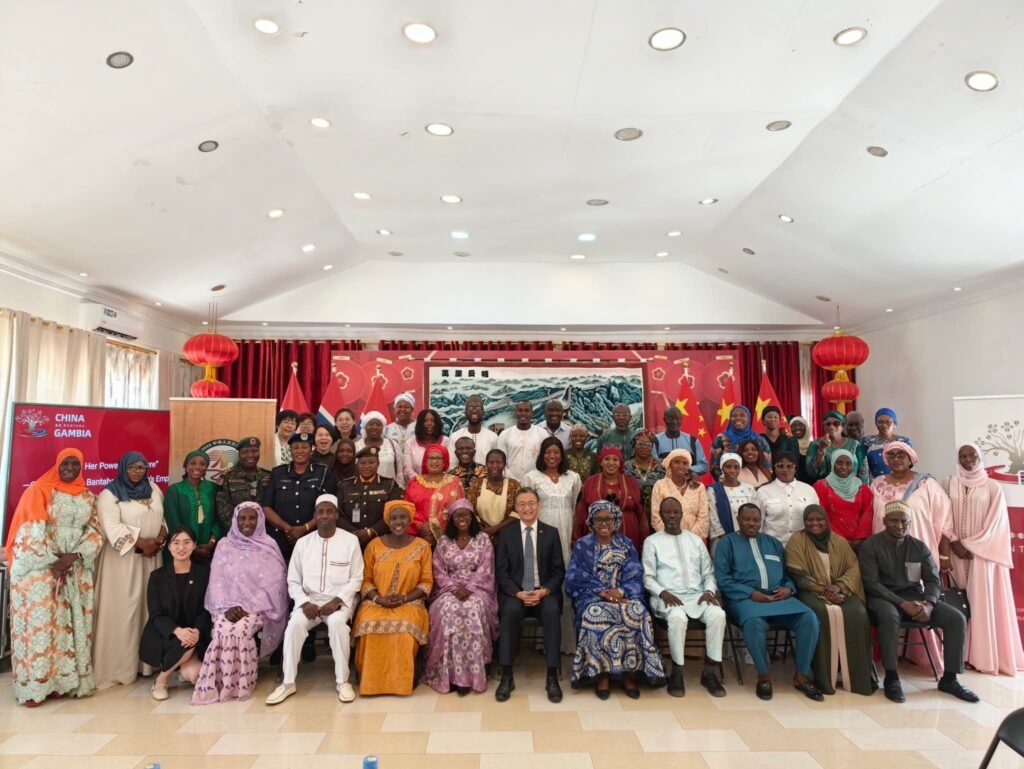
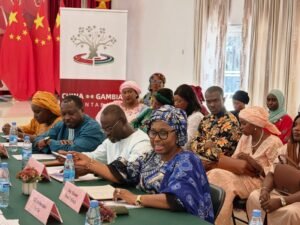
The Chinese Embassy in The Gambia hosted a China-Gambia Bantaba on Women’s Empowerment on July 17, bringing together Gambian officials, women delegates, Chinese representatives and exchange program participants to discuss gender advancement, friendship and cooperation between the two countries.
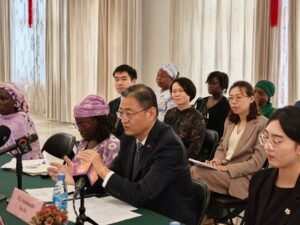 The event was attended by Chinese Ambassador to The Gambia Liu Jin, Minister of Gender, Children and Social Welfare Fatou S. Kinteh, and the ministry’s Permanent Secretary, Ambassador Habib T.B. Jarra.
Gambian women delegates who recently returned from exchange programs in China also participated in the discussion, sharing their experiences and reflecting on how lessons learned from China could support women’s empowerment initiatives in The Gambia.
Female representatives from the Confucius Institute at the University of The Gambia and members of the Chinese Medical Team also attended the event.
Ambassador Liu highlighted China’s achievements in women’s development and said China continues to support global efforts to advance the rights, dignity and participation of women.
He noted that China has upheld the spirit of the Beijing Declaration and Platform for Action, a landmark global framework for women’s rights and gender equality. He added that China remains committed to deepening international cooperation and strengthening experience-sharing with The Gambia.
 According to the embassy, China has invited multiple groups from women’s organizations in The Gambia to visit China this year for exchanges. Liu said the embassy is ready to continue working with Gambian partners to promote mutual learning and “write a new chapter” for women’s development in both countries.
The Gambian participants expressed appreciation for China’s support and shared insights from their visits to China. They said the exchange programs exposed them to ideas, systems and experiences that could help strengthen women’s participation in development, leadership, skills-building and community advancement in The Gambia.
They also expressed hope for stronger exchanges between the two countries, saying they would apply the knowledge and observations gained from China to support women’s causes at home.
The Bantaba carried significance beyond diplomacy. In Gambian tradition, a bantaba is a space for community dialogue, listening and problem-solving. By framing the event around women’s empowerment, the embassy and the Gambian partners created a platform where international cooperation was connected to local development needs.
For Gambian women, empowerment cannot remain only a conference theme. It must translate into access to education, business financing, health services, leadership opportunities, legal protection, technology training and participation in decision-making.
The presence of the Ministry of Gender, Children and Social Welfare gave the dialogue public policy importance. It also underscored the need for partnerships that strengthen institutions while directly supporting women and girls in communities.
Women’s empowerment is central to national development because women are not only beneficiaries of progress; they are builders of families, businesses, farms, classrooms, health systems, markets and communities. When women are supported, societies become more productive, resilient and inclusive.
The event also demonstrated the value of exchange programs when participants return home prepared to share knowledge and serve their communities. International visits become more meaningful when lessons are adapted locally and used to improve lives.
The China-Gambia Bantaba therefore stood as both a celebration of friendship and a call for practical action. Its long-term value will depend on how the ideas discussed are transformed into programs, partnerships and opportunities for Gambian women.
As The Gambia continues to pursue inclusive development, sustained cooperation in women’s empowerment can help expand leadership, reduce inequality and give more women the tools to shape the country’s future.
About The Author