Boucar Diouf leaves Social Action Directorate with gratitude, pledge to continue serving Senegal
By Mutiu Olawuyi
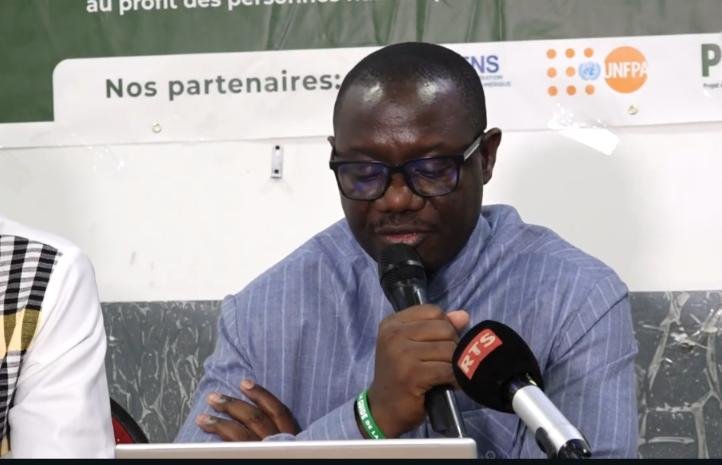
Former Director General of Social Action Boucar Diouf has expressed deep gratitude to Senegalese authorities, colleagues, partners, party officials and supporters as he leaves his position at the head of the Direction générale de l’Action sociale.
In a farewell statement, Diouf said he was leaving office with a “deep feeling of gratitude,” thanking President Bassirou Diomaye Faye and former Prime Minister Ousmane Sonko for what he described as the “immense trust” placed in him when he was appointed to lead the institution.
“I leave with a clear conscience, a heart full of gratitude and the conviction that I served with loyalty, humility and dedication,” Diouf said.
Diouf described his appointment as a historic moment for Senegal’s social work sector, noting that, for the first time, a social work adviser had risen to lead the Directorate General of Social Action.
“This appointment will remain engraved in the history of the Directorate General of Social Action,” he said. “For the first time, a social work adviser acceded to the head of this institution. It was an immense honor for me and a great pride for the entire family of social workers.”
His statement carried both personal reflection and institutional meaning. For Senegal’s social workers, Diouf’s tenure represented more than a leadership change. It symbolized professional recognition for a field that often works quietly with vulnerable people, families in crisis, persons with disabilities, children, women, elderly citizens and communities needing support.
Diouf said he and his team had a historic responsibility to demonstrate that social workers could lead the institution with competence, commitment and dignity.
“We had a historic responsibility: to demonstrate that social workers were capable of carrying this institution with competence, commitment and dignity,” he said. “We met this challenge together.”
He stressed that the achievements recorded during his time in office were not the work of one person, but the result of collective effort.
“Every advance, every result, every hope restored is the fruit of collective work,” Diouf said.
The former director general thanked his collaborators, partners, actors in the social sector and all those who believed in the vision pursued under his leadership.
“To my collaborators, partners, actors of the social sector and all the people who believed in our vision, I simply say: thank you,” he said.
 Diouf also extended appreciation to political leaders, militants and supporters in the Fatick department, including cell leaders, communal coordinators and movement coordinators. He gave special recognition to supporters from his commune, Mbellacadiao.
“I give a special mention to those of my commune, Mbellacadiao,” he said.
His message also acknowledged family members, friends and others who supported and encouraged him during what he called a “beautiful adventure.”
The tone of Diouf’s statement suggested a departure without bitterness. Instead, it emphasized service, humility, gratitude and continuity.
“The service of the nation never stops,” he said. “Functions pass, but commitment remains.”
That sentence captured the wider meaning of his farewell. Public office is temporary, but national service should not end with a title. For social workers, especially, leadership is not only measured by administrative authority. It is measured by the lives touched, the vulnerable protected and the dignity restored.
Diouf’s departure comes at a time when Senegal’s social protection system faces important demands. Families affected by poverty, persons with disabilities seeking access to services, children in need of protection, elderly citizens, and communities facing social hardship all require institutions that are responsive, humane and efficient.
For that reason, the Directorate General of Social Action remains one of the most important public institutions in the country’s human development architecture. Its work connects government policy to the daily struggles of citizens who often depend on social services for survival, protection and reintegration.
Diouf’s farewell message therefore raises a broader national question: how can Senegal continue to strengthen social action as a professional, respected and well-resourced pillar of governance?
His tenure appears to have strengthened the morale of social workers who saw one of their own rise to the top of the institution. The challenge ahead is to preserve that recognition and ensure that social work remains central to public policy, not treated as a secondary function.
In closing, Diouf prayed for Senegal and expressed appreciation from the heart.
“May God bless Senegal and protect our dear country,” he said. “Thank you from the bottom of my heart.”
About The Author