Editorial: The Gambia must win, regardless of who wins the election
By Mutiu Olawuyi | Editor, Senegambia Times
The December 2026 presidential election must be more than a contest for State House. It must be an examination of The Gambia’s democratic maturity, institutional integrity and collective commitment to national prosperity.
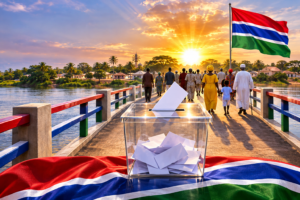
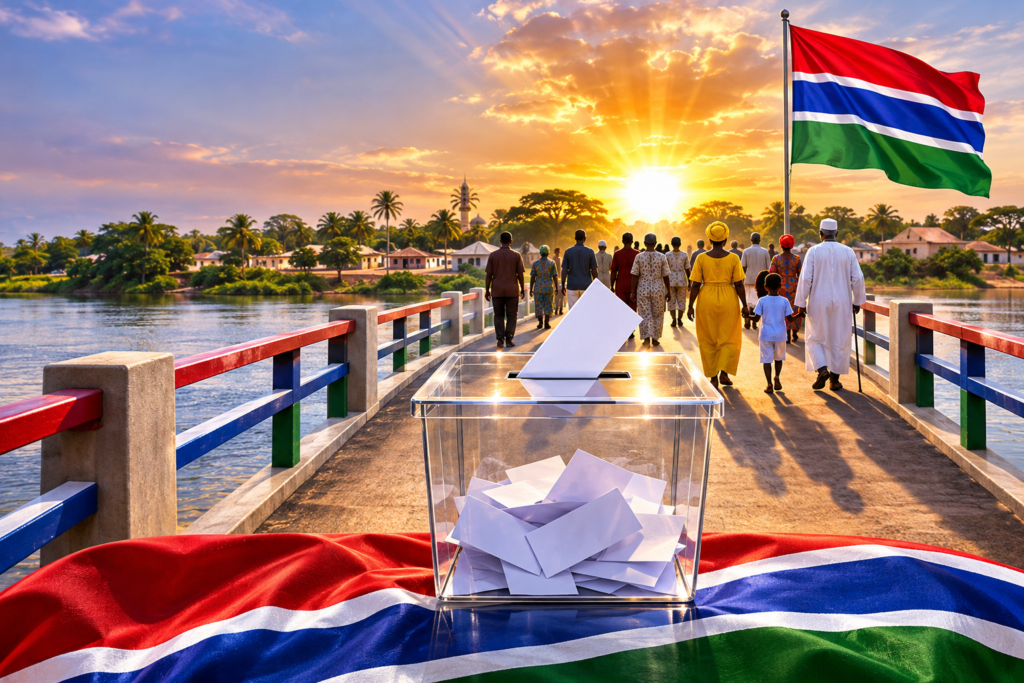
On Saturday, Dec. 5, 2026, Gambians will return to the polls to determine who will lead their country for the next five years. Yet, the most consequential question confronting the nation is not simply who will occupy State House. It is what kind of country Gambians will wake up to after the election.
Will it be a nation strengthened by democratic competition or weakened by political hostility? A society united by shared aspirations or divided by partisan loyalties? A republic where public office remains a responsibility to serve rather than a privilege to possess?
These questions transcend the political ambitions of President Adama Barrow, Ousainou Darboe, Talib Ahmed Bensouda and every other presidential contender.
Presidents come and go. Political parties rise and fall. The Gambia must endure.
Beyond the ballot: The unfinished revolution of 2016
Nearly a decade ago, Gambians demonstrated to the world that even a small nation could achieve an extraordinary democratic transformation. Through the ballot box, they ended Yahya Jammeh’s 22-year rule and opened a new chapter in their national history.
The democratic transition of 2016 was not merely a rejection of a political administration. It expressed aspirations for accountable leadership, constitutional governance, human dignity, institutional independence and economic opportunity.
Ten years later, the country has an opportunity to examine how far those aspirations have been fulfilled.
Democracy cannot be considered complete simply because elections are conducted periodically. Its quality must also be assessed through the independence of institutions, protection of fundamental rights, accountability of public officials and improvement of citizens’ living conditions.
Changing a government is an electoral achievement. Changing the conditions that undermine human dignity is a developmental achievement.
The Gambia deserves both democratic freedom and meaningful development.
A presidency is a responsibility, not a possession
The Independent Electoral Commission has cleared President Barrow to seek a third term under the existing constitutional framework. His candidacy has nevertheless renewed debate about presidential term limits and the unfinished constitutional reform process.
The distinction between constitutional eligibility and broader democratic expectations deserves serious public examination.
Barrow has defended his candidacy on the grounds that Gambians should determine who governs them. Critics, meanwhile, have questioned his pursuit of another term in light of earlier commitments and the country’s democratic transition.
These competing perspectives deserve examination through facts, constitutional provisions and respectful public debate rather than personal attacks.
The constitutional reform question extends beyond Barrow. It concerns the kind of institutional safeguards that should govern every future president, regardless of political affiliation.
A constitution should protect a republic from the excesses of power rather than depend entirely on the personal restraint of those exercising it.
Similarly, opposition leadership should be examined beyond its ability to defeat an incumbent. Democratic alternatives require credible economic plans, institutional reform proposals, competent leadership and transparent commitments to accountability.
The legitimate pursuit of political power carries an obligation to explain how that power will improve the lives of citizens.
Poverty does not recognize party colors
An unemployed Gambian does not become employed because a favored political party wins an election. A hungry child cannot survive on campaign slogans. A struggling farmer cannot irrigate a field with political promises. A mother facing a medical emergency needs a functioning health facility, not a partisan explanation.
The everyday realities of Gambian families constitute the most meaningful agenda for the election.
According to recent figures reported by Deutsche Welle, the World Bank projects economic growth of 5.3% in 2026, while extreme poverty is expected to remain at approximately 21%. The 2025 Labour Force Survey also indicates that a substantial proportion of young people are neither employed nor participating in education or training.
Behind these statistics are human beings whose aspirations deserve attention beyond the campaign season.
There are graduates searching for opportunities, families struggling with rising living costs, farmers seeking reliable markets, entrepreneurs confronting financial constraints and young people contemplating dangerous migration routes because opportunities at home appear insufficient.
Economic growth matters, but its distribution matters equally. National development cannot be adequately understood through macroeconomic figures alone.
The public debate surrounding the election should therefore provide meaningful answers to questions such as:
- How will sustainable employment opportunities be created for young Gambians?
- What practical measures will improve food security and household purchasing power?
- How will affordable and reliable health care reach underserved communities?
- What strategies will strengthen education, vocational training and entrepreneurship?
- How will public borrowing, expenditure and national resources be managed transparently?
- What institutional safeguards will protect citizens against corruption and abuse of authority?
These are substantive questions applicable to every presidential candidate, irrespective of party affiliation.
Political popularity and the capacity to govern effectively are not necessarily the same thing.
Peace must never become a substitute for justice
On Nov. 16, presidential candidates signed a peace pact under the auspices of the Independent Electoral Commission, committing themselves to tolerance, nonviolence and responsible electoral conduct.
This commitment is important, particularly given The Gambia’s political history. However, peace cannot be sustained through signatures and ceremonial declarations alone.
Electoral peace requires fairness.
A peaceful election is not merely one without physical violence. It is one in which citizens can express their political preferences without fear, journalists can investigate without intimidation, candidates can campaign under equitable conditions and electoral institutions can perform their responsibilities independently.
Peace must not be confused with silence. Legitimate criticism is not necessarily hostility. Political disagreement is not disloyalty. Demanding electoral accountability is not an attack on national stability.
Conversely, legitimate grievances do not justify violence, intimidation, destruction of property or attacks against fellow citizens.
A credible democratic process provides lawful mechanisms for resolving disputes while protecting freedom of expression and peaceful political participation.
Justice and peace are not competing objectives. Each strengthens the other.
The enormous responsibility of the electoral commission
The Independent Electoral Commission faces a responsibility extending beyond the administrative organization of the election.
With more than 1.14 million registered voters, the commission must safeguard public confidence in a process whose consequences will shape The Gambia’s political and economic future.
The IEC has indicated that preparations are underway to deliver a transparent, inclusive and credible election. Those assurances will ultimately be measured against its performance.
Transparent electoral procedures, accurate counting, impartial administration, accessible information and timely communication of results are essential to public confidence.
Where legitimate objections arise, citizens and political parties should have access to effective mechanisms for addressing them.
The security services also have an indispensable responsibility. Their institutional loyalty belongs to the republic and its constitutional order, not to an individual politician or political organization.
Every citizen deserves equal protection, irrespective of political affiliation.
Similarly, domestic and international election observers must operate independently, documenting both achievements and shortcomings without allowing diplomatic considerations to overshadow electoral integrity.
The credibility of the ballot is fundamental to the legitimacy of the government that emerges from it.
The media must illuminate, not inflame
Gambian journalists, broadcasters, editors and digital content creators also face a defining professional responsibility.
An election season can become a marketplace of misinformation, manipulated images, fabricated accusations, selective reporting and inflammatory rhetoric.
The media must resist becoming an unofficial communication department for any political organization.
Constructive restorative journalism does not mean avoiding uncomfortable truths or manufacturing positive narratives. It means exposing problems accurately, examining their underlying causes, interrogating proposed solutions and highlighting credible opportunities for institutional improvement.
Journalists should investigate campaign promises, verify controversial claims, scrutinize party manifestos and provide citizens with reliable information.
They should distinguish allegations from established facts and avoid presenting speculation as evidence.
They must also recognize that sensational headlines and inflammatory commentary can impose social costs far beyond the temporary attention they generate.
The responsibility of journalism during an election is not to manufacture political winners. It is to enable the public to understand the choices before it.
A newsroom that sacrifices truth for partisan loyalty undermines the very democracy it claims to defend.
Ethnicity and religion must never become political weapons
The Gambia’s cultural, ethnic and religious diversity is part of its national identity.
Political competition should never transform that diversity into an instrument of hostility.
Gambians have lived, traded, studied, worshipped and built families across ethnic and political boundaries for generations. Those relationships are far older and more enduring than contemporary political alliances.
A Mandinka, Wolof, Fula, Jola, Serahule, Serer, Aku or member of any other community should enjoy the same citizenship, dignity and constitutional protection.
Likewise, Muslims, Christians and people of other beliefs share a common national home.
No political victory is worth the destruction of relationships that communities have built over generations.
Political organizations are temporary institutions within a permanent national community. Their disagreements must never be allowed to become inherited grievances between families and ethnic groups.
The election also matters to Senegal and West Africa
The Gambia’s democratic stability carries significance beyond its geographical borders.
Its relationship with Senegal is deeply rooted in shared cultures, family connections, trade, transportation and regional security.
Political instability in either country can affect cross-border commerce, migration, investment and the livelihoods of communities throughout the Senegambian region.
ECOWAS and other international partners have expressed support for a credible and peaceful Gambian election. Their contributions can strengthen electoral processes, but the ownership of Gambian democracy ultimately belongs to Gambians.
International solidarity should reinforce national institutions without replacing their responsibilities.
A credible election would contribute to the wider regional experience of resolving political competition through democratic institutions rather than instability.
The real test begins after Dec. 5
Election day will eventually pass. Campaign vehicles will disappear from the streets. Political rallies will end. Posters will fade. The responsibilities of governing will remain.
The successful candidate will inherit responsibility for all Gambians, including those who opposed them.
Electoral victory does not eliminate the constitutional rights of political minorities. Opposition supporters do not lose their citizenship because their preferred candidate loses an election.
Likewise, unsuccessful candidates retain legitimate roles in democratic debate, public accountability and national development.
The post-election period must therefore provide space for institutional cooperation, lawful dispute resolution and national reconciliation.
Reconciliation does not mean abandoning accountability. Nor does accepting an electoral outcome require ignoring substantiated irregularities.
Rather, democratic maturity requires that grievances be examined through credible institutions, that lawful remedies remain accessible and that disagreements do not escalate into collective hostility.
The next administration’s performance will ultimately be assessed not by the enthusiasm of its victory celebrations but by its ability to deliver effective governance.
A national victory greater than any political victory
There is a profound difference between winning an election and building a nation.
An election produces a government. Nation-building requires justice, institutional integrity, productive economic policies, inclusive development and collective responsibility.
The December 2026 presidential election offers The Gambia another opportunity to consolidate the democratic transition that began in 2016 while confronting the economic and institutional challenges that remain unresolved.
It is an opportunity to demonstrate that political competition can coexist with mutual respect, that accountability can coexist with stability and that diversity can coexist with national unity.
The presidency is an important institution, but The Gambia is greater than any president.
Political parties are important vehicles of democratic participation, but The Gambia is greater than any political party.
The ballot is a powerful instrument of citizenship, but the enduring purpose of democracy is the welfare and dignity of the people.
On Dec. 5, a presidential candidate may win the election.
The greater achievement will be a credible process, a respected electorate, preserved national peace and a government capable of serving citizens without discrimination.
Whatever the electoral outcome, The Gambia itself must not lose.
About The Author