Senegal launches CFA 3.53 billion high school project in Dimboli
By Mutiu Olawuyi
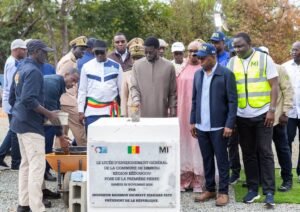
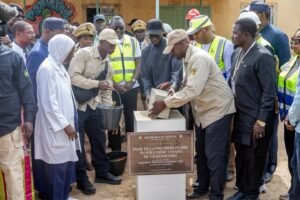
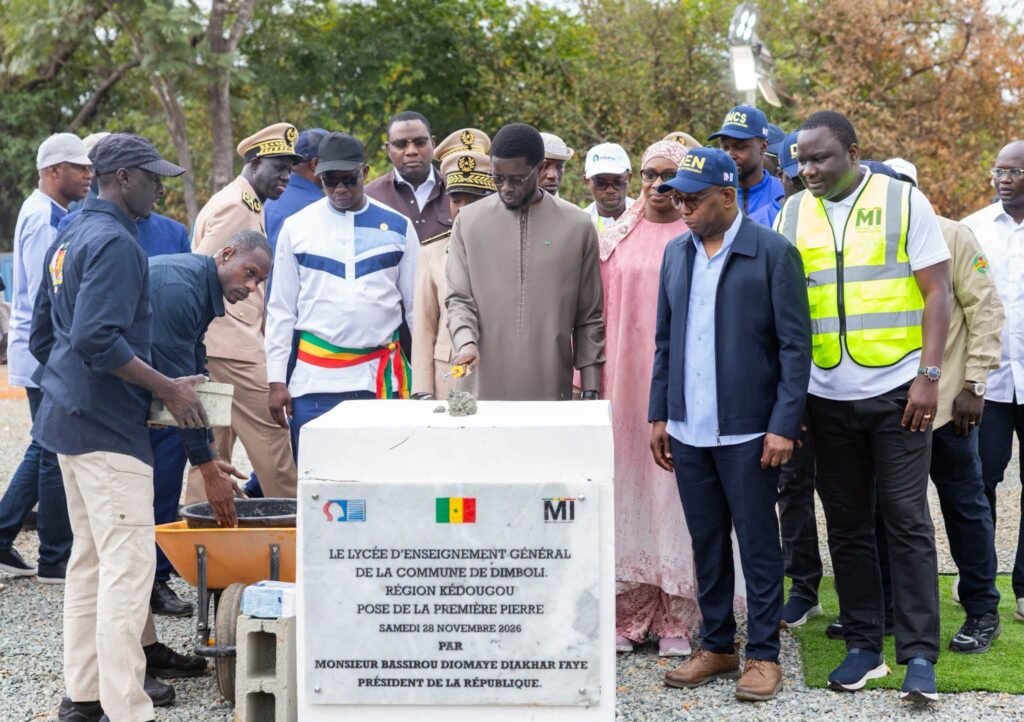
KÉDOUGOU, Senegal — Senegal has taken another step toward reducing regional educational inequalities as President Bassirou Diomaye Faye launched construction of a modern high school in Dimboli on Saturday, Nov. 28, 2026, during his economic tour of the Kédougou region.
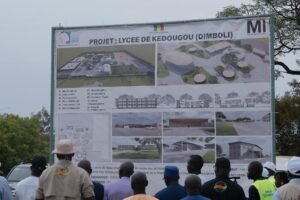
The project, valued at 3.53 billion CFA francs, is expected to be completed within 18 months and will initially accommodate more than 1,500 students, with potential expansion to 6,000 learners.
Designed to meet modern educational standards, the institution will feature classroom blocks, laboratories, an amphitheater, a gymnasium and an outdoor sports facility.
The investment forms part of the government’s broader efforts to expand educational opportunities, reduce territorial inequalities and strengthen human capital development in southeastern Senegal.
Bringing education closer to underserved communities
For families in Dimboli and surrounding communities, the new high school could help address longstanding challenges associated with geographical barriers to secondary education.
Long journeys to educational institutions and the financial burden of sending children to study away from home can undermine school attendance, academic performance and educational continuity.
By bringing secondary education closer to communities, the project could reduce these pressures, improve student retention and expand educational opportunities for children from economically disadvantaged households.
Its laboratories and modern learning facilities also offer opportunities to strengthen science, technology, engineering and mathematics education, potentially preparing students for careers in the region’s emerging industrial economy.
However, infrastructure alone cannot guarantee educational excellence. Recruiting qualified teachers, equipping laboratories, providing adequate learning materials and ensuring affordable access will be equally important.
From mineral wealth to intellectual wealth
 The groundbreaking follows a series of major mining and health care infrastructure initiatives launched during Faye’s economic tour of Kédougou.
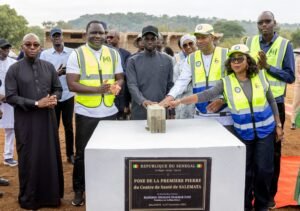
These include the Boto gold mine, the Falémé iron ore project, the Diamba Sud gold project, the Salémata referral health center and the maternal and child health center in Kédougou.
The Dimboli high school adds an educational dimension to the government’s stated ambition of ensuring that mineral exploitation contributes to sustainable social and economic development.
For a resource-producing region, investment in education could help reduce dependence on extractive industries by equipping future generations with transferable skills, entrepreneurial capabilities and professional qualifications.
Developing partnerships between educational institutions, mining companies, technical training centers and local businesses could further strengthen pathways from classrooms to employment.
Such partnerships should, however, prepare students for diverse economic opportunities rather than limiting their aspirations to the mining industry.
Making territorial equity measurable
The project’s potential expansion to 6,000 students reflects an ambition to accommodate growing educational demand across Dimboli and neighboring communities.
Realizing that ambition will require sustained financing, effective school management and additional investments in teaching personnel, sanitation, electricity, digital connectivity and student welfare.
Particular attention to girls’ education, learners with disabilities and children from low-income households could help ensure that the institution contributes meaningfully to educational equity.
Transparent monitoring of construction progress, enrollment, attendance, academic achievement and graduation rates would also enable communities to assess the project’s long-term impact.
The success of the investment should ultimately be measured not merely by the number of classrooms constructed but by the number of young people who complete their education and acquire the skills necessary to build productive and dignified lives.
For Kédougou, sustainable prosperity requires more than extracting gold and iron. It requires developing the intellectual and professional capacity of the people who will inherit the region when its mineral resources are depleted.
Mineral deposits may enrich a generation, but quality education can transform generations.
About The Author