Sonko presses Faye to let voters resolve political standoff
By Mutiu Olawuyi |
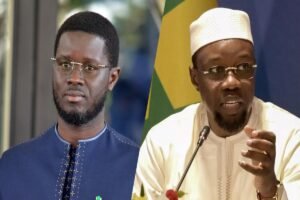
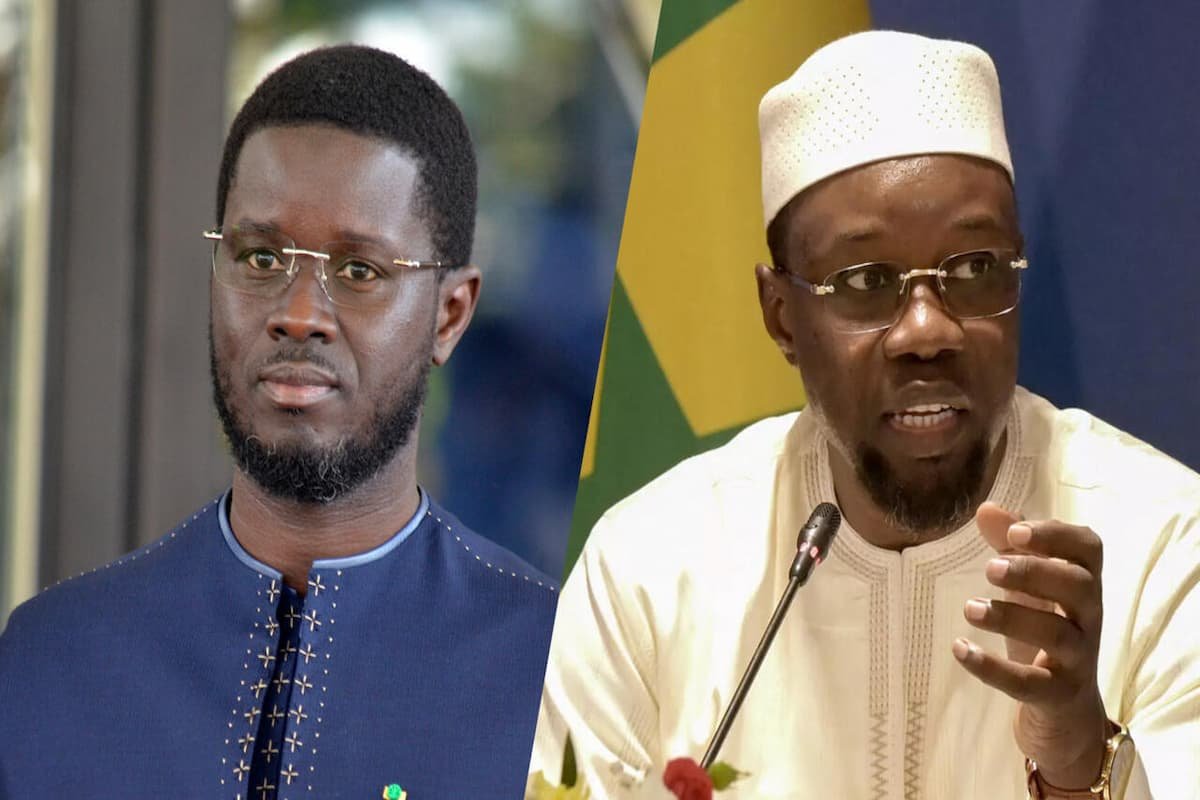
DAKAR, Senegal — Senegal’s deepening political and budgetary standoff has taken a new turn as National Assembly Speaker Ousmane Sonko challenged President Bassirou Diomaye Faye to resign or dissolve parliament, arguing that voters should determine the country’s political direction amid widening divisions between the executive and legislative branches.
Speaking in a video address to supporters of PASTEF-Les Patriotes on Thursday, Nov. 26, 2026, Sonko proposed a return to the polls as a means of resolving the confrontation between the presidential and parliamentary majorities.
The former prime minister specifically called on Faye to consider dissolving the National Assembly beginning Dec. 2, when the two-year constitutional restriction on dissolving the current legislature expires.
Sonko said that, if the decision were his, he would dissolve parliament on Dec. 2 and allow Senegalese voters to settle the dispute through fresh legislative elections within three months, AFP reported.
He also presented presidential resignation as another possible political solution, arguing that the executive and parliamentary majorities no longer share the same political orientation.
Former allies, competing mandates
The confrontation marks another chapter in the deteriorating relationship between two political figures who rose to power together in 2024.
Faye dismissed Sonko as prime minister in May 2026. Sonko subsequently became speaker of the National Assembly while retaining leadership of PASTEF, which secured 130 of the legislature’s 165 seats in the November 2024 parliamentary elections.
Their political differences have since developed into an institutional confrontation, particularly over the management of public finances.
On Nov. 19, Faye implemented the revised 2026 budget by decree after lawmakers rejected it. The National Assembly subsequently adopted a resolution condemning the decision by a vote of 128 to nine.
While parliamentary critics have raised concerns about fiscal transparency and debt assumptions, Faye has defended his intervention as necessary to ensure the continued functioning of state institutions, according to Reuters.
The dispute has introduced further uncertainty surrounding a proposed $2.2 billion International Monetary Fund support program intended to assist Senegal in addressing its substantial public debt challenges.
The financing arrangement has yet to receive final approval from the IMF’s executive board.
What Senegal’s Constitution permits
Article 87 of Senegal’s Constitution provides a mechanism through which the president may dissolve the National Assembly after consulting the prime minister and the speaker of parliament.
However, dissolution is prohibited during the first two years of a legislative term.
With the current legislature having been installed on Dec. 2, 2024, the president is expected to regain that constitutional prerogative on Dec. 2, 2026.
Should Faye exercise this authority, parliamentary elections would be required within 60 to 90 days of the publication of the dissolution decree.
A dissolution in early December could therefore lead to fresh legislative elections in early 2027.
Sonko’s declaration does not, however, establish that such elections will necessarily take place. Nor does his proposed choice between resignation and dissolution constitute a constitutional requirement imposed on the president.
The legal possibility of dissolving parliament must be distinguished from the political necessity of doing so.
Protecting citizens from political uncertainty
Beyond the rivalry between Faye and Sonko, the confrontation raises concerns about Senegal’s ability to maintain effective governance, restore fiscal credibility and protect citizens from the economic consequences of prolonged institutional disagreement.
Businesses require predictable economic policies, public institutions need reliable financing, and households depend on uninterrupted essential services.
Whether resolved through elections, constitutional procedures or negotiated institutional arrangements, the dispute has implications extending far beyond the political fortunes of either leader.
Potential avenues for reducing tensions include structured dialogue between the executive and legislature, independent examination of disputed budget assumptions, greater disclosure of public debt information and recourse to competent constitutional institutions where legal interpretations differ.
Such mechanisms would not require either political camp to abandon its convictions. They could, however, help establish a common institutional framework for managing disagreements while preserving public accountability.
Sonko also urged his supporters to exercise restraint and avoid confrontation, according to media reports, an appeal that carries particular significance amid heightened political tensions.
A test of institutional resilience
As Dec. 2 approaches, attention will increasingly turn to whether Faye chooses to exercise his dissolution powers or pursue another avenue for managing the dispute.
No decision confirming the dissolution of parliament has been established following Sonko’s latest remarks.
For Senegal, the immediate challenge is to ensure that political competition does not undermine democratic institutions, economic recovery or social cohesion.
Elections remain an important democratic mechanism for resolving political differences, but institutional dialogue, constitutional compliance and accountable governance remain equally important between elections.
Ultimately, Senegal’s democratic resilience will be tested not by the absence of disagreement, but by its institutions’ capacity to manage disagreement peacefully, lawfully and without compromising the welfare of citizens.
About The Author