Dutch maritime group proposes training center to support Senegalese youth jobs
By Mutiu Olawuyi
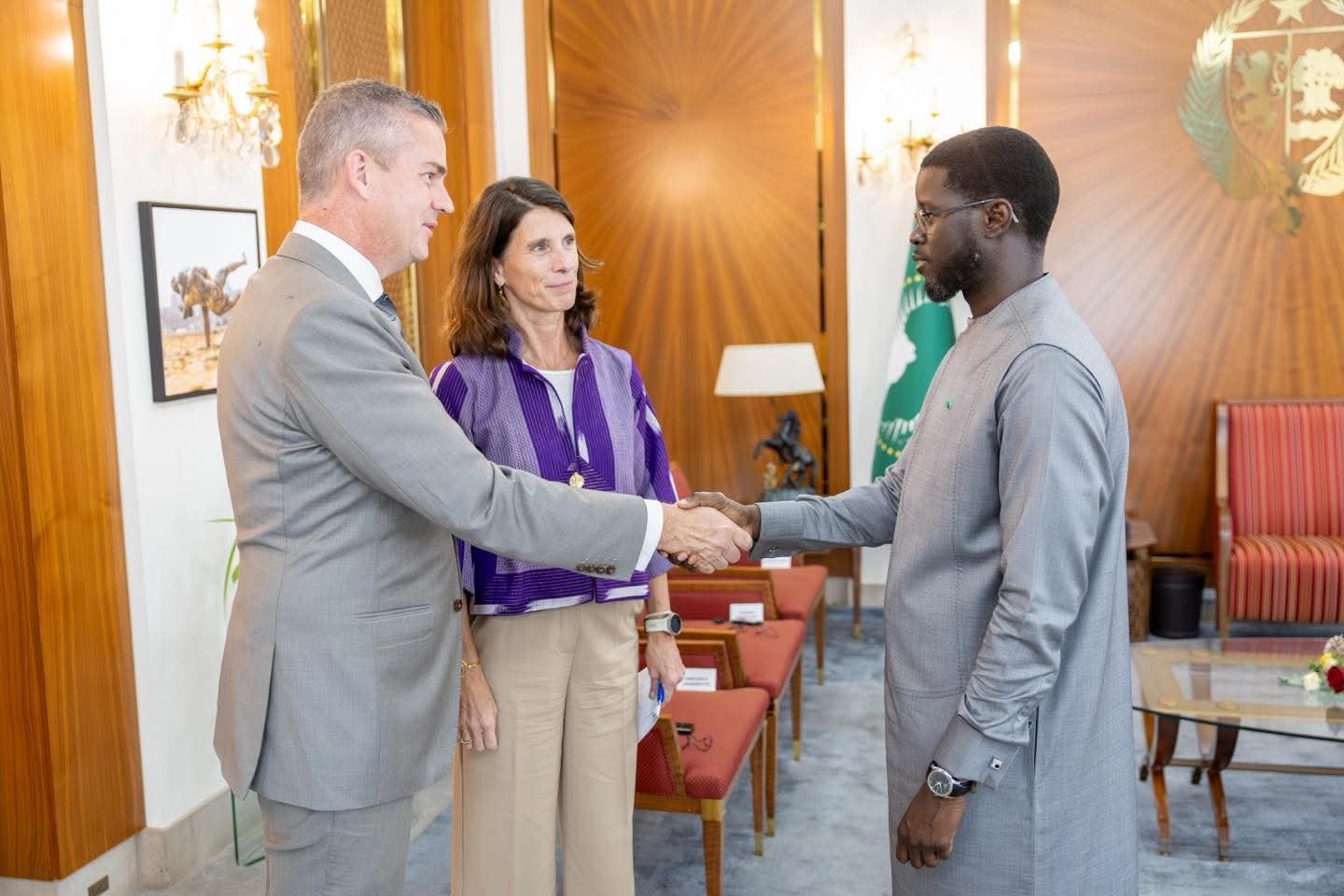
President Bassirou Diomaye Faye has received, today, a delegation from Damen Shipyards Group, a leading Dutch maritime company, for discussions on investment opportunities, shipbuilding capacity and skills development in Senegal’s maritime sector.
The delegation was led by Frederick Vandepitte, Damen’s Group Africa director. Damen Shipyards Group is a major player in the Dutch shipping industry, with expertise in ship construction, maintenance and repair.
According to the presidency, the discussions focused on strengthening the partnership between Damen Shipyards Group and the Société des Infrastructures de Réparation Navale, known as SIRN, as well as exploring Damen’s wider investment prospects in Senegal.
The meeting placed particular emphasis on developing national maritime capacity through technology sharing, skills transfer, training of qualified human resources and support for major structural projects.
 The Damen delegation also presented a plan to establish a training center dedicated to shipbuilding and ship repair trades. The proposed center is intended to help Senegal build high-level local expertise while expanding employment opportunities for young people.
The initiative comes at a time when Senegal is seeking to strengthen its blue economy, modernize maritime infrastructure and position itself as a stronger player in ship repair, port services, coastal logistics and marine industry development.
For Senegal, a stronger maritime sector can generate jobs, attract investment, support industrial growth and reduce dependence on foreign technical expertise. It can also create opportunities for young people in practical and specialized fields such as welding, mechanical engineering, naval maintenance, electrical systems, marine safety, ship design support and port operations.
The proposed training center is therefore significant. It suggests a shift from simple foreign investment to capacity-building investment. If implemented effectively, it could help ensure that Senegalese workers are not only employed in maritime projects but trained to lead, manage and sustain them.
Such partnerships matter because industrial development requires more than infrastructure. It requires human capital. Shipyards, ports and naval repair facilities cannot function at their highest level without skilled technicians, engineers, safety specialists, project managers and maintenance workers.
The partnership with SIRN could also strengthen Senegal’s ability to maintain and repair vessels locally, creating value inside the country and supporting the wider West African maritime economy.
The presidency said the discussions were aligned with the goal of supporting structural projects and building national expertise. This reflects Senegal’s broader ambition to connect investment with youth employment, technical education and long-term industrial sovereignty.
The challenge ahead will be implementation. Senegal must ensure that any future agreement includes clear training targets, local employment commitments, technology transfer, environmental standards and measurable benefits for communities and the national economy.
 For young Senegalese, especially those seeking alternatives to unemployment and irregular migration, the maritime sector can become a serious pathway if training is accessible, practical and linked to real jobs.
The meeting between President Faye and Damen Shipyards Group therefore goes beyond diplomacy. It points to a practical development question: how can Senegal turn its coastal position, ports and maritime assets into skilled employment, industrial growth and national capacity?
If properly structured, the Damen-SIRN partnership could become a model for responsible investment — one that brings capital and technology while helping Senegalese youth acquire the skills needed to build and maintain the country’s maritime future.
About The Author