Senegalese order halts farming by Gambians near border, sparking calls for dialogue
By Ebrima Fadera
Edited by Mutiu Olawuyi
Senegalese local authorities have issued an administrative order suspending the farming of agricultural land reportedly used by Gambians from Missira in Jarra West, raising concern among residents and prompting calls for urgent dialogue between The Gambia and Senegal.
The order, issued by the Sous-Préfet of the Arrondissement of Boghal in Senegal’s Sédhiou region, concerns the suspension of farming activity on a one-hectare agricultural field located in the village of Saré Demba Coumbayel, in the commune of Boghal.
According to the document, the suspension was ordered over the “occupation and exploitation of a land area without administrative authorization.”
The order directs the commander of the local gendarmerie brigade in Boghal, the mayor of the commune of Boghal and the village chief to ensure implementation of the decision.
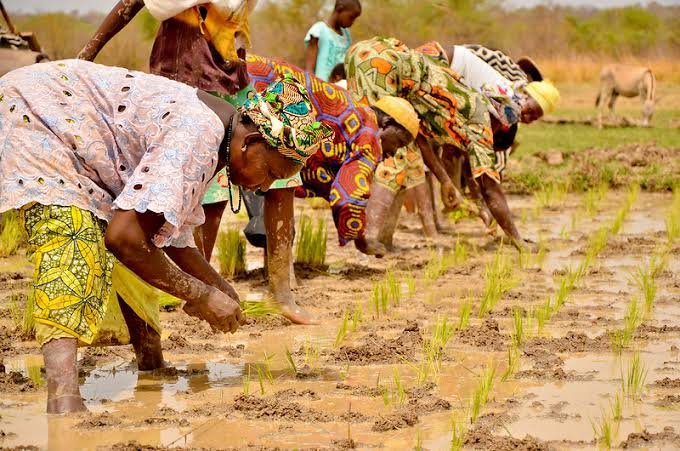
The development has affected Gambians from Missira, Jarra West, who are said to have been farming on the Senegalese side of the border. For many border families, farming is not merely seasonal work. It is food, income, stability and survival.
The matter has already generated reactions from Gambians, with several citizens urging restraint, clarity and diplomatic engagement.
Musa Joof said Senegal has the legal authority to act if the land falls within its territory, but warned that the facts must be clearly established.
“If the territory is in Senegal, then they have all legal authority to take the step,” Joof said. “But if the territory is not part of Senegal, then they have no right.”
He called on authorities from both countries to act quickly.
“All that is needed is for the authorities from both sides to come together and solve the problem amicably without delay,” he said.
Abubakar Sidiq Ceesay described the matter as serious and warned against allowing border tensions to grow.
“I think on a more serious note, Senegal should put an end to these things they are starting,” Ceesay said. “We are too close for issues like this, and border disputes between countries are always very dangerous.”
Modou E. Boye said the development is worrying because of its impact on farmers who depend on the land.
“This is a worrying development for the affected Gambian farmers who depend on these farms for their livelihoods,” Boye said. “We hope the authorities of both The Gambia and Senegal will engage in peaceful dialogue to find a fair and lasting solution that protects the interests of border communities.”
Mustapha Ceesay urged the Gambian government to treat the matter as a national concern and work closely with Senegalese authorities.
“The government should put politics aside and work closely with the Senegalese government to address the situation at hand,” Ceesay said. “Failure to do so could leave us facing a ticking time bomb that may eventually explode, with serious consequences for both countries.”
The reactions reflect a wider concern among Gambians that border-related decisions must be handled carefully, transparently and without delay.
Senegal has the sovereign right to regulate land use within its territory. At the same time, border communities require clear communication, lawful procedures and humane engagement, especially when administrative action affects farming families who depend on land for survival.
The Senegal-Gambia border is not only a line on a map. It is a lived space where communities share family ties, language, markets, farms, religion and culture. When land-use decisions affect such communities, they can easily create misunderstanding if people feel excluded from the process.
That is why this case should not be treated only as a local enforcement matter. It should become an opportunity for structured dialogue between the relevant local authorities in Senegal and The Gambia, traditional leaders, affected farmers and border-management institutions.
The priority should be to clarify the status of the land, determine whether any previous informal arrangements existed, explain the legal requirements for land use, and identify whether affected farmers can regularize their activities or be guided toward lawful alternatives.
If the farmers were operating without authorization, they should be informed of the proper procedures. If they were farming based on long-standing community practice, that reality should also be heard and considered through mediation.
The issue also highlights a wider regional challenge: many border communities depend on agriculture across administrative boundaries, yet land governance is often unclear, undocumented or poorly communicated to ordinary people.
Senegalese and Gambian officials should therefore use this moment to strengthen local border cooperation, improve community sensitization and prevent future disputes. Farmers need to know where they can cultivate, what permits are required, who to consult and how to resolve conflicts without fear or confrontation.
For Missira and Boghal, the best outcome will not come from anger or silence. It will come from dialogue that protects Senegal’s legal authority while also respecting the human dignity and livelihoods of Gambian farming families.
The matter should be handled with calm, transparency and neighborly responsibility. Senegal and The Gambia share more than borders; they share people, communities and a duty to preserve peace.
About The Author