Children shine as Guédiawaye honors social champions, leaders
By Mutiu Olawuyi
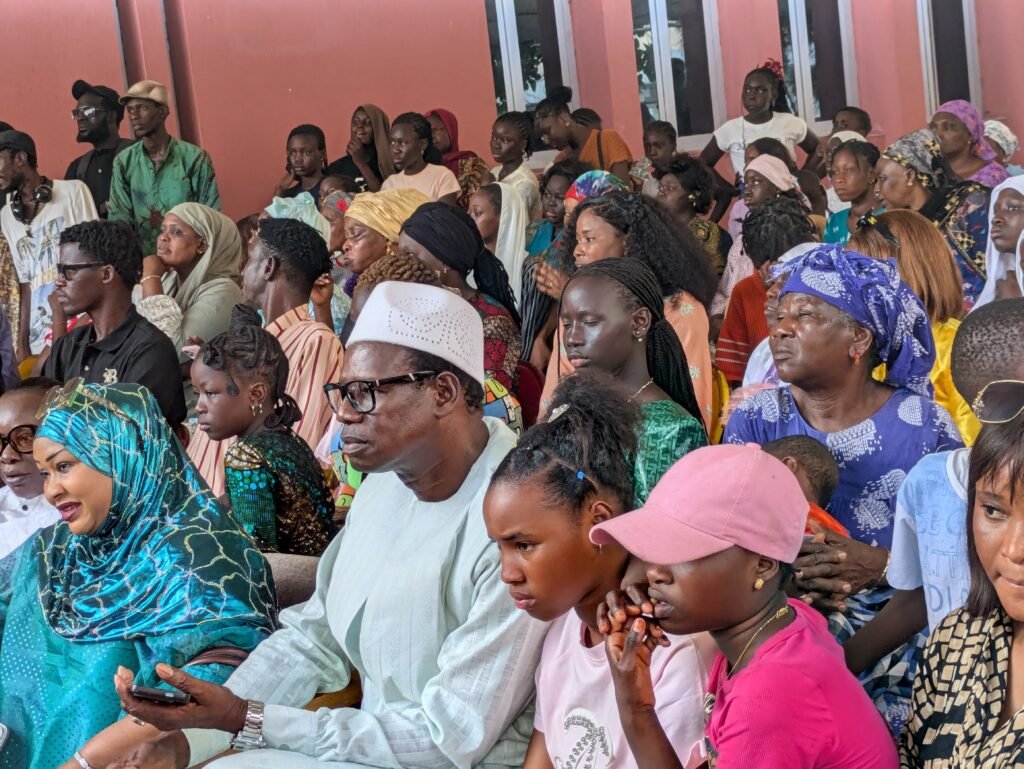
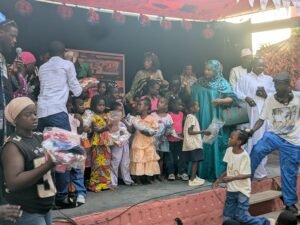
GUÉDIAWAYE, Senegal — Children took center stage in Guédiawaye on Friday, June 19, 2026, as 9.Prod and the Children’s Theatre Club organized a youth public performance at CDEPS Guédiawaye Espace Jeunes Yaakaar, bringing together young performers, artists, social welfare actors, community leaders and humanitarian partners.
Held under the theme “Les enfants ont leurs mots à dire” — “Children have their words to say” — the event created a platform for children to express themselves through cultural dances, music and short stage dramas.
The performances gave the children an opportunity to display confidence, creativity, discipline and cultural pride before parents, officials and community members. Through movement, rhythm, dialogue and theatre, the young performers showed that children are not only to be protected, but also heard, guided and given opportunities to develop their gifts.
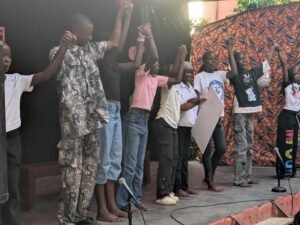 The cultural dances connected the children to heritage. The music brought joy and collective energy. The short dramas allowed them to reflect social realities in a language their peers and elders could understand. Together, the performances turned the event into a living classroom where art became education and children became messengers of renewal.
At the heart of the event was the recognition of Madame Khouma Anta Ndiaye, former director of social welfare in Wakhinane Nimzatt, who was honored as marraine d’honneur in recognition of her service in social promotion, child protection and community reintegration.
Her recognition carried special emotional weight because Ndiaye used the occasion to announce her promotion and departure from Guédiawaye. After years of social action in the community, she is now moving into a broader national responsibility, where she will no longer serve only one locality but will work across all regions of Senegal as a social worker.
All those interviewed at the event praised Ndiaye’s commitment, humility and impact on families, children and vulnerable communities in Guédiawaye. For many, her departure marks the end of a deeply personal chapter in local social welfare work, while her promotion represents a proud moment for the community that benefited from her leadership.
In an exclusive interview, Ndiaye expressed mixed feelings as she reflected on leaving the Guédiawaye community she had served closely.
“I am happy because this promotion is a new responsibility and a new opportunity to serve more people across Senegal,” Ndiaye said. “But I am also emotional because Guédiawaye is not just a place where I worked. It is a community that became part of me.”
She said her years in Wakhinane Nimzatt and Guédiawaye taught her that social work is not only about administration, but about presence, listening and human connection.
“When you work with children, women, families and vulnerable people, you do not only handle files,” she said. “You carry people’s pain, hopes and struggles. That is why leaving this community is not easy for me.”
Ndiaye said she would continue to carry the lessons of Guédiawaye into her new national role.
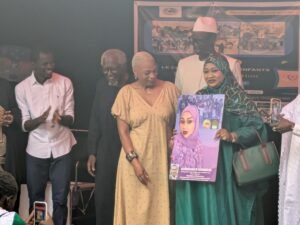 “What I learned here will follow me everywhere,” she added. “Guédiawaye taught me courage, patience and the importance of being close to the people. As I move to serve all regions of Senegal, I will not forget this community.”
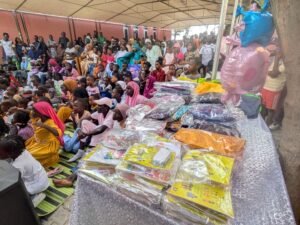
The event also included a major humanitarian outreach led by Ndiaye. On behalf of the Glory of Hope Foundation, she distributed school materials, backpacks, clothes, adult and children’s pads and Pampers to support children, families and vulnerable community members.
Ndiaye said the donation was part of a broader commitment to dignity, education and practical community care.
“When we support children with school materials, we are not only giving them objects,” Ndiaye said. “We are telling them that their education matters, their dignity matters and their future matters.”
She said the inclusion of hygiene products, clothing and other basic materials was deliberate because many families face quiet struggles that are not always visible during public ceremonies.
“Some children cannot learn well when their families are struggling with basic needs,” she said. “Support must touch the real life of the child — school, health, clothing, dignity and family stability.”
Ndiaye also expressed appreciation to Daylight Africa, headed by Sheikh Musa Drammeh, describing it as a founding source of opportunities for her and her community.
“I want to sincerely appreciate Daylight Africa and Sheikh Musa Drammeh,” Ndiaye said. “Many of the opportunities that allow us to serve our community today have their roots in the doors Daylight Africa opened for us.”
She also thanked Dr. Gloria Bent, founder and president of the Glory of Hope Foundation in New York, for supporting humanitarian outreach that reaches communities beyond the United States.
“We are grateful to Dr. Gloria Bent and the Glory of Hope Foundation,” Ndiaye said. “This support shows that the diaspora can play a powerful role in helping children, families and communities at home.”
Ndiaye’s intervention strengthened the practical message of the day: children need more than applause. They need material support, social protection, mentorship, educational tools and adults who believe in their future.
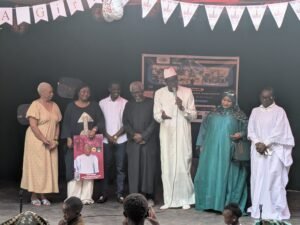 Other awardees included Racine Talla, mayor of Wakhinane Nimzatt Guédiawaye, who was represented by Miss Aissatou, director of CDEPS; Seyba Traoré, cineast and filmmaker; and Seune Séne, actress. Their recognition highlighted the role of local leadership, cinema, theatre and social service in shaping a more caring environment for children and young people.
The event was coordinated by Mamadou Faye, also known as Ngouda, whose work helped bring together children, artists, public actors and community supporters around youth empowerment through culture.
For many attendees, the gathering came at an important time. In communities facing economic pressure, youth unemployment, family instability and rising concern about children’s exposure to harmful influences, theatre can become more than performance. It can become education, therapy, discipline, confidence-building and civic training.
Traditional communicator Mor Seck said the event showed the value of culture as a tool for moral guidance and social healing. He also praised Ndiaye for her service to the community.
“When children are given a stage, they are not only acting,” Seck said. “They are telling us what they see, what they feel and what they need from adults. A community that listens to its children protects its future.”
Speaking about Ndiaye’s departure, Seck said her work would remain visible in the lives she touched.
“Madame Khouma Anta Ndiaye served with heart,” he said. “When a social worker works with love, the community remembers. Her promotion is a blessing, but Guédiawaye will miss her.”
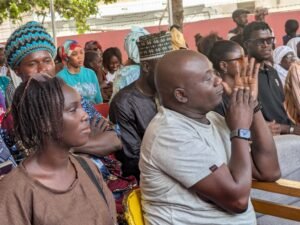 Malick Sy, master of ceremonies from the departmental prefecture, described the event as an example of how local institutions and cultural actors can work together to support children’s development.
“This kind of initiative deserves encouragement because it combines education, culture and social responsibility,” Sy said. “When children are involved in theatre, they learn confidence, discipline and teamwork. These are values that help them in school, in family life and later in society.”
Sy also said Ndiaye’s promotion should be seen as recognition of the kind of field work that often goes unnoticed.
“She has served this community with seriousness and commitment,” he said. “Her new responsibility shows that good local work can become national responsibility.”
 Fatou Ndiaye Kane, a member of Madame Khouma Anta Ndiaye’s staff, said the recognition of social welfare actors was important because the work of child protection and reintegration is often done quietly.
“Many people see the ceremony, but they do not always see the daily work behind social support,” Kane said. “Children need guidance, families need support, and communities need structures that help young people find their place.”
She said Ndiaye’s leadership had shaped the team and strengthened their commitment to vulnerable people.
“Madame Khouma taught us that social work requires patience, compassion and discipline,” Kane said. “We are proud of her promotion, but her departure is emotional for us because she was more than a director. She was a guide.”
The presence of artists and filmmakers also gave the program a strong creative dimension. By honoring figures such as Seyba Traoré and Seune Séne, the organizers emphasized the power of film and theatre to shape public consciousness, challenge harmful behavior and inspire young people.
For Guédiawaye, the event represented a practical model of local youth engagement. Instead of waiting for young people to fall into crisis before intervening, programs like this offer prevention through creativity, mentorship and public participation.
Ndiaye’s role as marraine d’honneur gave the day a strong social welfare foundation. Her career in social service and reintegration linked the performance to a deeper mission: helping vulnerable children and young people regain confidence, dignity and direction.
The humanitarian outreach by Glory of Hope Foundation further showed that empowerment must be both symbolic and material. A theatre stage can build confidence, but a backpack can help a child return to school prepared. A performance can give children voice, but clothing and hygiene support can protect dignity in daily life.
 The event also reinforced the importance of partnership between municipal authorities, cultural organizations, social welfare professionals, educators, families, diaspora foundations and community-based institutions. No single institution can protect and empower children alone. Communities become stronger when public service, culture, humanitarian support and family responsibility work together.
In Wakhinane Nimzatt and the wider Guédiawaye area, youth-centered cultural activities can help reduce idleness, strengthen moral education and provide children with positive role models. They can also help identify talent early and guide young people toward artistic, educational and professional opportunities.
The message from the event was simple but powerful: children should not be treated only as spectators of society. They must be participants in shaping it
As the performances ended, donations were distributed and honorees were recognized, the deeper lesson remained: a child who is heard is less likely to be lost. A child who is guided is more likely to become responsible. A child who is supported is more likely to rise.
The Guédiawaye youth theatre event therefore stood as more than a spectacle. It became a farewell tribute, a children’s platform, a humanitarian outreach and a celebration of service. It was a call to families, institutions, cultural leaders, diaspora partners and community organizers to invest in children not only with words, but with stages, mentorship, protection, material support and opportunity.
About The Author