Dakar hosts commemoration of US 250th anniversary
By Mutiu Olawuyi
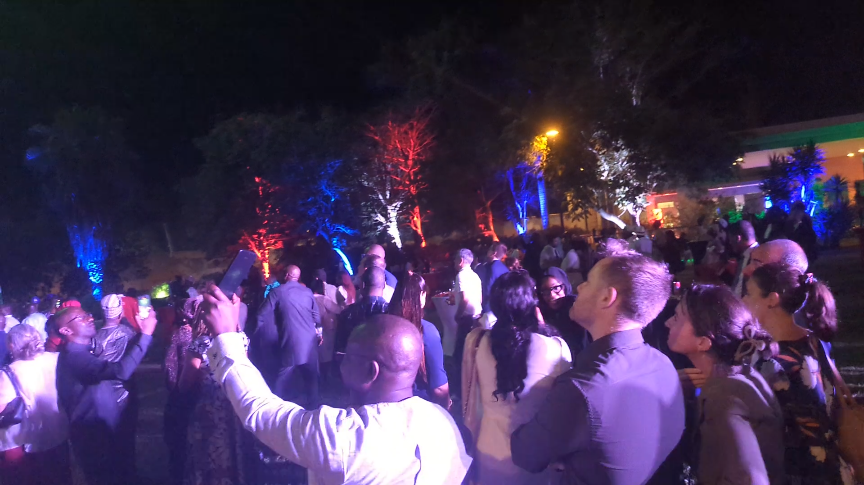
The United States Embassy in Dakar on Wednesday, June 17, 2026, commemorated the 250th anniversary of the United States with a distinguished gathering that brought together diplomats, U.S. citizens, Senegalese government officials, corporate representatives, senior citizens and friends of America in Senegal.
The event was not only a celebration of American history. It was also a reflection on diplomacy, partnership, hospitality and the long-standing relationship between the United States and Senegal, two nations separated by geography but connected by decades of cooperation, mutual respect and shared democratic aspirations.
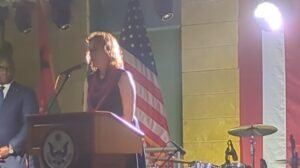
In her opening remarks, the Chargé d’Affaires of the U.S. Embassy, Jennifer Davis Paguada, highlighted America’s global achievements and its enduring role in international diplomacy, development partnerships, education, peacebuilding, innovation and people-to-people engagement.
She noted that the United States has continued to work with partners around the world to promote stability, opportunity and cooperation, while emphasizing that diplomacy remains one of the most important bridges between nations in a complex global environment.
The Chargé d’Affaires also paid warm tribute to Senegal and its people, praising the country’s hospitality, social warmth and distinctive way of life. She described Senegal as a valued partner with a culture of welcome that has made the American community and diplomatic mission feel at home.
Her remarks also reflected on the long diplomatic relationship between the United States and Senegal, a partnership that has grown across several areas, including education, health, security, entrepreneurship, democracy, cultural exchange, youth empowerment and economic development.
For many attendees, the commemoration carried a meaning beyond ceremony. It offered an opportunity to examine how nations preserve their history while renewing their responsibility to the present and future.
At 250 years, the United States stands not only as a country shaped by its founding ideals, but also as a nation still engaged in the unfinished work of democracy, inclusion and global partnership. In Dakar, that story was told through diplomacy, music, conversation, memory and the presence of diverse communities brought together under one roof.
The event also reaffirmed Senegal’s special place in U.S. engagement with West Africa. As one of the region’s most respected diplomatic partners, Senegal has long served as a strategic friend of the United States in areas of regional peace, democratic stability, public health, education and cultural exchange.
Guests at the event described the commemoration as a powerful reminder that diplomacy is not only conducted through official documents and government meetings. It is also built through trust, friendship, hospitality, cultural respect and shared human encounters.
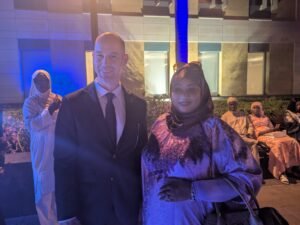 Anta Ndiaye, a senior government official and social worker at Senegal’s Ministry of Family, Social Action and Solidarity, said the event reflected the importance of partnership that touches people’s lives beyond politics.
“This celebration reminds us that diplomatic relations must always serve human dignity,” Ndiayie said. “When countries cooperate in education, health, social protection and community development, ordinary people feel the value of friendship between nations.”
Njie said the relationship between Senegal and the United States has remained meaningful because it continues to create spaces for dialogue, learning and service.
“For us in the social sector, partnership is not abstract,” she added. “It is about families, children, women, vulnerable people and communities. Any friendship between nations becomes stronger when it helps people live with more dignity and opportunity.”
Charlotte Ndiaye Seck, a staff member of AEMO who also attended the commemoration, said the gathering highlighted the strength of cultural connection and mutual respect between Senegalese and Americans.
“What stood out for me was the spirit of openness,” Seck said. “The United States is celebrating 250 years, but here in Dakar, the celebration also became a moment to honor friendship with Senegal and the hospitality of the Senegalese people.”
Seck said the event showed that international relations must continue to include young people, professionals, social workers and community actors, not only diplomats.
“Diplomacy should not stay only inside offices,” she said. “It should reach schools, communities, families and institutions that work every day with people. That is how friendship becomes real.”
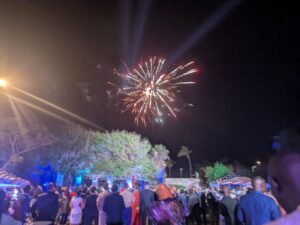 The presence of diplomats, senior citizens, Senegalese officials, corporate representatives and U.S. citizens gave the event a rich civic and international character. It was a gathering of memory and mission — memory of America’s long national journey and mission toward a future of deeper cooperation with Senegal.
The commemoration also came at a time when the world is facing difficult questions around peace, migration, economic inequality, climate pressure, technological change and democratic trust. Against that backdrop, the event served as a reminder that international partnerships must be measured not only by agreements signed, but by problems solved and lives improved.
For Senegalese guests, the celebration also reinforced the value of hospitality as a national strength. Senegal’s culture of teranga, its deeply rooted tradition of welcome, was acknowledged as a living foundation for friendship across borders.
That point mattered. Diplomacy works best when official relations are supported by social trust. The U.S.-Senegal relationship has endured because it has been built not only between governments, but also between students, teachers, entrepreneurs, artists, soldiers, health workers, civil society leaders, families and communities.
As the United States marked 250 years of national life, the Dakar commemoration became both a celebration and a challenge. It celebrated history, achievement and friendship. But it also pointed to the responsibility of nations to continue building partnerships that are fair, respectful and useful to people.
The message of the evening was clear: anniversaries are not only for looking backward. They are opportunities to renew purpose.
 For the United States and Senegal, that purpose remains rooted in dialogue, respect, shared values and cooperation that strengthens both nations.
As guests departed, the commemoration left behind more than photographs and formal speeches. It left a reminder that the best diplomacy is not only powerful; it is human. It listens. It respects. It serves. And when it is done well, it turns history into a bridge and friendship into a force for shared progress.
About The Author