AI race enters new phase as OpenAI, Google, Anthropic and China push market toward new global order
By Mutiu Olawuyi
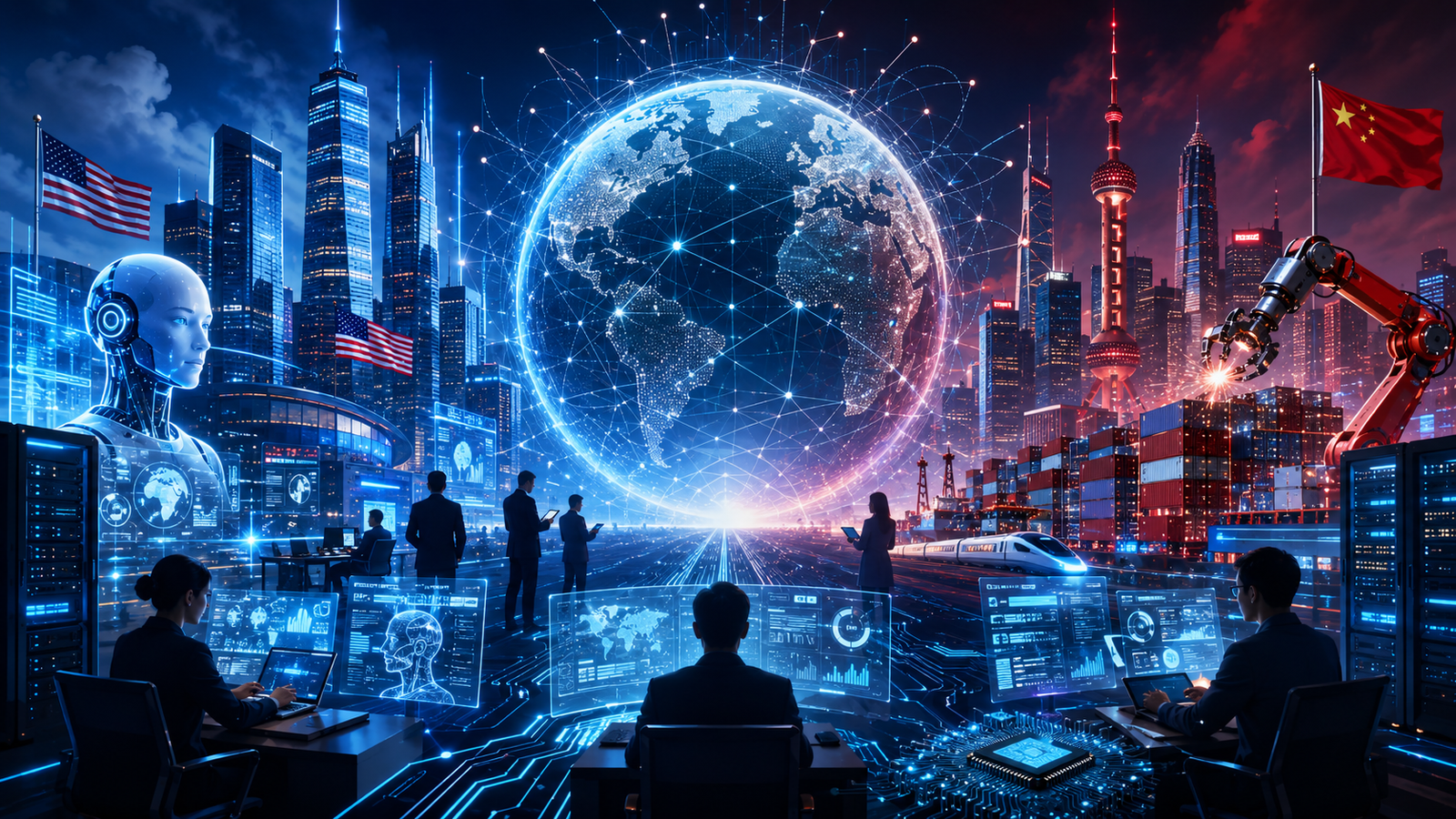
The global artificial intelligence race is moving from laboratory competition to economic power struggle, as new developments involving OpenAI, Google, Anthropic and Chinese AI companies suggest that the next stage of AI will be shaped by capital markets, exports, digital agents, advertising, and global usage patterns.
OpenAI, the company behind ChatGPT, is reportedly preparing for one of the largest public listings in technology history. Reuters reported that OpenAI is moving toward a confidential U.S. initial public offering filing, potentially going public as early as September 2026, with a valuation that could reach up to $1 trillion. The company was recently valued at about $852 billion and is reportedly seeking to raise at least $60 billion.
The move comes as OpenAI has also begun testing advertising inside ChatGPT. According to OpenAI’s Help Center, ads may appear for users on the Free and Go plans, while Plus, Pro, Business, Enterprise and Edu accounts remain ad-free. OpenAI says the ads are separate from ChatGPT’s responses and do not influence the answers generated by the model.
For ordinary users, journalists, educators, entrepreneurs and policymakers, this signals a major shift. AI platforms are no longer only productivity tools; they are becoming media, advertising, commerce and infrastructure platforms. As AI assistants become places where people search, learn, compare, write and make decisions, the question of who controls the interface becomes as important as who builds the model.
China is also changing the balance of the race. Reports indicate that Chinese AI models, including DeepSeek, Kimi, Qwen and GLM, have rapidly expanded their global footprint. South China Morning Post reported that Chinese open-source AI models accounted for nearly 30 percent of global usage in a report published by OpenRouter and Andreessen Horowitz, while TrendForce, citing Nikkei, reported that Chinese-developed generative AI models rose from around 1 percent to about 15 percent of global market share within roughly a year.
Some newer industry commentary claims Chinese models now account for about 60 percent of global API traffic on OpenRouter, led by models such as DeepSeek, Kimi, MiniMax and GLM. That figure should be treated carefully because it appears to refer to a specific platform’s token consumption rather than total worldwide AI use. Still, the broader trend is clear: Chinese AI models are gaining ground through aggressive pricing, open-source availability and practical performance.
The economic dimension is equally important. Bloomberg, cited by Yahoo Finance and Moneycontrol, reported that Chinese exports reached a monthly record of about $359 billion, or roughly $500 million every hour, with AI-related products such as semiconductors and computers accounting for about half of China’s export growth in April, according to estimates by Goldman Sachs and Nomura.
This means AI is not only a software revolution. It is now deeply tied to manufacturing, chips, data centers, energy systems, vehicles, logistics, and global trade. Countries that treat AI only as a chatbot trend may miss the deeper economic restructuring already underway.
Google has also intensified the race by introducing Gemini Spark, described as a 24/7 personal AI agent that can continue working through Google Cloud even when a user’s laptop is closed. TechCrunch reported that the agent is built from Gemini models and Google’s Antigravity agentic framework, with integration into services such as Gmail and other Google tools.
This development points toward a future where AI may no longer wait for users to ask questions. Instead, agents may monitor tasks, organize information, draft documents, manage schedules, and execute long-running assignments with limited supervision. That shift could transform knowledge work, but it also raises questions about privacy, consent, data access, workplace displacement and accountability.
Anthropic, the company behind Claude, is also emerging as a major force in enterprise AI. While the specific claim that Anthropic jumped from $4.8 billion to $10.9 billion in one quarter could not be independently verified from a primary source in this search, available reports and discussions point to rapid revenue growth driven by enterprise adoption and coding tools such as Claude Code. Anthropic’s own research has documented growing use of Claude for automation and task delegation, with users increasingly assigning more autonomous work to the model.
For Africa and the wider Global South, these developments should not be watched passively. AI is quickly becoming a new layer of economic power. The countries that build policy, skills, infrastructure and local AI ecosystems will have a better chance of benefiting from the revolution. Those that depend only on imported tools may become consumers in a system where data, value and decision-making power flow elsewhere.
The constructive challenge is not to panic about AI, nor to celebrate it blindly. The real task is to prepare societies for responsible adoption. Governments must invest in digital literacy, data protection, local language AI, education reform, cybersecurity and innovation financing. Newsrooms must learn to use AI without surrendering editorial judgment. Schools must teach students how to think with AI, not how to copy from it. Businesses must adopt AI ethically while protecting workers from sudden exclusion.
The AI race is no longer coming. It is already reorganizing the world.
The question now is whether nations, institutions and citizens will shape that future — or simply be shaped by it.
About The Author