Gambia Embassy in Washington hosts ECOWAS Ambassadors for talks on regional security, cooperation
By Mutiu Olawuyi
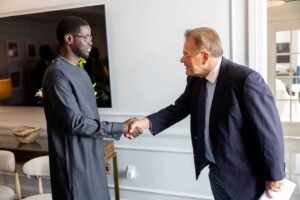
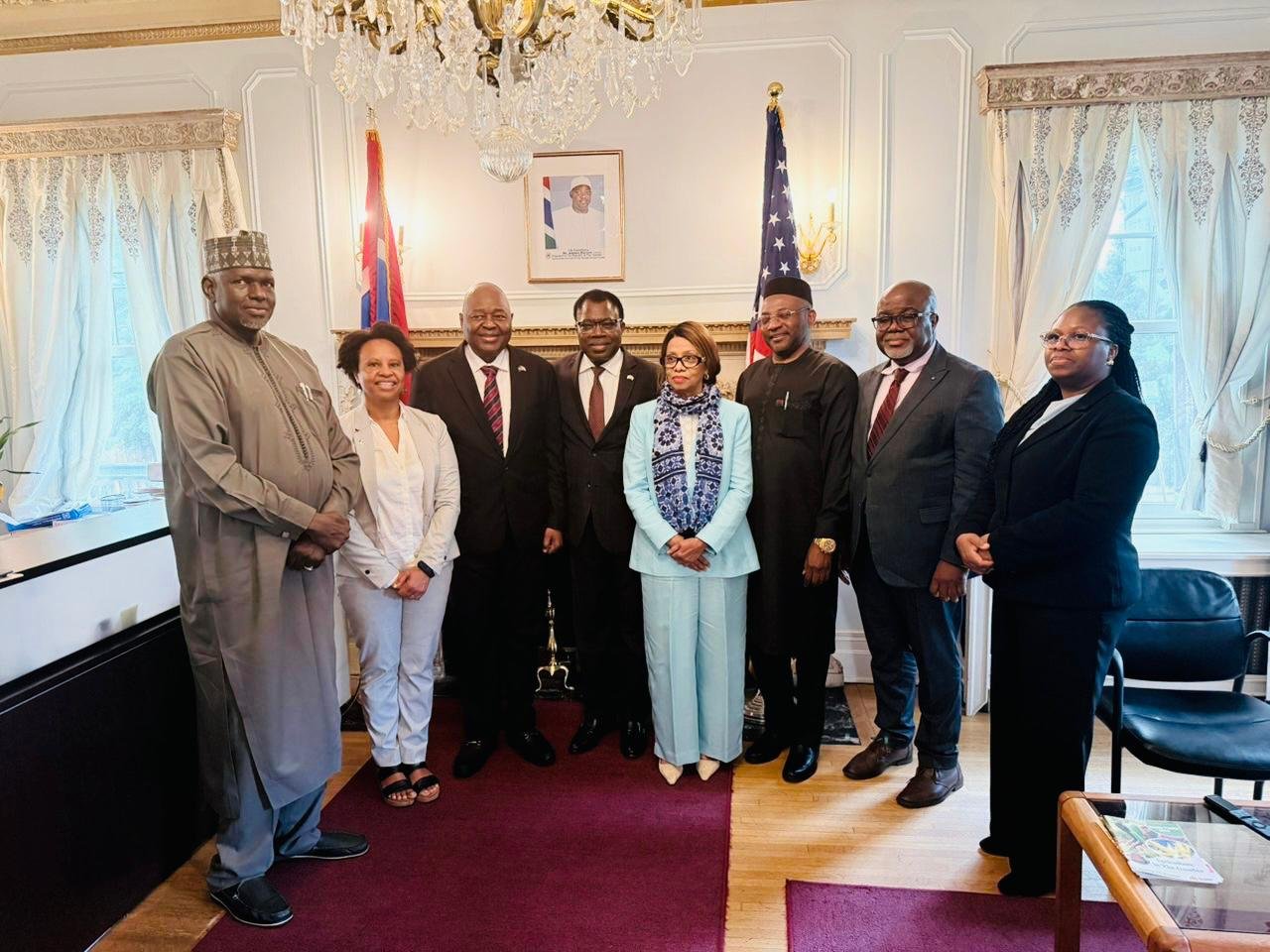
The Embassy of the Republic of The Gambia in Washington, D.C., hosted ambassadors from member states of the Economic Community of West African States on Thursday, May 21, 2026, for discussions on bilateral relations, regional security, and policy developments in Washington affecting West Africa.
The meeting brought together ECOWAS ambassadors accredited to the United States as part of their scheduled monthly consultations, which rotate among the embassies of ECOWAS member states represented in Washington.
The delegation was led by the Dean of ECOWAS Ambassadors in Washington, H.E. Frederic Edem Hegbe, and was received by H.E. Momodou Lamin Bah, Ambassador of the Republic of The Gambia to the United States of America.
The gathering provided a platform for the ambassadors to review issues of shared concern, including bilateral matters, the evolving security situation in the Sahel, and policy decisions in Washington with direct or indirect implications for West Africa.
The Sahel remains one of the most sensitive security zones affecting the wider West African region, with instability, violent extremism, unconstitutional changes of government, displacement, and cross-border insecurity continuing to test regional cooperation. For ECOWAS diplomats in Washington, such consultations offer an important opportunity to strengthen common understanding and coordinate diplomatic engagement with the United States and other partners.
The Gambian Embassy received the delegation with what participants described as warm hospitality, reflecting The Gambia’s continued commitment to regional dialogue, multilateral diplomacy, and West African integration.
The meeting also reinforced the importance of regular diplomatic coordination among ECOWAS representatives outside the subregion. In a period of shifting global alignments, security threats, economic pressure, migration concerns, and development challenges, West African countries are increasingly required to speak with greater coherence on matters affecting the region.
The Washington consultations are part of an ongoing effort by ECOWAS ambassadors to maintain structured engagement, exchange information, and support regional positions on peace, security, governance, trade, and development.
The latest meeting also followed an earlier high-level engagement in October 2025, when ECOWAS ambassadors met in Washington, D.C., with H.E. Julius Maada Bio, President of the Republic of Sierra Leone and Chairperson of the Authority of Heads of State and Government of ECOWAS Member States.
During that engagement, discussions centered on opportunities to deepen subregional cooperation through ECOWAS. The leaders also agreed to work toward building a more closely connected regional bloc capable of safeguarding peace and strengthening regional integration.
For The Gambia, hosting the May 21 meeting served as both a diplomatic responsibility and a reaffirmation of its place within the ECOWAS family. As one of the smaller member states in the bloc, The Gambia continues to benefit from and contribute to regional cooperation, particularly in areas of democracy, peacebuilding, migration, trade, and institutional development.
The meeting at the Gambian Embassy also carried a broader message: West Africa’s diplomatic strength depends not only on formal summits of presidents and ministers, but also on consistent coordination among ambassadors who represent the region’s interests in strategic capitals such as Washington.
At a time when the subregion faces complex security and economic challenges, such regular consultations can help prevent fragmented responses and promote a more united West African voice.
The constructive value of the meeting lies in its emphasis on dialogue, regional solidarity, and shared responsibility. ECOWAS continues to face difficult questions, especially around security, governance, economic resilience, and public trust. But sustained diplomatic engagement remains one of the most practical tools for keeping the regional project alive.
As ECOWAS ambassadors continue their monthly rotation among member-state embassies, the Washington platform is expected to remain an important space for building consensus, strengthening partnerships, and advancing the collective interests of West Africa.
About The Author