Sall steps aside with dignity: “I remain fully committed to the ideals that inspired my candidacy”
By Mutiu Olawuyi
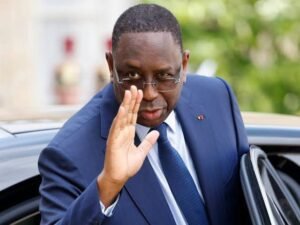
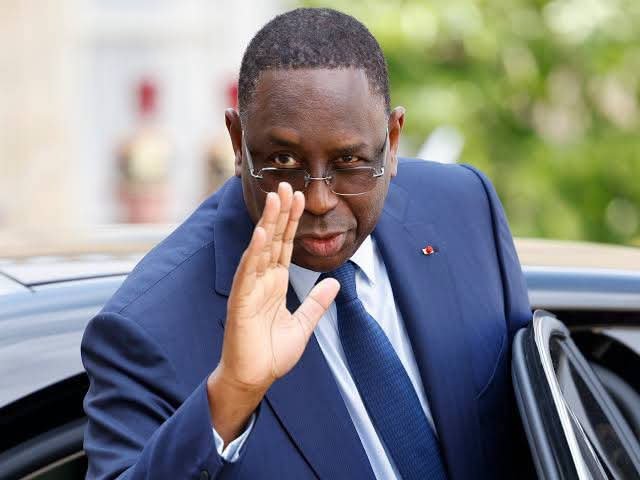
Former President of the Republic of Senegal, Macky Sall, announced on Saturday, in a formal declaration issued from Marrakech and published on his campaign site, mackysall4un.org, that he is withdrawing his candidacy for the position of Secretary-General of the United Nations, a decision he said was taken “with a deep sense of responsibility” after consultations with Africa’s two sitting institutional leaders.
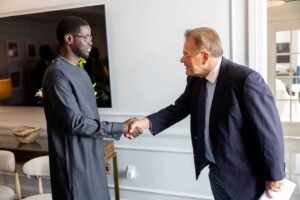
“Following the informal vote of October 16, 2026 for the election to the position of Secretary-General of the United Nations, and after consultations with His Excellency Mr. Évariste Ndayishimiye, President of the Republic of Burundi, current President of the African Union, and His Excellency Bassirou Diomaye Diakhar Faye, President of the Republic of Senegal, current President of ECOWAS, I have decided to withdraw my candidacy for the said post,” Sall declared.
Responsibility Over Ambition
In the statement, Sall explained that his withdrawal was a deliberate contribution to consensus-building within the Security Council, “bearing in mind that since the beginning of the process, the results of the various straw polls have indicated a choice in favour of a candidacy from the Latin American and Caribbean region, and possibly a woman.”
He was unambiguous about what had driven his bid: “For my part, my candidacy was essentially motivated by the desire to place my experience of nearly forty years of public life at the service of the United Nations.”
Gratitude Across Continents
The former president devoted much of the declaration to thanks, a tone that defines this withdrawal as an act of grace rather than grievance. He thanked President Ndayishimiye, who sponsored his candidacy, and President Faye, who supported it; the member states of the Security Council who voted in his favour throughout the process; and the members of his campaign team, “who accompanied me for months, with faith and determination.”
His gratitude extended well beyond diplomacy. Sall expressed his appreciation to “the religious and customary authorities for their prayers and marks of sympathy,” as well as “to Senegalese women and men, activists, sympathisers, political and civil society organisations, and friends of Africa and abroad, for their support and encouragement since the announcement of my candidacy.”
Africa’s Place in the World
Turning to the state of the world, Sall sounded a note of urgency laced with hope. “As the world continues to face the multiplication of conflicts, the aggravation of geopolitical rivalries, the fragmentation of the international order and unprecedented economic and financial challenges, I remain convinced that the United Nations must undertake a profound transformation of its working methods and its functioning.”
And he reaffirmed the conviction at the heart of his campaign: “Africa, which is at the heart of the issues of peace, security and development, must also continue to make its voice heard and pursue its efforts in order to occupy the place that is rightfully its own in global governance.”
A Farewell in the Spirit of Service
Sall closed his declaration not with a retreat, but with a renewed commitment, one that captures the restorative spirit of Senegalese public life.
“I withdraw my candidacy, but remain fully committed in the service of the ideals that inspired it: peace, security, economic and social development, international cooperation, and dialogue among nations. I wish every success to the person who will be called upon to exercise the high responsibilities of Secretary-General of the United Nations,” he said.
The Race Continues
The withdrawal narrows but does not settle the contest. Friday’s sixth informal straw poll showed Costa Rica’s Rebeca Grynspan narrowly ahead with nine “encourage” votes, though every remaining contender, including Uganda’s Olara Otunnu received at least one “discourage” vote from a veto-wielding permanent member, leaving the field open. US envoy Mike Waltz has indicated that additional candidates may still enter, and Washington has signalled it finds none of the current seven suitable.
With António Guterres’s second term ending on December 31, the Security Council has fewer than three months to agree on a candidate who can secure at least nine of fifteen votes without a single permanent-member veto before the 193-member General Assembly endorses the winner.
For Senegal and for the continent, Sall’s parting words are the story: a candidacy offered in service, withdrawn in dignity, and a commitment to peace and dialogue that endures beyond any single office. Africa’s voice, as he reminded the world today, does not fall silent; it rises.
Senegambia Times will continue to follow the race for the next Secretary-General as the Security Council moves toward its decisive stage.
About The Author