Senegal Eyes Industrial Sovereignty With Landmark Falémé Iron Ore Project
By Mutiu Olawuyi
KÉDOUGOU, Senegal — After generations of anticipation, Senegal has taken a major step toward transforming its long-untapped Falémé iron ore deposits into an engine of industrial development, employment and regional economic integration.
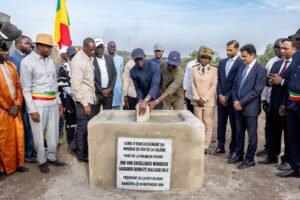
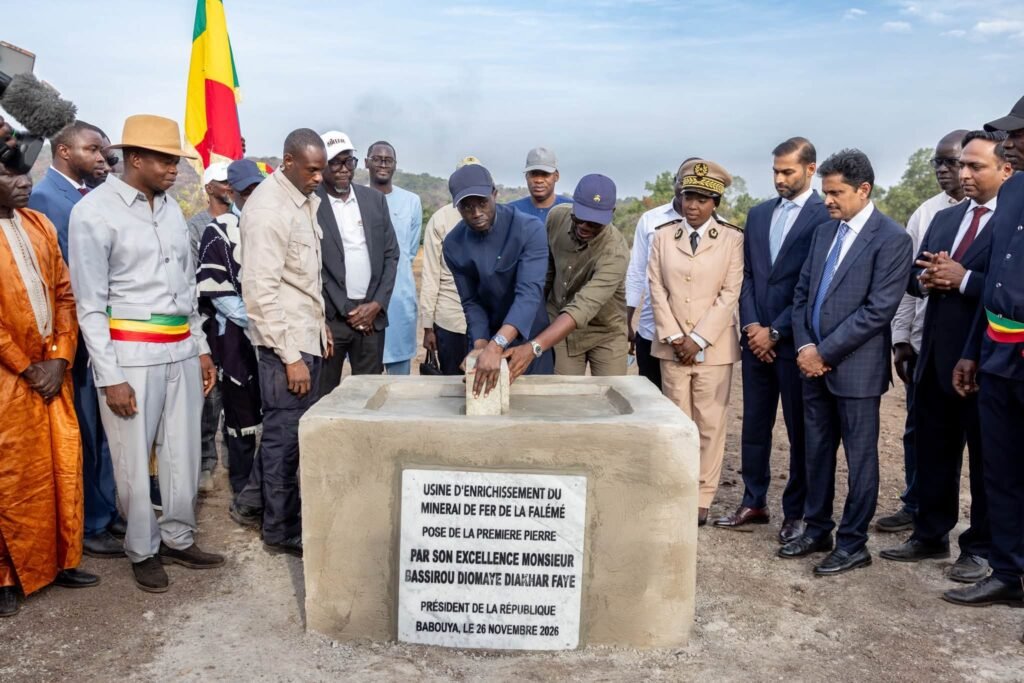
President Bassirou Diomaye Faye laid the foundation stone for the Falémé iron ore exploitation project on Thursday, November 26, 2026, in Farangalia, marking the beginning of an initiative intended to move Senegal beyond mineral extraction toward domestic steel production.
The project, spearheaded by the Société des Mines de Fer du Sénégal Oriental (MIFERSO) in partnership with Planet One, represents an initial investment of $933 million, equivalent to approximately 530 billion CFA francs.
According to the announcement, the initiative is expected to generate more than 1,200 direct and indirect jobs while creating opportunities for industrial development, infrastructure expansion and local entrepreneurship.
Breaking the Cycle of Raw Material Exports
For decades, successive generations of Senegalese citizens have heard about the economic potential of the Falémé iron ore deposits without witnessing their commercial exploitation.
President Faye’s ambition, however, extends beyond extracting and exporting iron ore. The head of state wants the entire production chain, from mineral extraction to steel manufacturing, to be established within Senegal.
This approach could help address a longstanding structural challenge confronting many African economies: exporting raw materials while importing expensive finished products manufactured from those same resources.
Developing domestic steel production could enable Senegal to retain a greater share of its mineral wealth, reduce dependence on imported industrial materials and stimulate related sectors, including construction, engineering, manufacturing and transportation.
Achieving that ambition, however, will require reliable energy supplies, substantial industrial infrastructure, specialized technical expertise, competitive production costs and access to domestic and international markets.
The project’s long-term viability will therefore depend on the successful integration of mining, processing, manufacturing and commercial operations.
Railway Infrastructure to Reconnect Eastern Senegal
Another significant component of the initiative is the proposed railway infrastructure that will serve the mining operations.
President Faye expressed his desire for the railway to bring eastern Senegal closer to the rest of the country, positioning transportation infrastructure as an instrument of territorial integration rather than merely a means of transporting minerals.
If designed to accommodate broader economic and community needs, the railway could improve regional connectivity, reduce transportation costs and facilitate the movement of agricultural products, industrial goods and people.
For communities in eastern Senegal, improved connectivity could also expand access to markets, public services and investment opportunities.
The challenge will be ensuring that the railway delivers wider socioeconomic benefits rather than functioning exclusively as an industrial corridor serving mining interests.
Prioritizing Local Youth and Businesses
President Faye also called for employment, vocational training and subcontracting opportunities to prioritize young people and businesses from the region.
The directive addresses a critical concern frequently associated with large-scale extractive projects: the risk that communities hosting valuable natural resources remain economically marginalized while much of the wealth generated leaves their territories.
For the projected 1,200 direct and indirect jobs to deliver lasting benefits, vocational training programs will need to equip local residents with relevant skills in mining technology, metallurgy, mechanical engineering, industrial maintenance, logistics and occupational safety.
Local enterprises could also benefit from transparent procurement arrangements that enable them to participate in construction, transportation, equipment maintenance, catering and other mining-related services.
Establishing measurable local employment targets, accessible training programs and fair subcontracting procedures would help translate the president’s stated priorities into verifiable outcomes.
Environmental Protection and Community Participation
The scale of the Falémé project also brings significant responsibilities concerning environmental protection, land management and community welfare.
Mining and steel production require careful management of water resources, industrial waste, energy consumption and land rehabilitation.
The Falémé River, which forms part of the natural boundary between Senegal and Mali, adds a cross-border dimension to environmental governance. Protecting its ecosystem and the livelihoods that depend on it will require effective monitoring and, where appropriate, cooperation between neighboring countries.
Meaningful consultation with affected communities, transparent environmental impact assessments and accessible grievance-resolution mechanisms could help prevent conflicts while strengthening public confidence in the project.
Regular disclosure of environmental performance, employment figures and community development expenditures would also enable citizens to assess whether the initiative is meeting its stated objectives.
A Broader Vision for Senegal’s Mining Economy
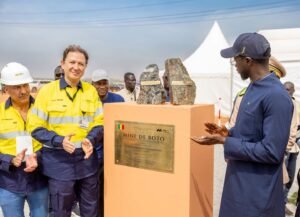
The foundation-stone ceremony follows the inauguration of the $464 million Boto gold mine in Médina Baffé earlier on Thursday, highlighting the growing importance of eastern Senegal within the country’s economic development agenda.
Together, the two projects represent approximately $1.397 billion in announced investment and more than 3,050 projected direct and indirect jobs.
Their combined potential extends beyond mineral production. They could contribute to the emergence of regional industrial clusters, technical training institutions, stronger transportation networks and diversified local economies.
Nevertheless, the distinction between the two milestones remains important: the Boto mine has been inaugurated, while the Falémé project is entering a new development phase marked by the laying of its foundation stone.
The announced investments and employment projections should therefore not be confused with expenditure already completed or jobs already created.
From Geological Wealth to Generational Prosperity
The Falémé project offers Senegal an opportunity to redefine the relationship between natural resources, industrialization and human development.
Its enduring success will depend not simply on the volume of iron ore extracted but on the country’s capacity to transform that ore into steel, develop competitive industries, create sustainable employment and improve living conditions in resource-producing communities.
For generations, the iron beneath Falémé remained a promise. The foundation-stone ceremony marks a step toward realizing that promise, but the more demanding work of financing, construction, industrial development and public accountability lies ahead.
The ultimate measure of the project’s success will be whether the wealth extracted from eastern Senegal helps build a stronger economy without leaving its host communities behind.
Senegal’s ambition is no longer simply to extract iron from its soil. It is to build an industrial future from it.
About The Author