Beyond Gold: Senegal Inaugurates $464 Million Boto Mine, Faye Demands Prosperity for Local Communities
By Mutiu Olawuyi
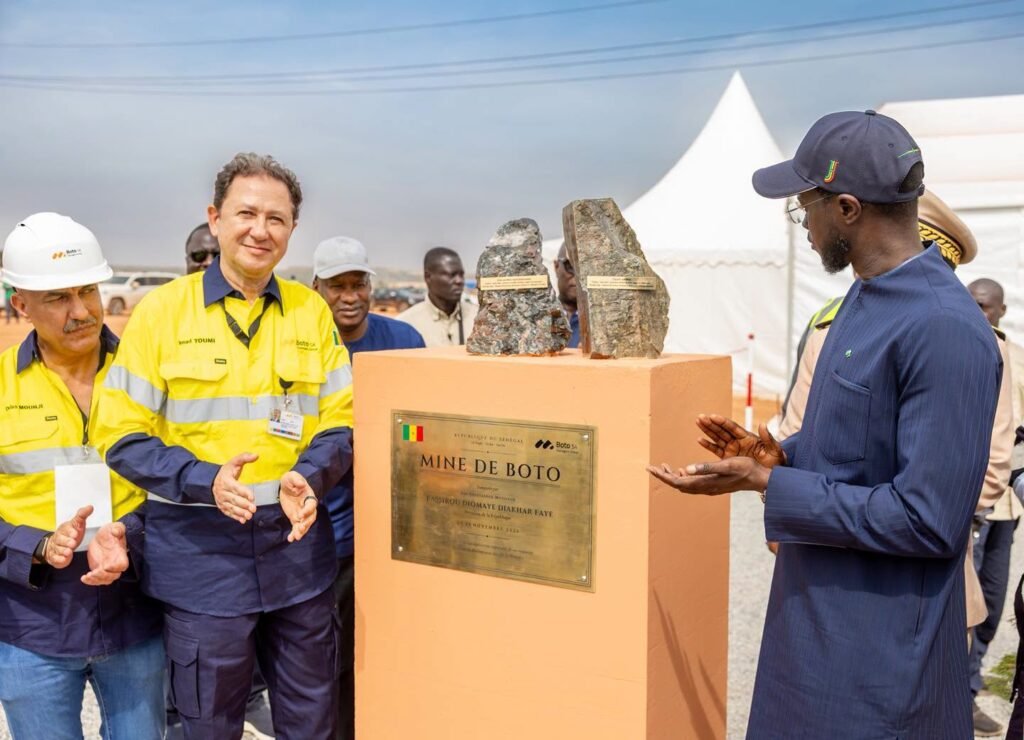
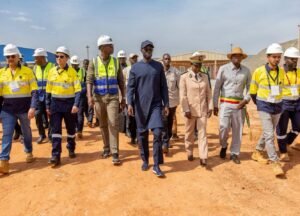
KÉDOUGOU, Senegal — Senegal has taken another significant step toward expanding its mining economy with the inauguration of the $464 million Boto gold mine, as President Bassirou Diomaye Faye reaffirmed his administration’s commitment to ensuring that the country’s mineral wealth translates into tangible improvements in the lives of local communities.
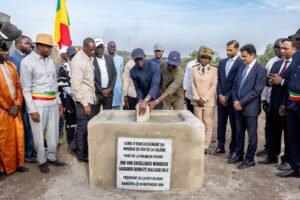
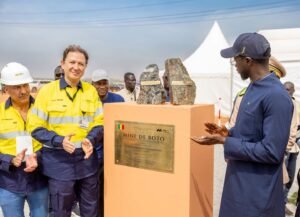
The president inaugurated the mining facility on Thursday, November 26, 2026, in the commune of Médina Baffé, in the southeastern region of Kédougou.
Developed by the Moroccan mining group Managem, the Boto project represents an investment of nearly $464 million, equivalent to more than 270 billion CFA francs. According to the Senegalese presidency, the mine is expected to generate approximately 1,850 direct and indirect jobs and contribute more than 1.2 trillion CFA francs in state revenue over its operational lifespan.
The inauguration brings the number of gold mines identified by the presidency to three, alongside Sabodala and Mako, further strengthening Kédougou’s strategic position within Senegal’s extractive economy.
Putting Communities at the Heart of Mining Development
 Addressing residents during the inauguration, President Faye raised a fundamental question that continues to shape debates about natural resource governance across Africa: how should mineral wealth be used to improve the lives of citizens, particularly those living in resource-producing communities?
The president emphasized that economic development loses its meaning when communities hosting major extractive projects remain deprived of its benefits.
“The development of Kédougou is neither a favor nor a concession,” President Faye declared.
His statement reflects a policy direction that seeks to reposition mining communities as legitimate beneficiaries of national resource wealth rather than passive spectators in the extraction of resources from their territories.
The presidency identified the new Mining Code, local content requirements, domestic mineral processing and the mobilization of funds allocated to local authorities as key instruments for achieving this objective.
These mechanisms could help strengthen local economies, expand employment opportunities, encourage domestic entrepreneurship and provide additional resources for essential public infrastructure.
Turning Mineral Wealth Into Human Development
 While the projected investment, employment and government revenue figures are encouraging, the long-term significance of the Boto project will depend on how effectively these resources are converted into sustainable human development.
For communities in Kédougou, the success of mining should be reflected not only in national revenue statistics but also in improved access to quality education, healthcare, clean drinking water, electricity, transportation infrastructure and dignified employment.
Particular attention should be given to vocational training and technical education, enabling young people from mining communities to acquire the qualifications required to participate meaningfully in the industry.
Local businesses should also have opportunities to enter mining supply chains through procurement, transportation, construction, catering, equipment maintenance and other commercial services.
Such an approach would help ensure that the economic benefits of mining circulate within host communities rather than remaining concentrated among investors, contractors and central government institutions.
Environmental Responsibility and Public Accountability
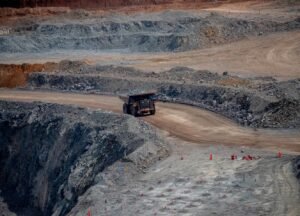 The expansion of Senegal’s gold mining industry also underscores the importance of responsible environmental management, transparent resource governance and sustained community engagement.
Large-scale mining operations can create economic opportunities, but they also carry environmental and social risks that require effective oversight. Protecting water resources, preserving agricultural livelihoods, rehabilitating affected land and maintaining safe working conditions must remain integral to the project’s implementation.
Transparent reporting on mining revenues, local employment commitments, environmental compliance and community development expenditures would help strengthen public confidence and institutional accountability.
Regular consultation with residents, traditional leaders, local authorities, civil society organizations and mining operators could also provide mechanisms for identifying grievances and resolving disputes before they escalate.
The objective should be to establish a mutually beneficial relationship in which commercial profitability, environmental protection and community welfare reinforce one another.
A Test of Senegal’s Economic Sovereignty
The Boto gold mine represents more than an expansion of Senegal’s extractive capacity. It offers an opportunity to demonstrate how the country’s pursuit of economic sovereignty can be translated into practical outcomes through responsible investment, equitable resource distribution and domestic value creation.
President Faye’s emphasis on local processing is particularly significant. Exporting raw mineral resources without developing domestic processing capacity can limit the employment, technological advancement and industrial opportunities available to resource-producing countries.
Strengthening local value chains could help Senegal retain a greater share of the economic value generated by its natural resources while gradually developing its industrial and technical capabilities.
The involvement of Morocco’s Managem Group also highlights the potential of intra-African investment and economic cooperation to support industrial development, technology transfer and regional prosperity.
However, the projected 1.2 trillion CFA francs in government revenue remains a forecast rather than an amount already realized. Its eventual value will depend on production levels, international gold prices, operating conditions and the applicable fiscal arrangements.
From Gold Deposits to a Legacy of Shared Prosperity
 The inauguration of the Boto mine marks an important milestone in Senegal’s economic development, but its most enduring achievement will not necessarily be measured by the quantity of gold extracted.
It will be measured by the number of families lifted out of poverty, young people equipped with employable skills, businesses empowered to grow, communities provided with essential infrastructure and natural environments protected for future generations.
The challenge before the Senegalese government, Managem and local authorities is to ensure that the promises accompanying the inauguration become measurable and publicly verifiable outcomes.
For Kédougou, the ultimate victory will come when the wealth beneath its soil is reflected in the quality of life above it.
Gold is a finite resource. The prosperity it creates must outlive the mines.
About The Author