Barrow receives pre-election delegation led by Linda Thomas-Greenfield
By Mutiu Olawuyi
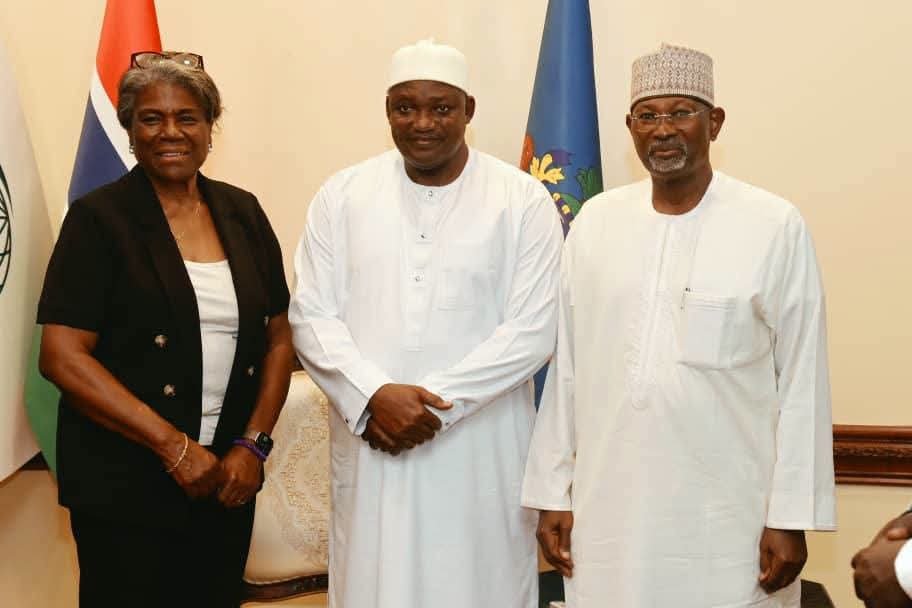
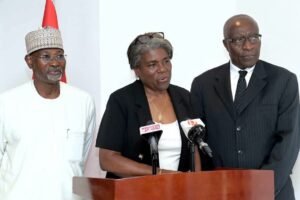
President Adama Barrow has received a pre-election assessment delegation at State House led by Ambassador Linda Thomas-Greenfield, former United States Ambassador to the United Nations, as The Gambia prepares for its Dec. 5, 2026 presidential election.
The delegation also includes Professor Attahiru Jega, former chairman of Nigeria’s Independent National Electoral Commission, according to the statement from State House.
The meeting focused on The Gambia’s electoral process, with President Barrow welcoming the delegation and assuring its members of his support for peaceful, credible and transparent elections.
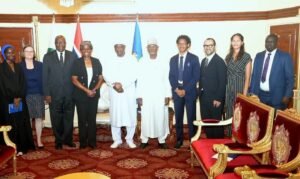 Ambassador Thomas-Greenfield thanked Barrow for what she described as his generosity with his time and for engaging the delegation in an “extraordinarily fruitful discussion” on the country’s election process.
The visit forms part of a wider pre-election assessment mission by the National Democratic Institute, which said it would deploy a mission to The Gambia from Aug. 24 to 28 ahead of the December 2026 presidential election. The NDI mission is co-led by Thomas-Greenfield and Jega, and is expected to engage electoral stakeholders in line with international principles for election observation.
As part of its work, the delegation is expected to meet opposition political parties, civil society organizations and other stakeholders to gather first-hand views on the coming election.
The Gambia’s presidential election is scheduled for Dec. 5, 2026, a date also referenced by the Independent Electoral Commission and regional pre-election engagements.
 The presence of a high-level pre-election delegation is significant because elections are not judged only by what happens on voting day. They are shaped by the months before the poll: voter confidence, equal political space, credible institutions, peaceful campaigning, transparent administration, security conduct and the trust citizens place in the process.
For The Gambia, the 2026 election is another test of democratic consolidation. Since the country’s political transition, Gambians have continued to demand stronger institutions, accountable leadership and electoral processes that reflect the will of the people.
A credible election requires more than official assurances. It requires the government, opposition parties, the Independent Electoral Commission, security services, courts, media, civil society and citizens to play their roles responsibly.
Barrow’s assurance of support for peaceful, credible and transparent elections is therefore important. But it must be matched by practical steps that guarantee a level playing field, protect freedom of expression and assembly, prevent intimidation, address misinformation and ensure that all parties have confidence in the electoral process.
The delegation’s planned meetings with opposition parties and civil society organizations are equally important. A full assessment of the electoral environment must listen not only to the government, but also to political competitors, citizen groups, election monitors, journalists, youth, women and community leaders.
The goal should not be foreign approval for its own sake. It should be national confidence. Gambians themselves must believe that the process is fair, that institutions are independent, that complaints can be addressed lawfully and that the final outcome reflects the ballot.
Regional and international partners, including NDI, ECOWAS and other observer bodies, can support that process by encouraging dialogue, identifying early risks and recommending reforms before tensions escalate. ECOWAS previously said its pre-election fact-finding mission sought to assess readiness and support confidence-building ahead of the Dec. 5 vote.
The coming months will require political restraint from all sides. Campaign language should not endanger peace. Security institutions should act neutrally. Electoral authorities should communicate clearly. Political parties should prepare their supporters to accept lawful outcomes and pursue grievances through due process.
If handled responsibly, the 2026 election can strengthen The Gambia’s democratic journey. If mishandled, it could deepen mistrust and polarization.
The meeting at State House should therefore be seen not as a ceremonial visit, but as a reminder that credible elections are built through transparency, inclusion and institutional discipline long before voters enter the polling booth.
About The Author