Banjul Mayor challenges IEC over “selective enforcement” on political movements

Banjul Mayor Rohey Malick-Lowe has publicly challenged the Independent Electoral Commission (IEC) over what she describes as inconsistent treatment of political movements operating across the country, calling for greater clarity and fairness in how electoral rules are applied.
In a strongly worded but respectful public statement addressed to IEC Chairman Joseph Colley, the mayor said the commission’s recent warning against political movements behaving like registered political parties raises serious questions, especially since some of those same movements have for months or years been active in ways that closely resemble party structures and political operations.
Referring to reports that only registered parties can sponsor candidates, Malick-Lowe argued that several movements have already been functioning openly across The Gambia without apparent sanction. She pointed to activities such as maintaining regional offices, holding regional congresses, taking part in coalition discussions with registered parties, organizing political meetings, and distributing political materials.
Her core question was direct: if such activities have long been allowed, why should a national congress suddenly become the red line?
Malick-Lowe suggested that preventing a movement from holding a national congress does little to change the political reality on the ground, especially when individuals may still contest elections as independent candidates. In her view, the larger issue is not only legality, but consistency.
“What we need from the IEC is clarity and consistency — not selective enforcement,” she said.
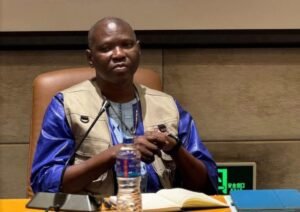 The mayor, who openly acknowledged her membership in the United Democratic Party (UDP), said her party affiliation does not invalidate the concern she is raising. She argued that the public deserves a clear explanation of what practically distinguishes a registered political party from an active political movement if both are carrying out similar political activities in full view of the public.
The statement is likely to add to an ongoing debate in Gambian politics over the boundaries between civic organizing, political mobilization, and formal party activity. It also raises a broader governance issue: electoral credibility depends not only on rules, but on whether those rules are applied early, clearly, and equally to all actors.
From a democratic standpoint, the mayor’s intervention highlights an important principle. Institutions such as the IEC are strongest when their decisions are seen as transparent, predictable, and impartial. Where enforcement appears delayed or selective, mistrust can grow and political tension can deepen.
As the country moves closer to future electoral contests, the call from Banjul’s mayor may resonate beyond party lines. The immediate issue is political movements. The wider issue is confidence in the fairness of democratic oversight.
About The Author