Senegal, UN Rights Office strengthen partnership on child protection and social inclusion
By Mutiu Olawuyi
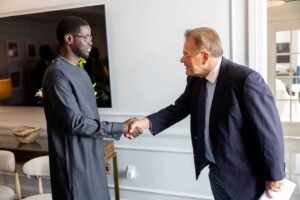
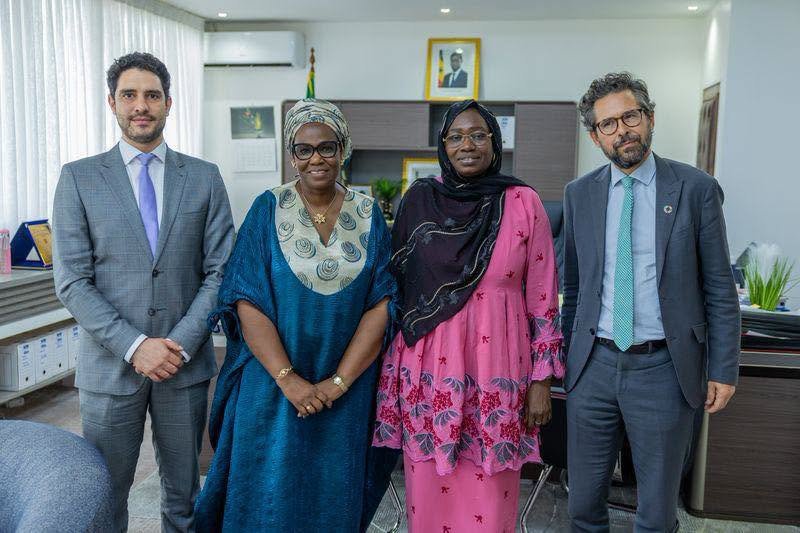
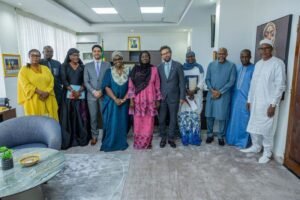
Senegal’s Ministry of Family, Social Action and Solidarity has held talks with a delegation from the United Nations Office of the High Commissioner for Human Rights as part of efforts to strengthen cooperation on child protection, social protection and the rights of vulnerable groups.
The audience, granted by the Minister of Family, Social Action and Solidarity, focused on deepening collaboration between Senegal and the U.N. system, particularly through the Project to Support Child Protection and the Fight Against Violations of Children’s Rights, known by its French acronym PAPEV.
According to the ministry, the meeting provided an opportunity to share its strategic priorities in line with Senegal’s national transformation agenda, the National Development Strategy and the government’s broader commitment to human development, social justice and protection of vulnerable populations.
Discussions centered on several key priorities, including child protection, the fight against poverty and vulnerability, strengthening social protection systems, women’s economic empowerment and the protection and inclusion of persons with disabilities.
The ministry also presented several priority initiatives, including the National Programme for Women’s Economic Empowerment, a project to strengthen the protection of children and persons with disabilities, and efforts to improve social protection mechanisms and care systems for vulnerable individuals and groups.
The meeting also reviewed the long-standing cooperation between the ministry and the U.N. human rights office, especially in supporting legislative and institutional reforms related to the rights of women, children and vulnerable persons.
Through PAPEV, the partnership has supported capacity-building for child protection actors, assistance for the reintegration and return of children to family environments, strengthening of care mechanisms for children and vulnerable persons, and support for Senegal’s implementation of international human rights commitments.
The U.N. human rights delegation welcomed the ministry’s strategic direction and expressed its readiness to align its support with the government’s priorities.
The minister, for her part, welcomed the U.N. office’s continued engagement and reaffirmed her commitment to strengthening the partnership in order to accelerate public policies on women’s empowerment, child protection, social protection and disability inclusion.
 The engagement comes at a critical time for social policy in Senegal. Across the country, families facing poverty, children exposed to exploitation or neglect, women seeking economic opportunities and persons with disabilities continue to need stronger, more coordinated public support.
The value of the Senegal-U.N. partnership will therefore be measured not only by policy commitments, but by practical improvements in communities: safer children, better referral systems, stronger social workers, more inclusive services, accessible support for persons with disabilities and economic pathways for women.
For child protection in particular, the focus on reintegration and return to family environments is important. Children who experience abuse, trafficking, abandonment or exploitation need more than rescue. They need psychosocial support, family tracing, community follow-up, education, health care and long-term protection from repeated harm.
The same is true for social protection. Assistance must move beyond emergency response and become a reliable system that identifies vulnerable households early, connects them to services and helps them build stability.
The meeting also reflects a broader understanding that human rights, social protection and inclusion are not separate agendas. They are foundations for national development. A country cannot achieve sustainable transformation while children remain unsafe, women remain economically excluded, or persons with disabilities remain outside public life.
The next challenge will be implementation. Senegal’s ministries, local authorities, technical partners, civil society organizations and community actors will need to coordinate closely so that policies reach the people they are designed to serve.
The audience between the ministry and the U.N. human rights office sends a positive signal. It shows a shared commitment to making rights, protection and inclusion central to Senegal’s development path.
For that commitment to become meaningful, the partnership must continue to prioritize accountability, funding, field presence and measurable results for the most vulnerable communities.
About The Author