Faye meets Siemens Healthineers chief to advance Senegal’s hospital equipment drive
By Mutiu Olawuyi
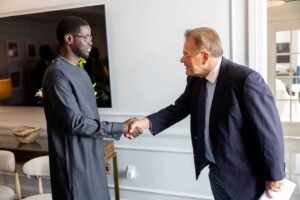
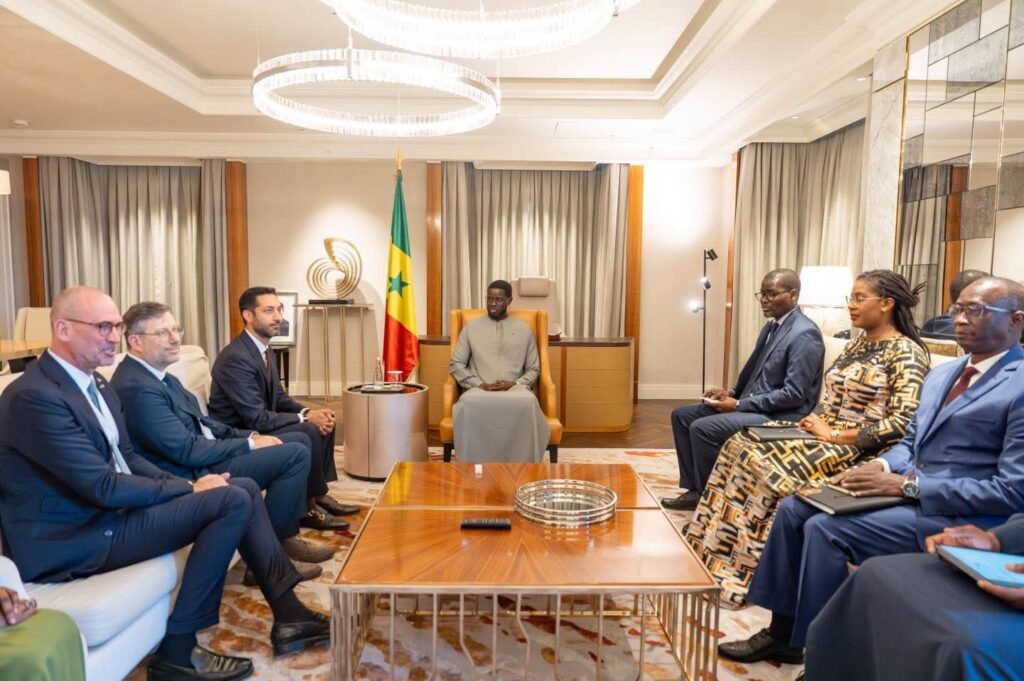
President Bassirou Diomaye Faye has met with Marco Linnig, head of Siemens Healthineers, on the sidelines of the German-Senegalese Economic Forum, in a discussion focused on strengthening Senegal’s medical technology capacity and improving access to timely diagnosis across the country.
Siemens Healthineers is one of the world’s leading medical technology groups, with expertise in medical imaging, laboratory diagnostics, digital health systems and hospital technology solutions.
The meeting placed a human face on a technical issue that affects every family: the ability of hospitals to diagnose illness quickly and accurately. For Senegal, better-equipped health facilities could mean more scanners, imaging devices and diagnostic tools in regions where patients currently face long delays, costly referrals or travel to major cities for basic medical examinations.
The challenge is not abstract. When a patient in Ziguinchor, Matam, Tambacounda, Kolda or Saint-Louis falls ill, the distance between symptoms and diagnosis can determine survival, recovery, cost of treatment and family stability. A hospital without modern diagnostic tools forces patients to wait, travel or go untreated. A hospital with the right equipment and trained personnel can save lives.
President Faye emphasized that Senegal’s health modernization must go beyond the purchase of sophisticated machines. He insisted that the training of Senegalese doctors, radiologists, biomedical engineers and technicians must remain at the center of any partnership.
That point is critical. A scanner is only as useful as the professionals who can install it, operate it, maintain it and interpret its results. Without training and maintenance, expensive machines can become symbols of wasted investment. With local expertise, they become tools of dignity, efficiency and national health sovereignty.
The discussion with Siemens Healthineers therefore aligns with the broader ambition of Vision Senegal 2050, which places national capacity-building, human capital development and structural transformation at the heart of Senegal’s development agenda.
For Senegal’s health sector, this means building hospitals that are not only physically present, but technically ready. It means ensuring that regional facilities are equipped to serve citizens before emergencies become tragedies. It also means reducing the burden on families who spend money traveling in search of diagnosis that should be available closer to home.
The meeting in Berlin also reflected the wider value of economic diplomacy. Partnerships between Senegal and German companies can become meaningful when they translate into concrete improvements in daily life: better hospitals, shorter waiting times, stronger technical training, reliable equipment maintenance and improved patient outcomes.
Medical technology is one area where investment can produce both social and economic benefits. It can create skilled jobs, strengthen hospital performance, improve disease detection, support preventive care and reduce avoidable deaths linked to late diagnosis.
However, the success of such partnerships will depend on implementation. Senegal must ensure that any future agreement includes clear commitments on technology transfer, training, after-sales maintenance, regional deployment, affordability and accountability.
The objective should not be to concentrate modern medical equipment only in Dakar. A fair health system must reach the regions. The real impact of discussions with Siemens Healthineers will be measured not in official photographs, but in radiology units, emergency wards and diagnostic centers serving ordinary Senegalese.
For families, the meaning is simple: illness should not become a journey of uncertainty because the right machine or trained technician is unavailable. For doctors, it means having the tools to make the right decision at the right time. For the country, it means turning health investment into national resilience.
President Faye’s meeting with Linnig therefore represents more than a business engagement. It is part of a larger question facing Senegal’s development path: how to ensure that foreign investment strengthens local competence, improves public services and gives citizens better access to care.
If followed by practical action, the Siemens Healthineers engagement could support Senegal’s drive to modernize hospitals, expand diagnostic capacity and train the professionals needed to sustain the system.
What was discussed in a meeting room in Berlin may tomorrow be measured in a hospital corridor in Matam, a radiology department in Ziguinchor or a diagnostic unit serving families far from the capital. That is where the promise of health diplomacy must become real.
About The Author