U.S. Embassy strengthens health security partnership with Senegal in Saint-Louis
By Mutiu Olawuyi
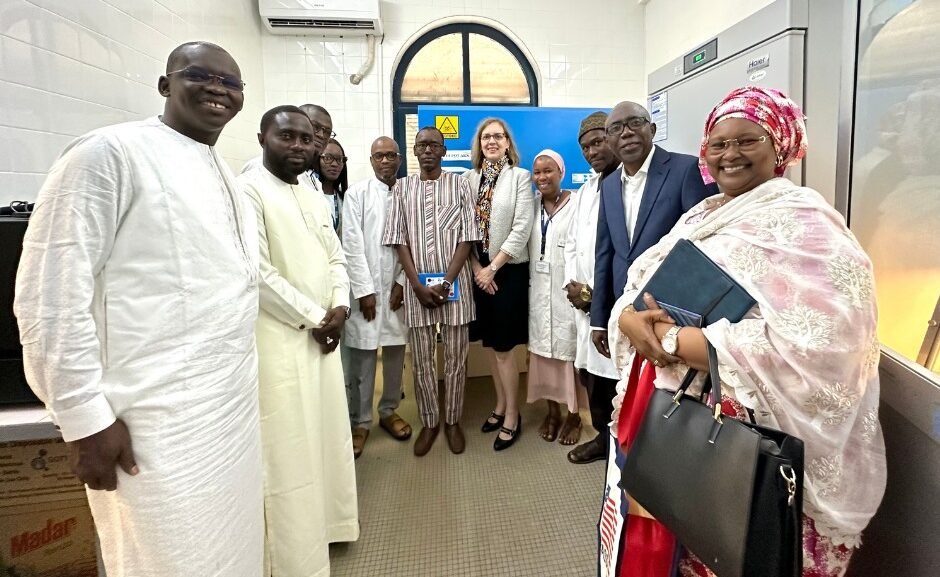
The United States Embassy in Senegal has reaffirmed its partnership with Senegal in strengthening health security, following a visit to the Molecular Diagnostic Unit laboratory at the Saint-Louis Regional Hospital.
The visit was led by Jennifer Davis Paguada, Business Manager at the U.S. Embassy in Senegal, who toured the laboratory supported by the U.S. Centers for Disease Control and Prevention. The engagement highlighted the importance of stronger local laboratory capacity in detecting and responding quickly to epidemics.
According to the U.S. Embassy, the new laboratory capabilities will help communities in Saint-Louis and surrounding areas identify public health threats faster, respond more effectively, and protect Senegalese families from infectious disease outbreaks.
The embassy noted that disease does not respect borders, making investment in Senegal’s health infrastructure not only beneficial to local communities, but also important for international health security.
“With these new laboratory capabilities, local communities can detect and respond to epidemics faster, protecting Senegalese families while establishing an early warning system that helps prevent diseases from reaching U.S. territory,” the embassy stated.
The visit underscored the growing importance of health diplomacy between Senegal and the United States, especially in a world where epidemics can move rapidly across regions through travel, trade, and migration.
For Senegal, improved molecular diagnostic capacity means quicker testing, stronger disease surveillance, better outbreak management, and more reliable public health response. For communities, it means families can benefit from earlier detection and more timely intervention before health emergencies spread widely.
The U.S. Embassy said the United States is proud to partner with Senegal to prevent the spread of infectious diseases and improve health outcomes in both countries.
“Strong health systems in Senegal mean safer communities here and greater safety for Americans around the world,” the embassy added.
The Saint-Louis visit also reflects a broader lesson from recent global health crises: local health systems are the first line of defense in protecting both national and international populations. When hospitals, laboratories, health workers, and disease surveillance systems are strengthened at the community level, the benefits extend far beyond one city or country.
Saint-Louis Regional Hospital’s Molecular Diagnostic Unit therefore represents more than a technical facility. It is part of a wider early warning network that can help public health authorities detect threats, track disease patterns, and respond before outbreaks become larger emergencies.
The CDC’s support for the laboratory also points to the practical value of international cooperation in health. Instead of waiting for crises to become global emergencies, partnerships such as this focus on prevention, preparedness, and rapid response.
For Senegalese families, the impact is immediate and human: faster diagnosis, better protection, stronger confidence in health facilities, and a greater chance of containing outbreaks before they disrupt communities.
For the United States, the investment reflects a recognition that global health security begins with strong partners. Supporting Senegal’s health infrastructure is therefore not only an act of friendship, but also a strategic approach to protecting lives across borders.
As Senegal continues to strengthen its public health system, the partnership with the United States in Saint-Louis demonstrates how diplomacy, science, and community health can work together to build safer societies.
At a time when infectious diseases remain a shared global threat, the message from Saint-Louis is clear: protecting one community helps protect many others.
About The Author