SENELEC-NAWEC partnership takes center stage at Senegal-Gambia Presidential Council
By Ebrima Fadera
Edited by Mutiu Olawuyi
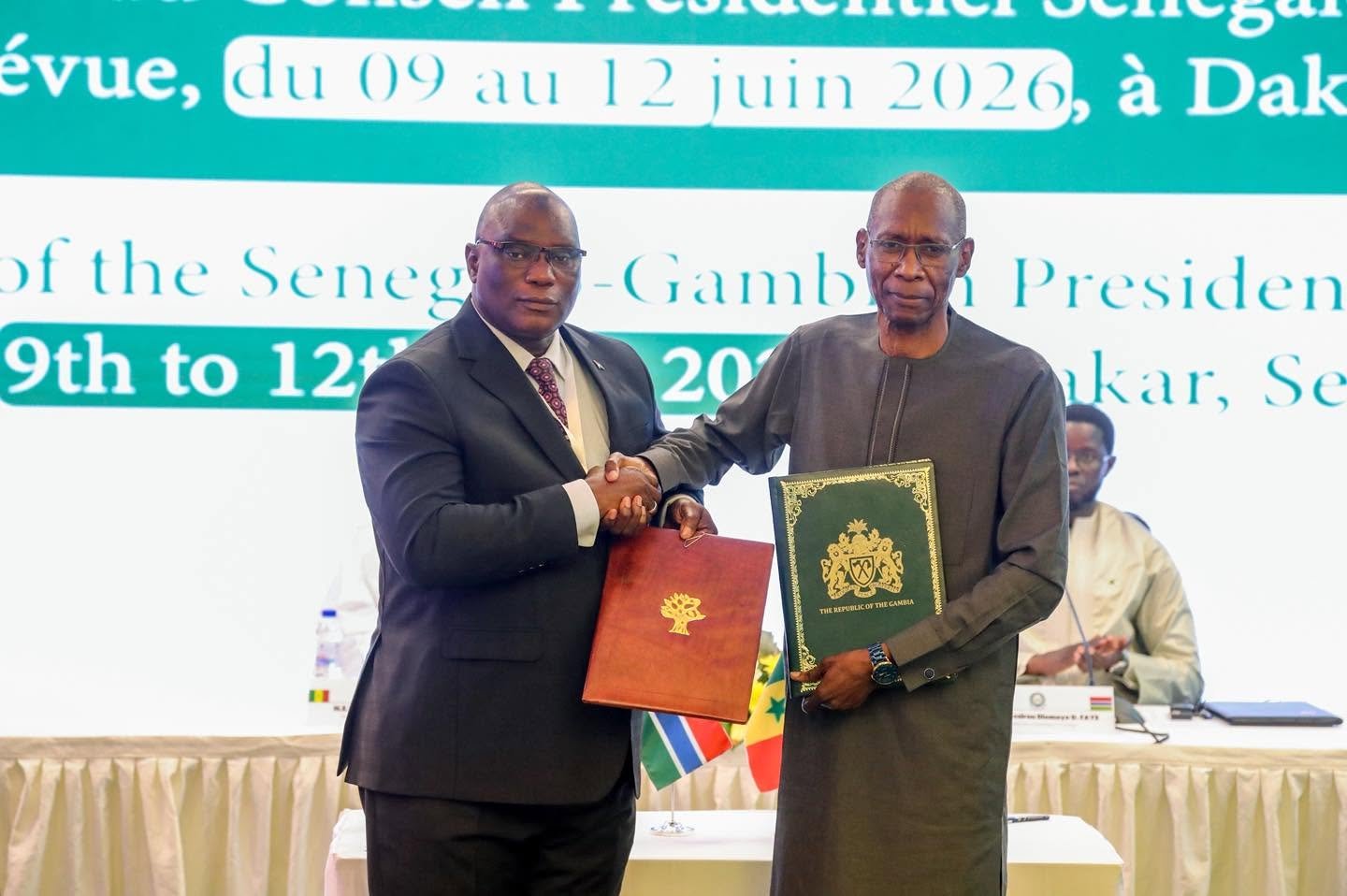
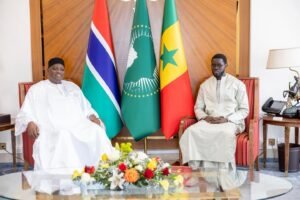
Energy cooperation between Senegal and The Gambia took center stage Thursday, June 12, as Presidents Bassirou Diomaye Diakhar Faye and Adama Barrow co-chaired the fourth session of the Senegal-Gambian Presidential Council in Dakar, reaffirming their commitment to building a more connected and energy-secure Senegambia region.
The high-level meeting, held eight years after the creation of the council, was framed by both leaders as a session of evaluation and action. The two presidents emphasized that bilateral commitments must move beyond official statements and produce concrete, measurable results for communities in both countries.
Among the major achievements highlighted was the electric interconnection between Senegal’s national electricity company, SENELEC, and The Gambia’s National Water and Electricity Company, NAWEC. The project has become one of the clearest examples of practical cooperation between the two countries, showing how shared infrastructure can help address common development needs.
 For many communities across the Senegambia region, electricity is not just an energy issue. It affects education, health care, agriculture, business, security, women’s economic participation and youth opportunity. Reliable power allows students to study at night, health centers to function better, small businesses to preserve goods, farmers to process produce and families to live with greater dignity.
The SENELEC-NAWEC partnership therefore represents more than technical cooperation between two utility companies. It is part of a wider regional development vision in which Senegal and The Gambia use their shared geography and historical ties to strengthen public services and support economic growth.
The two heads of state welcomed progress made from the Senegambia Bridge to the SENELEC-NAWEC electric interconnection, presenting both as symbols of what can happen when Banjul and Dakar coordinate their priorities. While the bridge improved mobility and trade, the power interconnection points toward a future of deeper energy integration and stronger regional resilience.
The council also outlined future priorities, including the materialization of the common border, the Sambangalou Dam, economic integration, agriculture, energy and climate resilience. These priorities reflect the understanding that the next phase of Senegambia cooperation must be built around infrastructure that directly improves livelihoods.
Energy was especially important in the discussions because both countries face growing demand for affordable, stable and sustainable electricity. As populations expand and economies modernize, power supply will remain central to industrial development, digital transformation, food systems, education and climate adaptation.
The Sambangalou Dam, if effectively advanced within the wider regional framework, could further support electricity generation, water management and climate resilience. In that context, the SENELEC-NAWEC interconnection may become part of a broader energy architecture linking national grids, regional power pools and renewable energy ambitions.
The fourth Presidential Council was crowned by the signing of 12 agreements and roadmaps covering defense and security, economy and trade, energy and hydrocarbons, digital transformation, youth, culture, environment and cross-border cooperation.
The inclusion of energy and hydrocarbons among the signed instruments demonstrates that power development is now one of the pillars of the Senegal-Gambia strategic partnership. For the people of both countries, the success of these agreements will be measured by their impact on access, affordability, reliability and productivity.
The two presidents also reaffirmed their shared commitment to peace, stability and good neighborliness within ECOWAS, the African Union and the United Nations. That commitment is critical because energy development depends on trust, security and long-term policy coordination.
Beyond the formal agreements, the meeting carried a deeper message about identity and destiny. Senegal and The Gambia remain two sovereign states, but their people are bound by history, families, culture, religion, trade and daily movement. As the presidency noted, the two countries are often understood as one people living in two countries, with a border that should serve not as a line of separation but as a line of unity.
That idea is particularly important for energy development. Electricity networks do not stop at political emotion; they require planning, maintenance, financing, regulation and cooperation. If managed responsibly, the SENELEC-NAWEC partnership can become a model for how African neighbors use shared systems to solve shared problems.
The challenge now is implementation. Agreements must translate into stronger power supply, better service delivery, transparent project management, fair pricing, technical reliability and visible benefits for households and businesses.
For The Gambia, energy cooperation with Senegal can support efforts to expand access and reduce pressure on domestic supply systems. For Senegal, deeper cooperation with The Gambia strengthens regional integration and expands its role in West African energy connectivity. For border communities, it can mean more reliable electricity, better economic activity and stronger public confidence in bilateral cooperation.
The fourth Senegal-Gambian Presidential Council has therefore placed power development where it belongs: at the heart of regional integration. Roads and bridges connect people physically, but electricity connects opportunity.
If the SENELEC-NAWEC partnership continues to grow with discipline, transparency and citizen-centered planning, it could become one of the strongest foundations for a more productive, secure and prosperous Senegambia region.
About The Author