Editorial | Senegal’s Constitution Must Not Become a Battlefield of Political Wounds
By Mutiu Olawuyi
Chief Editor, Senegambia Times
Senegal is once again standing before the mirror of its democracy. What it sees today is not merely a constitutional amendment. It is a nation wrestling with power, trust, memory, ambition and the unfinished work of democratic maturity.
The recent constitutional amendment passed by the National Assembly has been presented by its supporters as a necessary step toward limiting excessive presidential power, strengthening Parliament, improving institutional accountability and deepening constitutional oversight. On paper, many of these objectives are not only defensible; they are desirable.
Indeed, no serious democrat should fear a stronger Parliament. No responsible republic should reject greater transparency in agreements involving natural resources. No citizen should oppose inquiry powers that allow elected representatives to ask hard questions on behalf of the people. Likewise, no country that has lived through electoral anxiety should ignore the need for clearer constitutional safeguards.
Senegal has seen enough to understand why institutions must be stronger than personalities.
The memory of 2024 remains fresh. The republic was shaken when the presidential election was postponed. Citizens marched. Institutions were tested. Political nerves tightened. For a moment, Senegal came close to a dangerous bend in its democratic road. Yet the country survived because its civic culture, legal institutions, political actors and citizens eventually pulled it back from the edge.
That history should have produced one national lesson: the Constitution must never again be treated as a political instrument to serve the convenience of those in power.
Therefore, the current reform deserves serious discussion, not shallow applause or reflexive rejection. Senegal needs constitutional reform. More importantly, however, Senegal needs constitutional healing.
There is a difference between reforming a Constitution to protect the republic and amending it to settle political scores. There is a difference between strengthening Parliament for the people and strengthening Parliament against one man. Similarly, there is a difference between limiting presidential excess and creating another center of institutional conflict.
This is where Senegal must be careful.
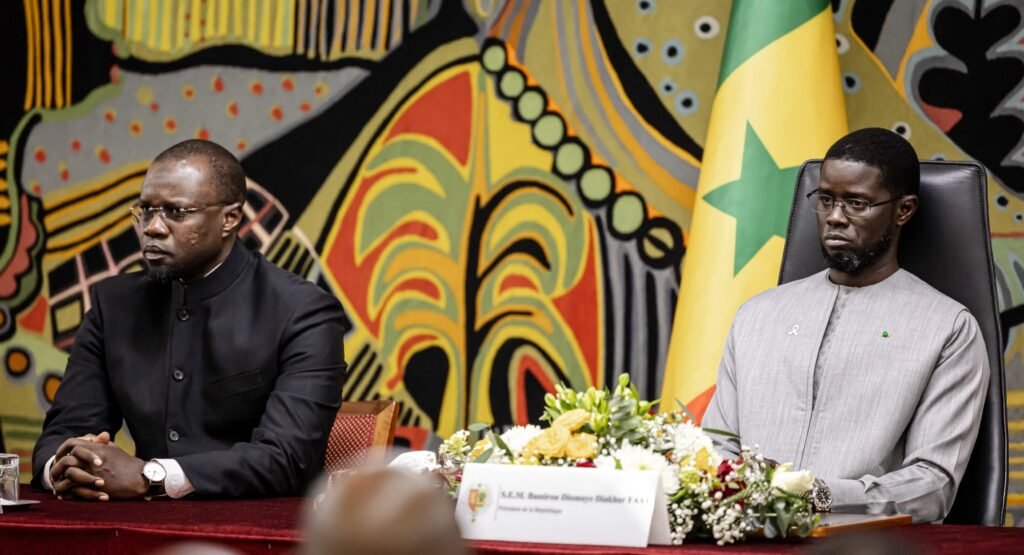
The political climate surrounding the amendment is troubling. The reform comes at a moment of visible tension between President Bassirou Diomaye Faye and Ousmane Sonko, the former prime minister who now leads the National Assembly. Their political partnership once represented hope for rupture, renewal and moral correction. Today, however, that same partnership appears strained by competing interpretations of power, loyalty and direction.
The people did not vote for a government of rivalry. They voted for relief. They voted for jobs, dignity, lower cost of living, justice, institutional discipline, accountable leadership and a new national ethic.
They did not vote for constitutional brinkmanship.
If constitutional reform becomes another chapter in a power struggle between the presidency and the parliamentary majority, ordinary Senegalese will lose again. The trader in Kaolack, the farmer in Kolda, the student in Saint-Louis, the fisherman in Mbour, the unemployed graduate in Dakar and the mother struggling with food prices will not benefit from elite quarrels dressed in legal language.
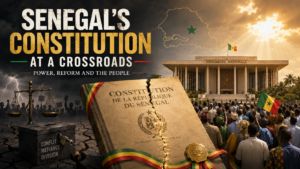
After all, Senegal’s Constitution is not the private property of the president. It is not the private property of Parliament. It is not the private property of Pastef, the opposition, civil society, jurists or activists. It belongs to the people.
And because it belongs to the people, any amendment to it must carry the moral weight of national consensus.
To be fair, some provisions in the reform deserve serious support. Requiring the government to inform Parliament about agreements related to natural resource exploitation is a strong democratic principle. Senegal’s oil, gas, minerals and strategic assets must not be governed in darkness. The people deserve to know how national wealth is negotiated, who benefits, what safeguards exist and how future generations are protected.
Parliamentary inquiry powers can also strengthen accountability. A legislature that cannot investigate meaningfully is a legislature that cannot defend the public interest. In a democracy, oversight is not obstruction. It is protection.
In addition, the proposal to replace the Constitutional Council with a Constitutional Court may be useful if it strengthens independence, competence and public confidence. Still, the question is not only whether a new court is created. The deeper question is who appoints its members, how independent they will be, what safeguards protect them from political pressure and whether citizens will see the court as an institution of justice or another instrument of power.
Institutions do not become credible because their names change. They become credible because their design, leadership and conduct inspire trust.
The restriction on presidential dissolution of Parliament also deserves careful public examination. Senegal has lived under a strong presidential tradition for decades. Reducing excessive executive power may help rebalance the republic. Nevertheless, if the reform simply moves the danger from an over-powerful presidency to an over-dominant parliamentary majority, Senegal will not have solved its problem. It will only have relocated it.
Democracy is not safe when one man controls everything. Nor is it safe when one party controls everything.
That is why balance matters.
The provision separating the role of head of state from political party leadership can also strengthen institutional neutrality. A president should govern the whole nation, not only the party that brought him to office. Yet this principle must be applied sincerely, not selectively. It must become a national ethic, not a weapon for the moment.
The government’s announcement that the reform will be submitted to a referendum is important. A referendum can restore legitimacy if it is properly conducted. However, a referendum should not be treated as a battlefield where one camp must humiliate another. It should be a civic process of national explanation, public education and respectful debate.
Senegalese citizens must understand what is being changed, why it is being changed, what risks exist, what benefits are expected and how the reform will affect the balance of power.
A Constitution cannot be amended through slogans alone. “Reform” is not enough. “Resistance” is not enough. “Rupture” is not enough. “Hands off my Constitution” is not enough. The people need clarity.
They need the text explained in Wolof, Pulaar, Serer, Jola, Mandinka, Soninke, French and every language of civic understanding. They need town halls, legal analysis, neutral media debates, youth forums, women’s consultations, religious and traditional community conversations, university panels and civil society monitoring.
In other words, constitutional literacy must come before constitutional voting.
The protests outside the National Assembly should also worry every responsible leader. When citizens feel excluded from constitutional change, the street becomes their Parliament. That is dangerous for democracy. At the same time, it is a warning to those in power.
Tear gas may disperse a crowd, but it does not answer a constitutional question. Arrests may silence a protest, but they do not build consensus.
A mature republic listens before it hardens.
At this moment, Senegal must choose between two paths. One path turns this amendment into another political war between rival centers of power. That path will deepen suspicion, weaken public trust and turn constitutional reform into a symbol of division.
The other path turns this moment into a national dialogue about how Senegal should be governed for the next generation. That path requires humility from the presidency, restraint from Parliament, honesty from political parties, responsibility from civil society and vigilance from citizens.
 President Faye must resist the temptation to see every parliamentary move as an attack on his office. Ousmane Sonko and the National Assembly must resist the temptation to use legislative strength as political punishment. The opposition must critique responsibly without turning every reform into a conspiracy. Civil society must defend the Constitution without becoming an echo chamber for partisan anxiety.
The republic needs adults in the room.
For decades, Senegal has been celebrated as one of West Africa’s democratic anchors. Yet democratic reputation is not a permanent inheritance. It must be renewed by each generation through conduct, restraint and respect for institutions.
The test of Senegal’s democracy is not whether leaders can pass amendments. It is whether they can build trust around them.
The test is not whether Parliament can weaken the presidency. It is whether institutions can strengthen the citizen.
The test is not whether one political camp wins the referendum. It is whether Senegal emerges more united, more accountable and more protected from future abuse.
A wiser path is still possible.
First, the full text of the amendment should be made widely available and explained in accessible language. Citizens cannot vote meaningfully on what they do not understand.
Second, an independent civic education process should be launched before the referendum. Universities, bar associations, media houses, religious leaders, women’s groups, youth organizations and disability rights groups should all be engaged.
Third, the presidency and Parliament should establish a formal framework for dialogue on the reform. The Constitution is too important to be managed through political messaging and public suspicion.
Fourth, any new Constitutional Court must be designed with safeguards strong enough to protect judicial independence. Appointment procedures, tenure, ethics rules and conflict-of-interest protections must be transparent.
Fifth, security forces must respect the right to peaceful protest. A constitutional debate cannot be handled as a public order nuisance. Citizens have the right to question power.
Finally, Senegalese political actors must remember the ordinary citizen. Constitutional architecture matters, but people are hungry for results. They want justice, jobs, electricity, health care, fair prices, good schools, safer communities and honest governance. Institutional reform must eventually serve these needs.
A Constitution is not only a legal document. It is a covenant of trust. It tells citizens that power has limits, rights have meaning, institutions have duties and no leader is bigger than the republic.
Senegal’s constitutional amendment may contain useful reforms. Even so, useful reforms can become dangerous if born in mistrust, rushed through division or defended with arrogance.
The country does not need a Constitution written in the language of revenge. It needs a Constitution protected by the spirit of justice.
It does not need a stronger Parliament merely to weaken a president. It needs stronger institutions to protect the people.
It does not need another political victory. It needs democratic repair.
Senegal must not waste this moment. If handled wisely, the amendment can help rebalance power and deepen accountability. If mishandled, it can open a new wound in a country already tired of political tension.
The Constitution must not become a battlefield of political wounds. It must remain the house where the republic finds shelter.
And in that house, every citizen must have a room.
About The Author