Editorial: Senegal’s Dialogue Moment Must Not Become a Political Funeral for Public Trust
By Mutiu Olawuyi
Chief Editor, Senegambia Times
Senegal is again standing at one of those delicate political crossroads where leadership is measured not only by constitutional power, but by emotional intelligence, institutional restraint, and the courage to put national stability above personal rivalry.
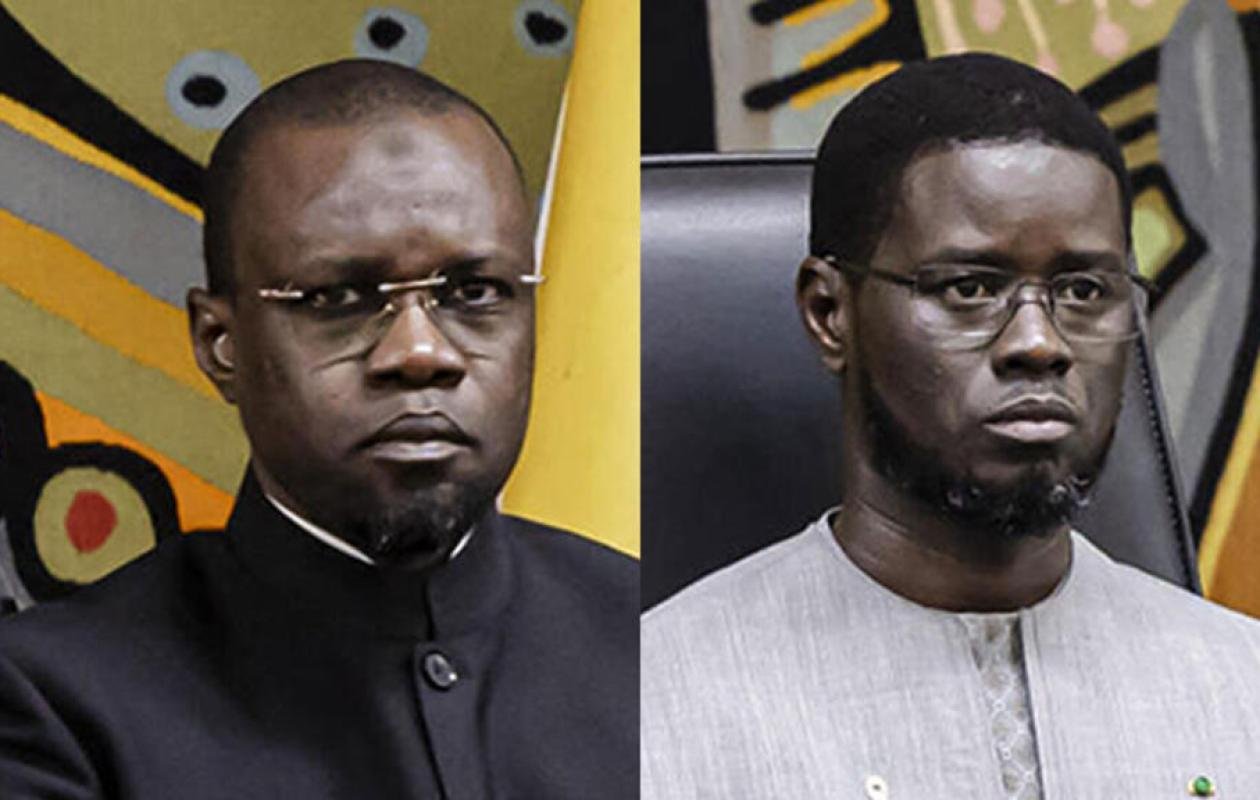
The recent dismissal of Prime Minister Ousmane Sonko, the dissolution of the government, and the subsequent wave of consultations led by President Bassirou Diomaye Diakhar Faye have created a political moment that must be handled with maturity by all sides. According to international reports, the President dismissed Sonko and dissolved the cabinet after months of tension between two former allies whose political partnership shaped Senegal’s historic 2024 transition. The outgoing ministers were reportedly asked to manage current affairs pending the formation of a new government.
This is not an ordinary reshuffle. It is a defining test of Senegal’s democratic culture.
For many citizens, Sonko is not merely a former Prime Minister. He is a political force, a symbol of resistance, and a major architect of the popular movement that brought the current dispensation to power. For others, President Faye is the constitutional Head of State entrusted with the responsibility to govern, decide, appoint, dismiss, stabilize, and protect the Republic from paralysis. Between these two truths lies the danger Senegal must avoid: turning a political disagreement into a national fracture.
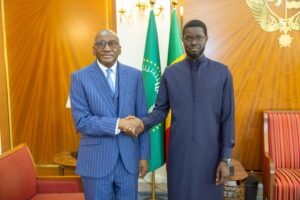
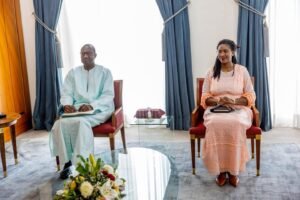
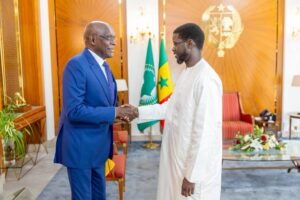
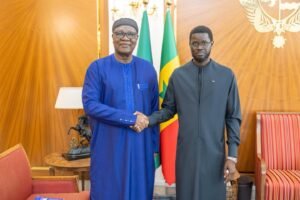
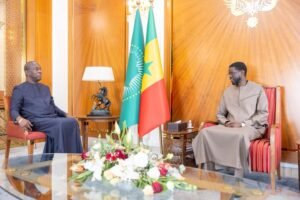
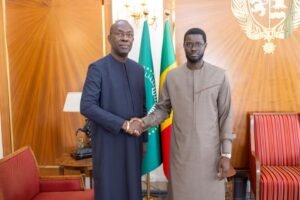
That is why the President’s decision to open consultations under the framework of the National Day of Dialogue is important. Receiving former Prime Ministers, former Interior Ministers, and other experienced state actors sends a necessary message: the Republic is larger than any party, any administration, any political camp, and any individual ambition.
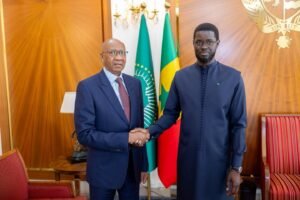
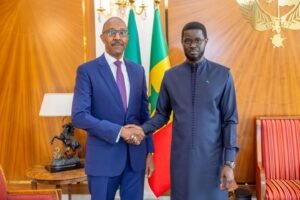
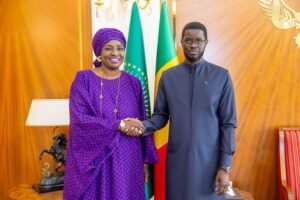
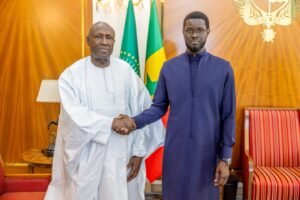
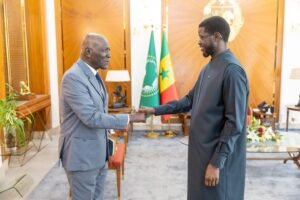
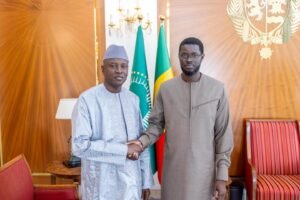
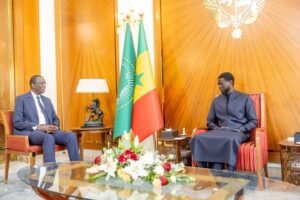
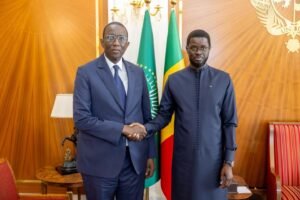
According to the Presidency’s summary of the consultations, President Faye received former heads of government including Cheikh Hadjibou Soumaré, Abdoul Mbaye, Aminata Touré, Amadou Ba, Sidiki Kaba, Mamadou Lamine Loum, and Souleymane Ndéné Ndiaye. He also consulted former Interior Ministers including André Sonko, Ousmane Ngom, Cheikh Tidiane Sy, Mbaye Ndiaye, Aly Ngouille Ndiaye, and Antoine Félix Diome. The discussions covered the economy, national security, the electoral process, public service performance, hydrocarbons, employment, cybersecurity, and regional instability.
This is the right instinct. But consultation must not become political decoration. It must become a governing discipline.
Senegal’s current challenges are too serious for symbolic dialogue alone. The country is facing economic pressure, fiscal concern, public anxiety, youth unemployment, institutional expectations, and complex regional security threats. Reuters has reported that Senegal’s economic situation is being complicated by a suspended IMF lending program linked to debt-reporting issues, with debt concerns and difficult policy choices forming part of the national debate.
In this context, the dissolution of government must not delay service delivery. It must accelerate correction. If the President is reorganizing public action, then the new government must be leaner, clearer, more accountable, and more responsive to the daily pressures of citizens.
The Presidency’s announcement that government performance reviews will now be held every 15 days, while the Council of Ministers will be reorganized on a weekly basis for a period, is a welcome managerial signal. But Senegalese citizens will not judge governance by the frequency of meetings. They will judge it by the price of food, the availability of jobs, the credibility of reforms, the fairness of elections, the safety of communities, and the humility of those in power.
The deeper issue before Senegal is not whether a President has the authority to sack a Prime Minister. Constitutionally, that power exists. The deeper issue is whether the exercise of that power strengthens or weakens public confidence.
This is where Senegal’s political class must be careful.
Supporters of Sonko must resist the temptation to interpret every presidential decision as betrayal. Supporters of Faye must resist the temptation to treat legitimate concern as sabotage. Opposition voices must avoid opportunistic celebration of instability. Civil society must remain vigilant without becoming inflammatory. Religious and traditional leaders must speak with balance. The media must report firmly without pouring petrol on national anxiety.
Senegal has earned its reputation as one of West Africa’s most politically mature democracies not because it has no crises, but because it has repeatedly found ways to manage crisis without destroying the Republic. That inheritance must not be wasted.
The President’s consultation with former Interior Ministers is especially significant. Senegal’s electoral process is one of the strongest pillars of its democratic identity. Any reform touching elections must be handled with broad consensus, transparency, and institutional humility. Electoral rules should never appear as weapons designed by one camp against another. They must remain the shared architecture of democratic competition.
Amadou Ba’s recent communiqué after meeting the President captured this concern when he emphasized that democratic rules must inspire confidence among all political actors. That is not merely an opposition talking point; it is a republican principle.
The same applies to security. In a region where instability is no longer distant, Senegal must protect its borders, strengthen its defense and security forces, support border communities, and address the social conditions that make insecurity easier to exploit. But security must not become an excuse for shrinking civic space. A stable Senegal must be both secure and free.
The fall of a Prime Minister should not become the fall of national discipline. The dismissal of ministers should not become the dismissal of public service continuity. The end of one governing team should not become the beginning of bitterness.
President Faye now carries an enormous burden. He must show that this political reset is not about consolidating personal control, but about restoring governmental efficiency and protecting national cohesion. He must appoint a government that reflects competence, integrity, inclusion, and urgency. He must communicate clearly to the nation, not only through decrees and palace summaries, but through a moral language citizens can trust.
Ousmane Sonko also carries a burden. His influence remains real. His words can calm or inflame. His conduct after dismissal will shape not only his political future, but the stability of the movement he helped build. History will not judge him only by how he fought for power, but by how he behaves when power shifts away from him.
The opposition, too, has a responsibility. This is not the time for destructive politics. Senegal needs a credible, organized, patriotic opposition that can challenge government decisions without undermining the country’s stability. The unity Amadou Ba called for must be based not on bitterness, but on democratic seriousness.
The consultations now underway should lead to three immediate outcomes.
First, a clear national stabilization roadmap. Senegalese citizens deserve to know the priorities of the next government, the timeline for action, and the mechanisms for accountability.
Second, a transparent economic recovery conversation. Government must tell citizens the truth about public finance, debt, subsidies, employment, and the hard choices ahead. People can endure difficulty when they believe leadership is honest and fair.
Third, a credible political confidence framework. Electoral reforms, institutional reforms, and public administration reforms must be handled inclusively. Senegal must not allow technical reforms to become political traps.
The most dangerous thing in this moment would be triumphalism from one side and victimhood from the other. The most useful thing would be disciplined dialogue, lawful opposition, accountable governance, and a shared refusal to let Senegal slide into avoidable polarization.
Senegal does not need politics of humiliation. It needs politics of repair.
It does not need leaders who only defeat one another. It needs leaders who can disagree without injuring the nation.
It does not need dialogue as performance. It needs dialogue as a path to institutional healing.
The Republic is not owned by the President. It is not owned by a Prime Minister. It is not owned by PASTEF, the opposition, the old political class, or the new political class. The Republic belongs to the Senegalese people — including the market woman worried about prices, the graduate looking for work, the farmer watching the rains, the border community worried about security, the young activist demanding dignity, and the elderly citizen praying that Senegal remains peaceful.
This is the moment for President Faye to prove that listening is not weakness. It is leadership.
This is the moment for Sonko to prove that political strength can coexist with restraint.
This is the moment for former leaders to prove that experience is not retirement from national duty.
And this is the moment for Senegal to prove, once again, that democracy is not the absence of tension, but the ability to manage tension without losing the soul of the nation.
The nation is watching. West Africa is watching. History is taking notes.
About The Author