Faye fires Sonko, dissolves Senegal government
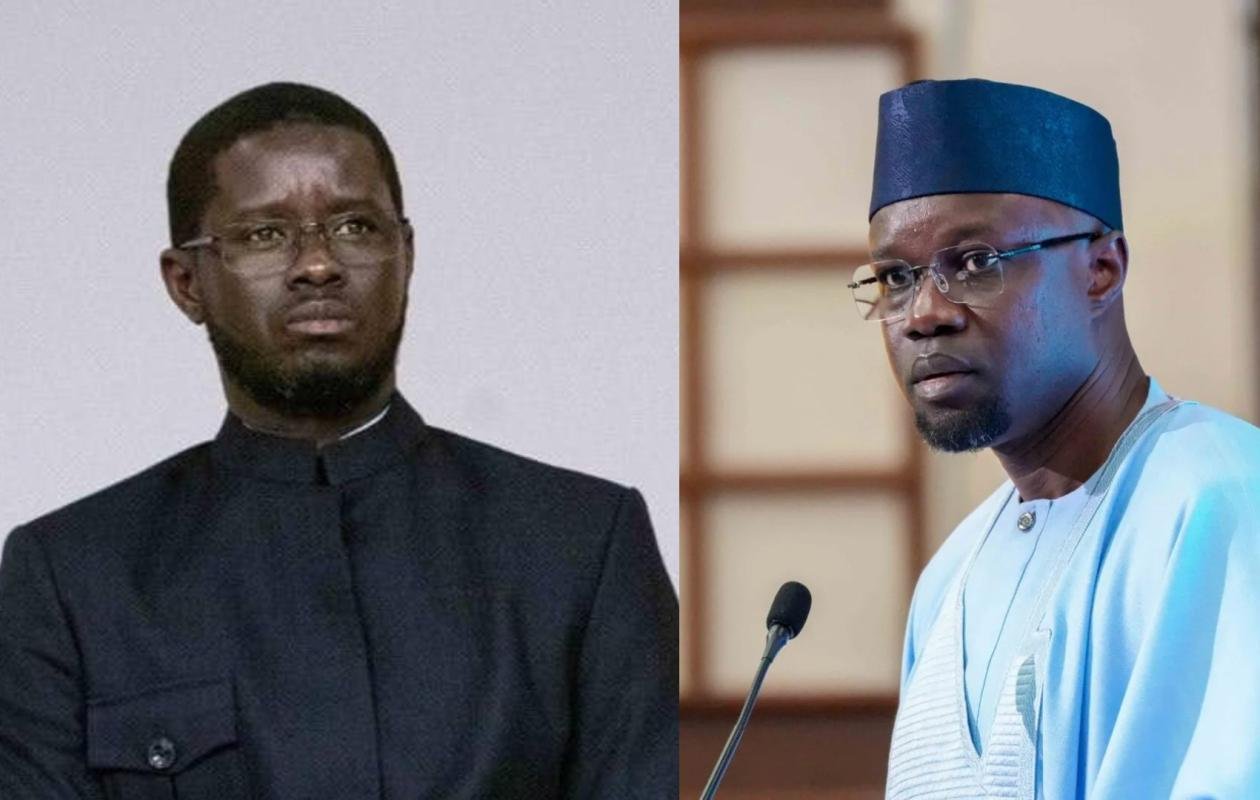
The dismissal ends a strained alliance between President Bassirou Diomaye Faye and Prime Minister Ousmane Sonko, raising fresh questions about political stability, economic recovery and public trust.
By Mutiu Olawuyi
Senegal has entered a delicate political moment after President Bassirou Diomaye Faye dismissed Prime Minister Ousmane Sonko and dissolved the government following months of tension between the two former allies.
The decision was announced on Friday, May 22, 2026, through a statement read on state media by Oumar Samba Ba, secretary-general of the presidency. Reuters reported that all ministers were dismissed, while the outgoing government was asked to continue handling day-to-day affairs pending the formation of a new administration.
According to the Associated Press, Ba said the dismissal of the Prime Minister led to the resignation of all government ministers and the dissolution of the cabinet.
Sonko responded briefly after his dismissal, writing: “Alhamdoulillah. Ce soir je dormirai le cœur léger à la cité Keur Gorgui.” In English: “Praise be to Allah. Tonight I will sleep with a light heart in the Keur Gorgui neighborhood.”
The statement was calm, but the political meaning of the moment is significant. Faye and Sonko came to power as symbols of change after the 2024 election. Sonko, leader of Pastef and a popular opposition figure with strong youth support, backed Faye after being barred from running because of a defamation conviction. Faye later appointed him Prime Minister.
Their relationship, however, had become increasingly tense. Reuters reported that disagreements included key financial measures and IMF-linked debt restructuring. Senegal is currently facing a debt crisis and a suspended $1.8 billion IMF programme linked to misreported debt figures, making political clarity especially important for economic confidence.
For citizens, the immediate question is not only who replaces Sonko. The larger issue is whether Senegal’s institutions can manage this transition without slowing reforms, weakening public confidence or deepening political uncertainty.
Senegal’s democratic reputation has long rested on institutional resilience, civic maturity and the ability to manage political disagreement through lawful processes. This moment will test those strengths.
The presidency now faces the urgent task of naming a capable Prime Minister, explaining the next phase of governance and reassuring citizens that public services, economic negotiations and reform commitments will continue. Pastef, opposition parties, civil society and youth movements also have a responsibility to avoid language or action that could inflame public tension.
The public expectations that shaped the 2024 election remain active: accountability, economic renewal, sovereignty, youth inclusion and stronger institutions. Those expectations should not be lost in political rivalry.
A steady path forward should include transparent communication from the presidency, continued engagement with the National Assembly, protection of civil liberties, responsible economic management and a clear commitment to national stability.
Sonko’s restrained reaction may help reduce immediate political heat. But Senegal’s leaders still carry the greater responsibility of ensuring that disagreement at the top of government does not become uncertainty for ordinary citizens.
As the country waits for a new government, this moment should be treated as a test of state discipline. Senegal can emerge stronger if its leaders place institutions above personalities, public interest above party tension, and national stability above political calculation.
About The Author