Alleged Islamophobic remark renews debate on media responsibility in Nigeria

The controversy surrounding an alleged anti-Muslim comment attributed to a Nigerian Tribune reporter has opened a broader conversation not only about one individual’s judgment, but about the role of the media in protecting social peace in religiously diverse societies.
The journalist at the center of the backlash, Yetunde Ajanaku, has been criticized online after a remark linked to her Facebook account circulated publicly. One of the alleged statements, written in Yoruba, has been translated as: “Only fools practice Islam.” The comment reportedly appeared beneath a post said to show an interfaith marriage involving a Muslim woman and a non-Muslim man.
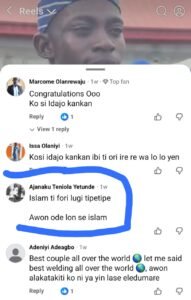
What makes the issue especially serious is not simply the offensiveness of the alleged phrase, but the context in which it emerged. Nigeria remains one of Africa’s most religiously influential nations, but also one where careless public language about faith can quickly deepen old wounds. In such an environment, journalism carries obligations beyond information delivery. It also carries the duty not to aggravate social fractures.
That is why the incident has drawn concern well beyond ordinary social media outrage. If accurately attributed, the remark would amount not merely to an unprofessional outburst, but to a form of Islamophobia that sits uneasily with the ethical expectations of journalism. A reporter is expected to approach communities with fairness, discipline, and respect. A public expression of contempt toward a faith community raises legitimate questions about trust, balance, and professional fitness.
The matter has also attracted attention because Ajanaku is known not only as a reporter but also as the founder of Ibadan Ladies Hub, a platform associated with women’s empowerment. Critics argue that public influence of that kind should come with even greater care, especially in a country where public speech can shape attitudes far beyond one’s immediate followers.
One of the reactions circulating online called on the Nigerian Tribune to distance itself from the alleged conduct and take steps to protect its professional credibility. That demand reflects a wider public expectation: when hate-sensitive language is linked to journalists, media institutions should not retreat into silence.
But there is a larger lesson here, and it reaches beyond one newsroom. Across West Africa, the health of democracy depends partly on whether the media can remain a stabilizing force in times of tension. Press freedom is essential, but so is ethical responsibility. The same public platform that can enlighten can also injure when it is used recklessly.
This is why the current moment should be treated as more than a reputational issue. It is an opportunity for institutional reflection. Newsrooms, media owners, and professional bodies may need to strengthen standards around online conduct, religious sensitivity, and how journalists carry their public identity beyond formal reporting spaces.
A constructive response would not seek to inflame the controversy further. It would seek clarity, accountability, and learning. If the allegation is true, then it deserves a response rooted in ethical seriousness. If there is context or dispute around attribution, that too should be addressed openly and responsibly. Either way, silence would only deepen distrust.
The deeper concern is this: when journalists appear to mock or demean a faith community, the damage is not confined to one comment. It can weaken confidence in the fairness of the press itself. And in societies where religion remains central to identity, that loss of trust can carry consequences far beyond the newsroom.
For Nigeria — and indeed for the wider region — the press must remain more than a platform for reaction. It must be a guardian of truth, restraint, and civic responsibility.
That is why Islamophobia, whether open or disguised, must never be normalized in journalism.
About The Author