Barrow opens 91-kilometer Kiang West Roads Project in Lower River Region
By Mutiu Olawuyi
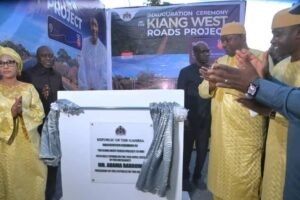
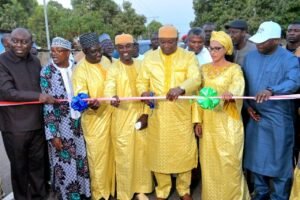
President Adama Barrow has officially commissioned the 91-kilometer Kiang West Roads Project, marking a major infrastructure milestone for communities in the Lower River Region (LRR) that have long faced isolation and limited access to essential services.
The road project responds to a longstanding need in the region, where poor transport links have for years affected mobility, trade, and access to basic services such as electricity, clean water, education, and healthcare.
The project is being implemented in two phases to improve connectivity across multiple communities.
Phase One covers Sankandi, Jiffarong, Bajana, Kuli Kunda, Keneba, Manduar, Kuyang, and Karantaba.
Phase Two covers Jolli, Tankular, Keneba, Kemoto, Mandina, Janneh Kunda, Jula Kunda, Burang, Taburankoto, Misira Tenda, Jissay, and Kanto Kunda.
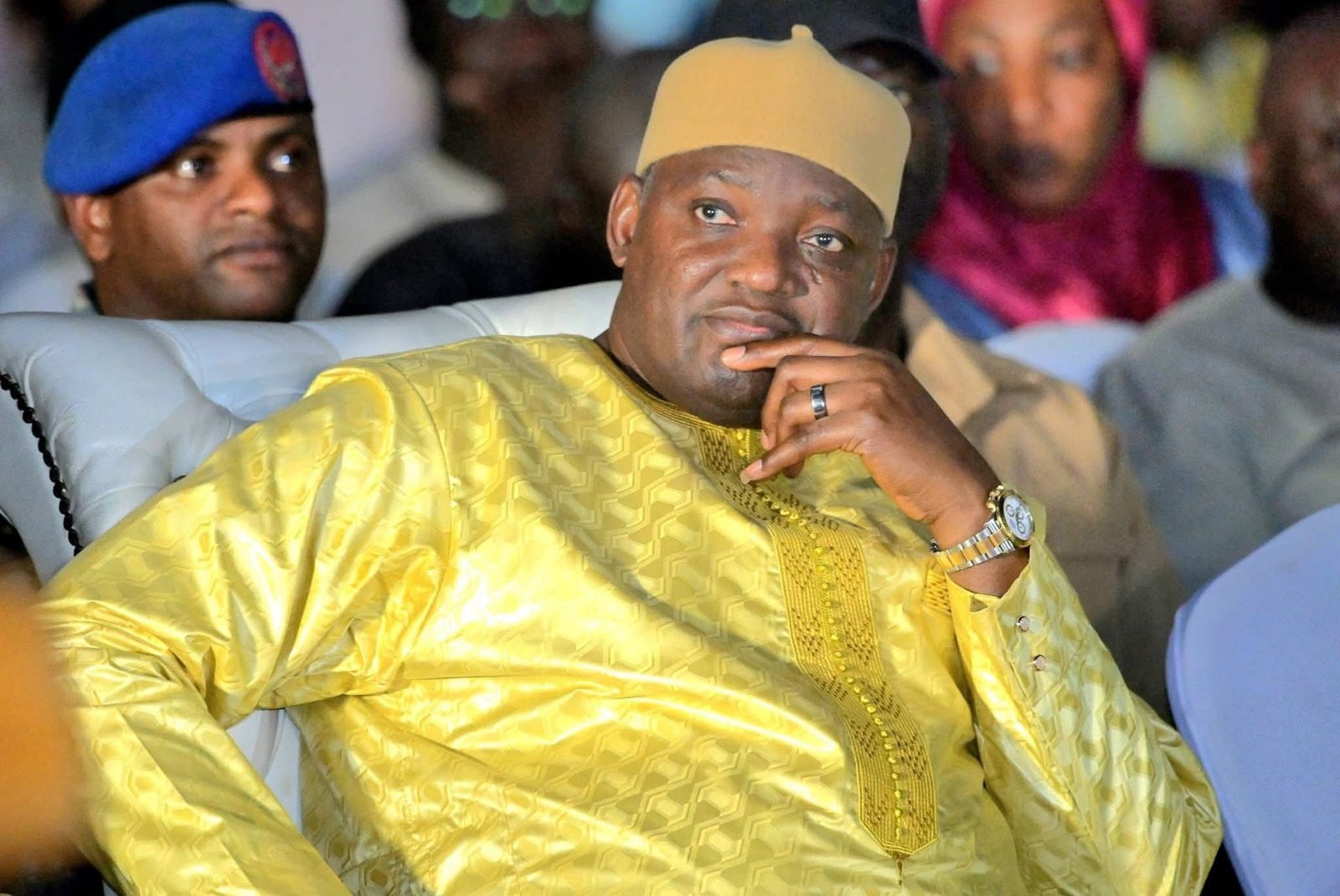
Speaking at the commissioning, President Barrow highlighted the transformative importance of the project, describing it as a critical investment in connectivity, road safety, and inclusive development. He urged road users and communities to take shared responsibility for preserving the infrastructure and respecting traffic rules in order to protect the value of the investment.
The significance of the project goes beyond road construction. In rural regions, transport infrastructure often determines whether farmers can reach markets, whether children can get to school more safely, whether patients can access timely medical care, and whether local businesses can expand. Better roads do not solve every development challenge, but they can reduce the isolation that often deepens poverty and slows opportunity.
For Kiang West and surrounding communities, the new roads are expected to ease movement, shorten travel time, and strengthen the links between villages and economic centers. In practical terms, this can improve not only transportation, but also the everyday rhythm of social and economic life.
 Village leaders and members of community groups welcomed the development and expressed gratitude for what they described as continued government attention to the region. They also reaffirmed support for national development efforts aimed at expanding opportunity beyond the main urban centers.
This Kiang West Roads Project represents more than a public works achievement. It reflects a broader development principle: when remote communities are better connected, they are better positioned to participate in national life with dignity, access, and hope.
About The Author