Gambia: Government moves to contain fuel price surge with subsidy package
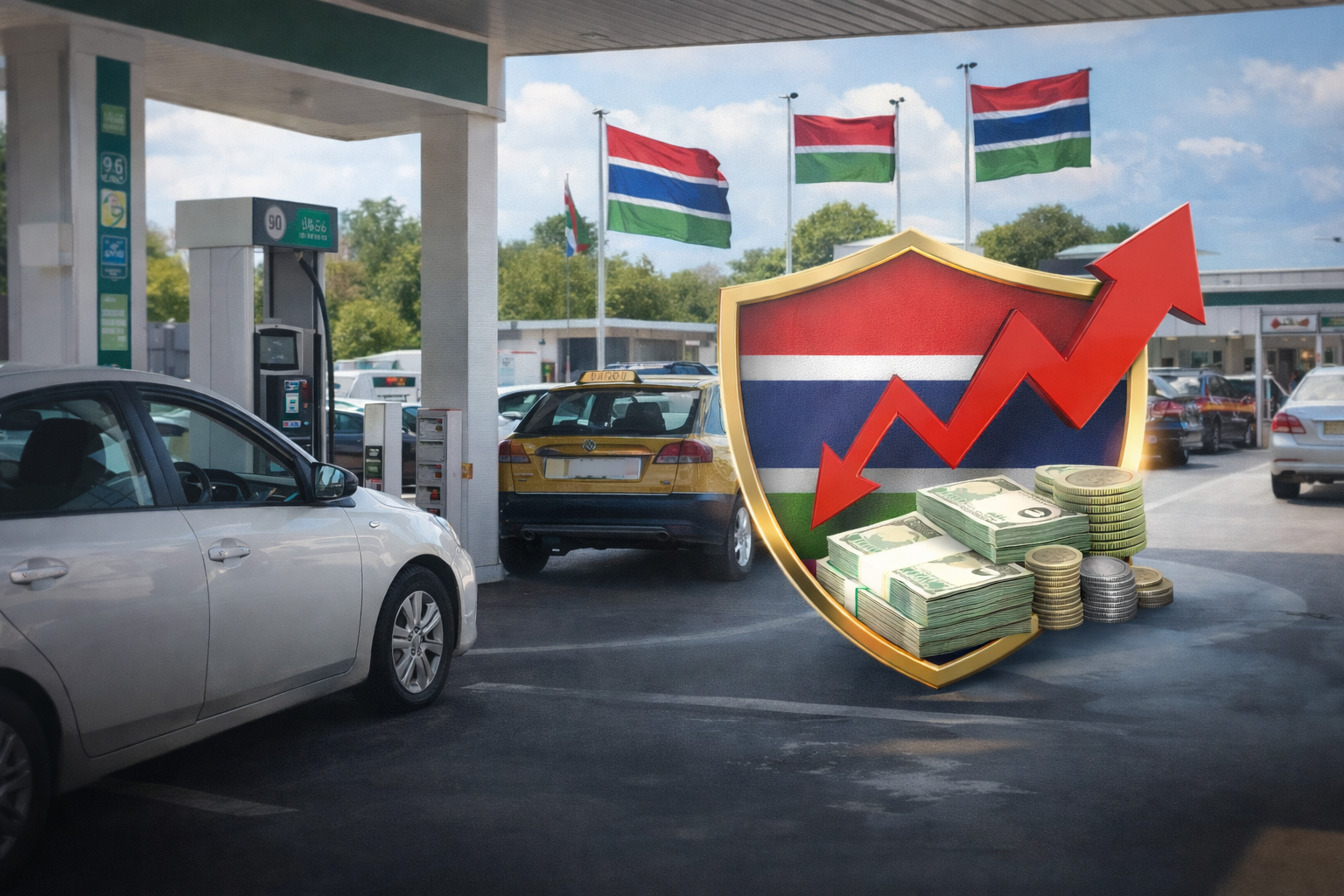
The Government of The Gambia has announced a series of subsidy measures aimed at protecting households and businesses from the impact of rising global fuel prices, offering temporary relief as international market pressures continue to push energy costs upward.
In a press release dated April 3, 2026, the Ministry of Petroleum, Energy and Mines said recent tensions in the Middle East have disrupted oil supply and transportation routes, triggering a sharp increase in international fuel prices. According to the ministry, the indicative price for April would have reached D101.29 per litre for petrol and D124.72 per litre for diesel if the full increase had been passed on to consumers.
Instead, the government approved lower pump prices for April 2026, setting petrol at D98.00 per litre and diesel at D95.00 per litre.
The ministry said this means the state is absorbing part of the shock through subsidies of D3.29 per litre on petrol and D29.72 per litre on diesel. Altogether, the fuel subsidy for the period amounts to D316,146,722.52, underscoring the scale of the intervention.
The measure signals an effort to balance economic reality with social protection. Fuel prices do not affect transport alone. They shape food distribution, small business costs, farming logistics, electricity-related spending, and the broader cost of living. By stepping in at this point, the government appears to be trying to prevent global instability from translating too quickly into severe domestic hardship.
The ministry also said the government will continue working closely with Oil Marketing Companies and other stakeholders to maintain fuel supply and responsible pricing. Officials added that global developments will be monitored closely and that further action may be taken if necessary to protect consumers while ensuring availability.
For ordinary Gambians, the announcement offers short-term breathing space. For policymakers, however, it also highlights a deeper challenge: how to shield citizens from volatile international energy markets while sustaining fiscal discipline and long-term energy resilience.
At a time when many countries are struggling to absorb imported inflation, the Gambian government’s intervention may help stabilize transport and market activity in the immediate term. The longer-term test will be whether such protective measures can be paired with broader strategies for energy security, economic resilience, and affordability.
About The Author