

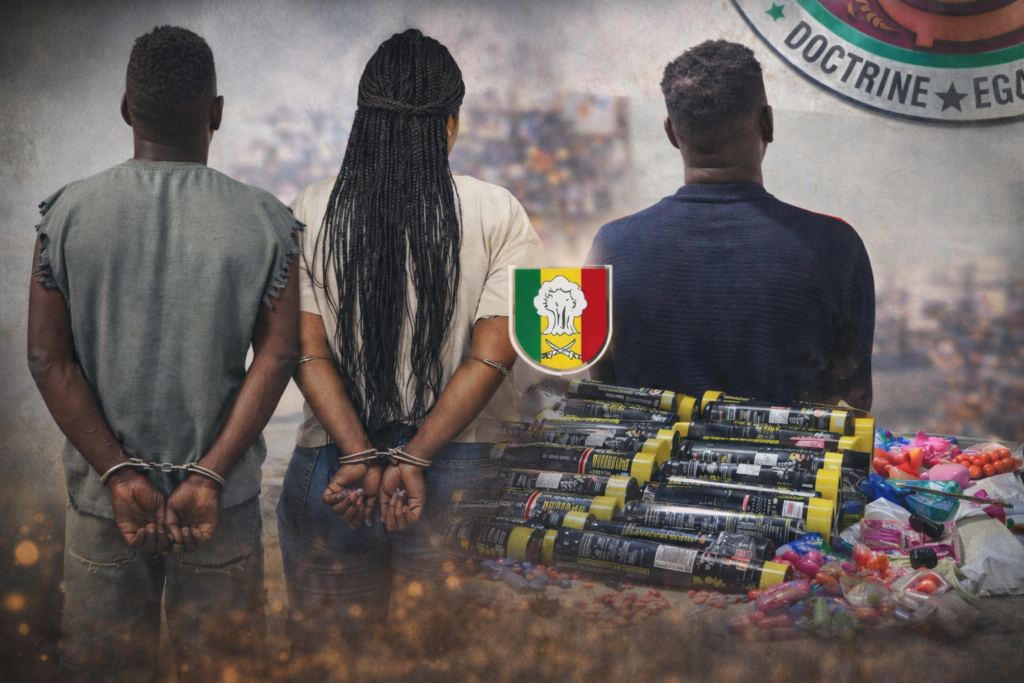
Senegal’s anti-narcotics authorities say they have dismantled a drug trafficking network operating across Ouest-Foire, Almadies, and Ouakam, in what officials describe as a major operation against the circulation of narcotics and psychotropic substances in the capital.
According to the Regional Narcotics Brigade of Dakar, which falls under OCRTIS, the operation was carried out on April 2, 2026 after intelligence pointed to a large-scale distribution network. Investigators first placed a furnished apartment in Ouest-Foire under surveillance late on April 1.
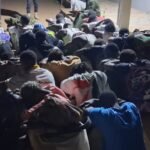
The following afternoon, officers moved in and reportedly found suspects on the premises during what police described as a consumption session. Investigators said the individuals were also preparing to receive a fresh delivery of psychotropic substances.
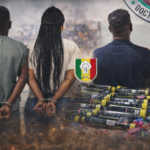
Items seized at the apartment included 14 canisters of nitrous oxide, also known as laughing gas, a quantity of hashish, one ecstasy pill, two mobile phones, and a black Toyota Corolla. Police said a more detailed search of the vehicle uncovered five grams of cocaine hidden inside. Two individuals were taken into custody on allegations including criminal association, drug possession, and trafficking.
The operation then expanded as investigators pursued the suspected supply chain. Police said they identified the principal supplier as a woman based in Ouakam. She was later arrested near Lycée de Ouakam, where authorities say she was about to deliver cocaine.
A subsequent search in Ouakam led to the seizure of 240 ecstasy tablets, including orange tablets and red-violet pills referred to as “Tik Tok,” along with three sachets of suspicious powder that have been sent to the police forensic laboratory for analysis. Officers also recovered cash and two mobile phones.
Police said the suspect admitted ownership of the seized products and was placed in custody on allegations including criminal association, possession of narcotics, and international drug trafficking.
Beyond the arrests and seizures, the operation reflects a wider concern about the evolving drug trade in urban Senegal, particularly the spread of synthetic substances and the risks posed to young people in and around residential and school areas. The reported arrest near a lycée underscores the urgency of prevention as well as enforcement.
The broader public challenge is not only to disrupt supply networks, but also to strengthen awareness, early intervention, and community vigilance. Drug trafficking is rarely an isolated criminal issue; it often feeds addiction, insecurity, exploitation, and long-term public health harm. That is why the success of enforcement operations must be matched by stronger education, family support systems, and neighborhood-level cooperation.
Senegalese police say they remain mobilized and have urged members of the public to share useful information through the toll-free line 800 00 17 00.

More Stories
Police raid in Brikama nets more than 30 suspects after residents raise alarm
U.S. calls for stronger Easter security in Nigeria as concerns grow over targeted attacks
Gambia: Government moves to contain fuel price surge with subsidy package