Police bring safety education to Thiès schools ahead of Senegal’s Independence Day
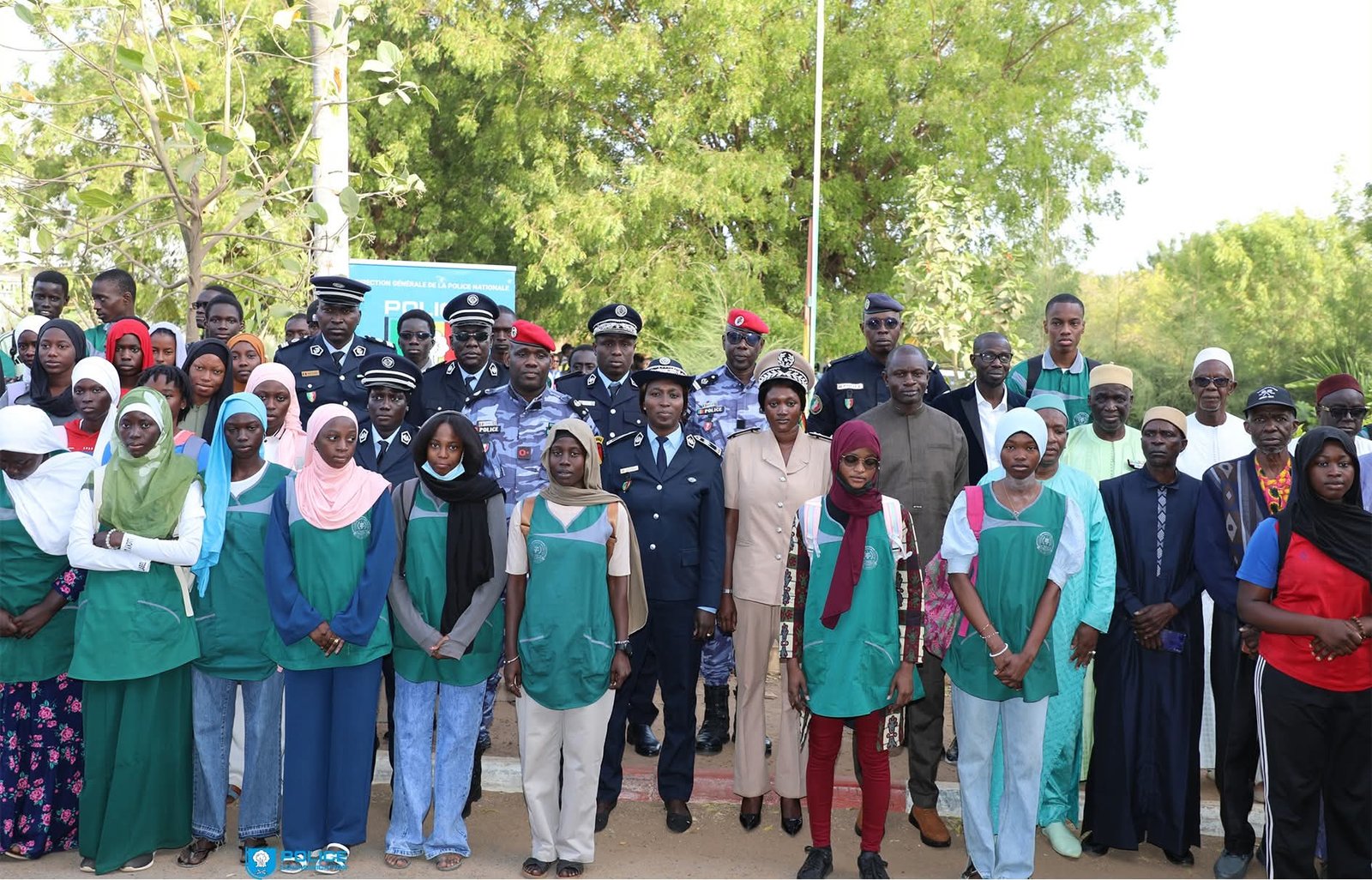
Senegal’s National Police has launched the first stage of its Senegalese Police Education Project (EDUPOLSEN) in Thiès, bringing safety awareness and civic education directly into schools as the city prepares to host this year’s 66th Independence Day celebrations.
The two-day initiative began at Lycée El Hadji Malick Sy and Collège Saint Gabriel, where officials say the project was designed to build trust, strengthen prevention, and create a more direct line of communication between students and law enforcement.
The opening day featured a solemn flag-raising ceremony at Lycée El Hadji Malick Sy, symbolically launching the school-based outreach effort in a city that is expected to play a central role in Senegal’s April 4 national festivities.
 Beyond the ceremony, the project focused on practical issues affecting young people. Police-led awareness sessions were organized for students on the dangers of drug use, the importance of road safety, and the growing risks associated with cybercrime. The sessions are part of a broader effort to move policing beyond enforcement and toward prevention, education, and early intervention.
The event was presided over by the Central Commissioner of Thiès and drew a broad cross-section of local leadership, including administrative authorities, elected officials, school stakeholders, district heads, bajenu gox, parents, and members of the educational community.
Participants reportedly welcomed the initiative, praising the National Police for selecting their institutions as part of the Edupolsen rollout. Their response suggests that school-centered safety education is increasingly being seen not as an external imposition, but as a shared community responsibility.
The significance of the Edupolsen initiative lies in its preventive logic. In many communities, young people encounter police mainly in moments of tension or crisis. Projects like this attempt to reverse that pattern by introducing students to law enforcement through dialogue, awareness, and support rather than confrontation.
That shift matters. When schools become spaces for civic education, digital awareness, and public safety literacy, they can help reduce vulnerability before problems escalate. In a time when cybercrime, substance abuse, and road-related risks increasingly affect adolescents, early education may prove just as important as enforcement.
As Thiès prepares to host a major national event, the Edupolsen project also sends a broader message: public safety is not only about securing streets and ceremonies, but also about investing in the knowledge, confidence, and protection of the next generation.





About The Author