


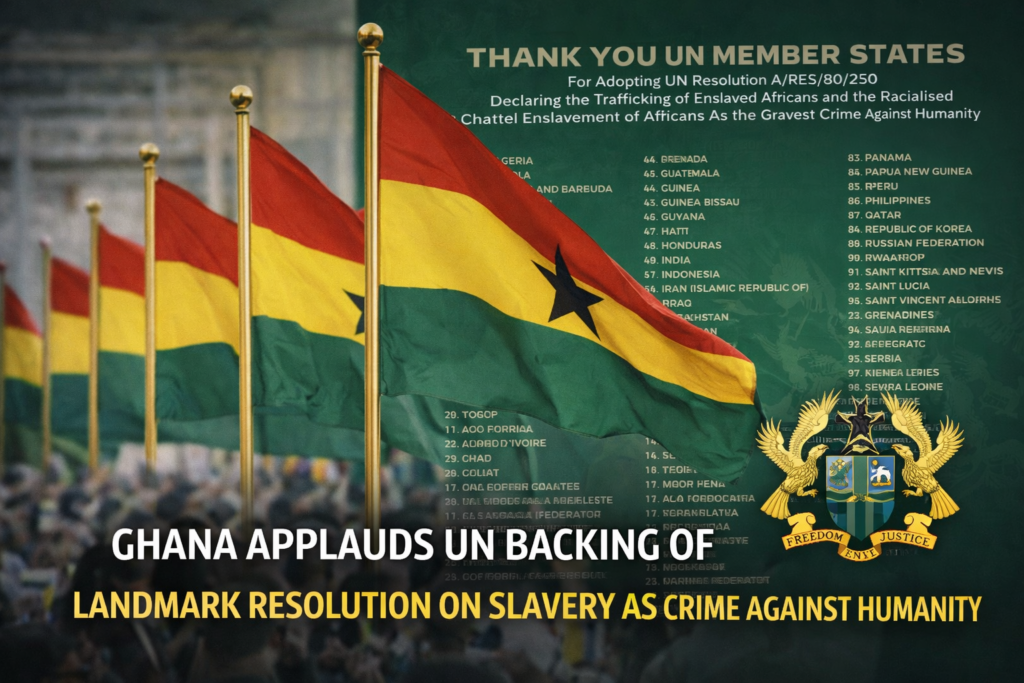
Ghana has expressed deep appreciation to United Nations member states following the adoption of a landmark resolution recognizing the trafficking and enslavement of Africans as among the gravest crimes against humanity.
In a statement shared by the Ghana Ministry of Foreign Affairs, authorities thanked countries across Africa, the Caribbean, Asia, Europe, and the Americas for supporting UN Resolution A/RES/80/250, describing it as a historic step toward justice, global recognition, and healing.
The resolution formally acknowledges the transatlantic slave trade and the racialized system of chattel slavery inflicted on Africans as crimes of profound historical injustice. Ghanaian officials framed the development as a collective moral milestone, reflecting a growing international willingness to confront the legacy of slavery and its enduring consequences.
The resolution signals a shift from remembrance to accountability. For decades, African nations and diaspora communities have called for stronger global recognition of slavery not only as a historical tragedy but as a foundational injustice with lasting socio-economic and psychological impacts. The UN’s adoption of this resolution strengthens that position within international law and diplomacy.
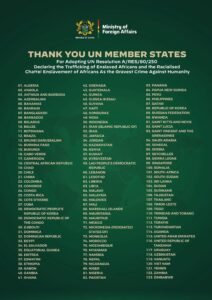 Ghana, long at the forefront of Pan-African advocacy and historical reconciliation efforts, views the development as part of a broader movement toward restorative justice. Initiatives such as the “Year of Return” and ongoing diaspora engagement campaigns have already positioned the country as a symbolic and practical bridge between Africa and its global diaspora.
The wide support for the resolution also reflects increasing solidarity among Global South nations and allies in advancing narratives of historical truth and equity within multilateral institutions. By acknowledging the scale and nature of slavery as a crime against humanity, the international community opens new space for dialogue on reparations, education, and structural redress.
While the resolution does not in itself prescribe reparative measures, its symbolic and legal weight may influence future global discussions on justice frameworks, economic redress, and cultural restitution.
For Ghana and many across Africa and the diaspora, the moment represents not only recognition of the past but a renewed call to shape a more just and inclusive global future.


More Stories
Three arrested in Kaolack livestock theft bust
U.S. Embassy hosts AI discussion in Dakar as Senegalese audiences explore future of technology
Senegal’s First Lady joins Global Child-Welfare Summit in Washington