



EDITORIAL: Guinea-Bissau’s Ceremonial Coup — A Choreographed Crisis
Guinea-Bissau has once again found itself at the centre of regional attention following what has widely been described as a “ceremonial coup”—a politically charged confrontation lacking the hallmarks of a genuine military takeover. Instead, the incident bears the unmistakable footprints of a carefully engineered crisis, raising troubling questions about political manipulation, institutional fragility and the future of democratic governance in West Africa. As this controversy continues to unfold, the implications reach far beyond Bissau, touching the heart of regional stability and Africa’s ongoing struggle with constitutionalism.
A Crisis That Appears More Choreographed Than Covert
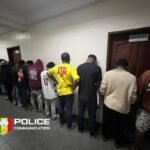
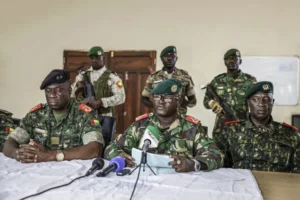
From the outset, the confrontation between elements of the National Guard and state security forces seemed less like a spontaneous mutiny and more like a politically orchestrated drama. The clash—triggered by the attempted release of two government officials facing corruption charges—unfolded with a level of predictability that suggests coordination rather than rebellion. In effect, the event reinforced growing concerns that the leadership of President Umaro Sissoco Embaló may be weaponising moments of chaos to manage political rivals and consolidate executive power.
This perception is not without basis. In recent years, tensions between the presidency and elements of the legislature have intensified, resulting in repeated institutional paralysis. Therefore, this “ceremonial coup” must be understood not as an isolated episode but as part of an ongoing struggle for political dominance.
Historical Parallels: A Nation Defined by Political Volatility
To fully appreciate the gravity of the current crisis, it is necessary to revisit Guinea-Bissau’s long and troubled political past. Since gaining independence in 1974, the country has endured repeated coups, intra-military conflicts, political assassinations and the infiltration of global narcotics networks into state structures. Each era of leadership has been marked by factionalism, distrust and instability.
President Embaló’s administration, inaugurated in 2020 amid contested election results, was expected to usher in a new chapter. Yet ongoing disputes with parliament, dissolved governments and accusations of overreach reveal a governance environment where old tensions persist. Consequently, what appears today as a staged crisis is rooted in decades of institutional fragility and political brinkmanship.
Alarm, Condemnation and Caution
Given the sensitivity of the situation, African leaders and regional bodies reacted quickly. Former Nigerian President Goodluck Jonathan expressed “deep concern” over what he described as a disturbing precedent, cautioning that political manipulation of crises undermines democratic progress and public trust. His remarks echoed the sentiments of governance advocates across the region.
Senegal’s Prime Minister Ousmane Sonko, known for his forthright stance on democracy and sovereignty, described the event as “a distortion of democratic responsibility.” He stressed that West Africa must not allow state-manufactured instability to become a political tactic.
Similarly, the African Union (AU) condemned the events unequivocally, warning that “any form of destabilisation, whether authentic or engineered, threatens continental peace and security.” The AU Peace and Security Council has already initiated consultations on mechanisms to deter leaders from exploiting crises for political gain.
Meanwhile, ECOWAS—already overburdened by an alarming wave of coups in Mali, Burkina Faso, Niger and recent tensions in Sierra Leone—issued a cautious but firm statement expressing “profound unease” about the ambiguous nature of the developments. However, the bloc’s credibility has suffered in recent years, raising doubts about its ability to enforce meaningful corrective action.
Growing Fatigue and Declining Trust
Across West Africa, civil society organisations, political commentators and activist groups have expressed deep frustration. Many argue that Guinea-Bissau’s crisis reflects a worrisome trend in which leaders treat governance as theatre rather than responsibility. Critics warn that, if unchallenged, such political stage-management could become a new tool for incumbents seeking to silence opposition or justify authoritarian impulses.
The public’s response has been equally telling. Growing political fatigue—coupled with economic pressures and declining living standards—has created an environment where citizens increasingly distrust government narratives. This erosion of confidence is particularly dangerous in fragile states where legitimacy depends heavily on public perception.
A Manufactured Crisis With Real and Far-Reaching Impacts
Regardless of whether the incident was engineered, its consequences are undeniably real. Guinea-Bissau’s economy is already vulnerable, and political uncertainty threatens foreign investment, regional partnerships and humanitarian support. Moreover, the normalisation of political theatrics risks emboldening other leaders across Africa to adopt similar crisis-based governance strategies.
Regionally, this incident adds yet another layer of instability to an already fragile West Africa, where constitutional rule has been repeatedly undermined. The cumulative effect of such events is a dangerous weakening of democratic norms, institutional accountability and regional cohesion.
The Way Forward: Transparency, Institutional Reform and Political Honesty
 To prevent further erosion of national stability, Guinea-Bissau must immediately initiate a transparent, independent investigation into the incident. Whether it was an attempted coup, a manipulated clash or a politically staged operation must be established beyond doubt. Only truth can restore institutional trust.
Furthermore, President Embaló and his administration must recognise that political theatrics cannot serve as a substitute for legitimacy, governance or national unity. Conversely, the opposition must engage constructively rather than exacerbate tensions. Strengthening judicial independence, empowering the legislature and depoliticising national security forces are critical steps for long-term reform.
Africa Must Reject Crisis as a Governing Strategy
The so-called ceremonial coup in Guinea-Bissau may have lasted only hours, but its implications will linger. It serves as a powerful reminder that Africa cannot afford leaders who trivialise instability or deploy crisis as a political tool. In a region already struggling with multiple coups, democratic setbacks and governance failures, political theatrics only deepen instability.
Guinea-Bissau now stands at a decisive moment. It must choose between repeating the familiar cycle of manufactured conflict or embracing a transparent, accountable and democratic path forward. The choice it makes will shape not only its future but also send a message to an entire continent watching closely.

More Stories
IMF Commends Gambia’s Economic Progress as Government Pushes Reform, Stability Agenda
Editorial: Senegal’s Fragile Unity — Between Faye’s Presidency and Sonko’s Promise
Nigeria’s Ngozi Okonjo-Iweala wins second term as WTO chief