

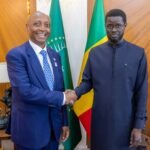
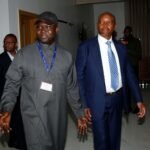

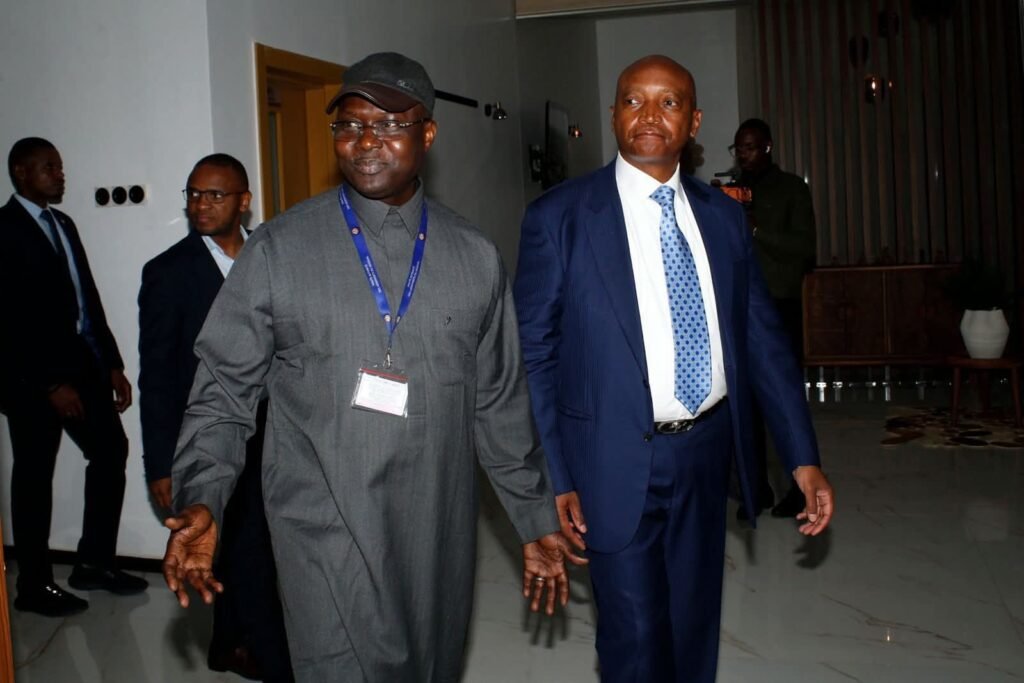
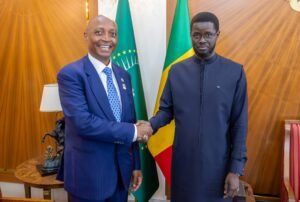
CAF President Dr Patrice Motsepe arrived in Dakar on Wednesday and was received by the President of the Senegalese Football Federation, Abdoulaye Fall, alongside other Senegalese football leaders.
While the official reception reflected Senegal’s stature in African football, the visit also triggered strong public reaction, revealing broader debates about governance, competition reform, and accountability within the continental game.
For some observers, the visit cannot be separated from wider national concerns. Modou Ndiayemabeye wrote, “Eighty days of detention for the 18 Senegalese held hostage in Morocco — their immediate release must be a prerequisite before any discussions. Enough is enough.” The reaction, though sharply expressed, reflects the feeling among some members of the public that football diplomacy should not be detached from questions of dignity and the treatment of Senegalese citizens abroad.
Others framed the moment around national pride and principle. Oumar Seck said he hoped Senegalese officials would behave like “true gentlemen” and deliver a firm, clear, and precise message. He insisted that “our trophy must not be the subject of any negotiation or compromise,” adding that it represents “the honour, pride, and dignity of an entire nation.” His comment illustrates how football matters in Senegal not merely as sport, but as a symbol of identity and collective dignity.
Another strand of reaction focused on the structure of African club football itself. Walid Maghraoui questioned why CAF had not moved earlier to expand its top competitions, asking: “Is it reasonable that a continent with more than fifty countries has only four groups in the Champions League?” He argued that the continent’s premier competition “needs restructuring” and said that giving more places to stronger leagues could improve quality, attract sponsors, and create more high-level fixtures across Africa.
Some comments were openly critical of Dr Motsepe’s leadership. Ousmane M. Thiam wrote, “Respect and dignity are not begged for,” before calling for what he described as “a final struggle, namely the resignation of the CAF president.” He accused the CAF leadership of poor stewardship and expressed anger over past controversies. Those remarks remain the views of a member of the public, but they underscore the intensity of feeling that continues to surround governance questions in African football.
These reactions show that Motsepe’s arrival in Dakar has landed in a football environment where expectations are high and patience is limited. Supporters are not only watching ceremonial visits; they are also demanding stronger institutions, more credible leadership, fairer competition structures, and decisions that respect both national pride and continental progress.
For Senegal, the visit presents an opportunity to engage CAF at a meaningful moment for African football. For CAF, it is also a reminder that legitimacy in the game is built not only through official meetings, but through transparency, fairness, and the confidence of the football public.
African football’s future will not be secured by protocol alone. It will require open dialogue, principled leadership, and reforms that convince supporters the game is being managed in the interests of the continent as a whole.

More Stories
American Center Dakar Amplifies Young Voices Through Speaking Arts Competition
Senegal Stands Firm on Integrity in African Football, Says President to CAF’s Motsepe
Saly Police arrest alleged visa fraudster in case involving over CFA30 million